As NIA opens its first Hamas terror probe in the Pahalgam attack, the forgotten story of how the Gaza-based terror group funded Islamist networks in India
For years, a section of India’s political and media establishment attempted to portray Hamas as a distant Middle Eastern actor whose activities had little relevance to India’s internal security landscape. Whenever concerns were raised about growing ideological, financial and operational linkages between global Islamist organisations and radical networks in India, such warnings were routinely dismissed as alarmism. The latest development in the investigation into the Pahalgam terror attack, however, indicates that Indian security agencies are no longer willing to view Hamas merely through the prism of the Israel-Palestine conflict. In a significant revelation, the National Investigation Agency (NIA), while filing its chargesheet in the Pahalgam terror attack case, stated that further investigation is underway to establish links between Pakistan-backed terror outfits and Hamas. The agency specifically noted that it is probing connections between Lashkar-e-Taiba (LeT), its proxy The Resistance Front (TRF), Jaish-e-Mohammed (JeM), Al Qaeda affiliates, Hamas and other global terrorist organisations. This is arguably the first time India’s premier anti-terror agency has formally brought Hamas within the ambit of a major terror investigation and signalled its intention to examine possible operational, ideological and financial linkages between the Gaza-based terrorist organisation and Pakistan-backed jihadist networks targeting India. The development assumes even greater significance because evidence of Hamas-linked radicalisation and funding networks in India is not entirely new. In fact, available literature, intelligence assessments and testimonies of former Islamist operatives suggest that Hamas had already established links with radical organisations operating in India decades ago. The NIA’s probe may therefore be uncovering not an entirely new phenomenon, but a network whose roots stretch back several decades. The SIMI-Hamas connection that many forgot One of the most significant examples of Hamas-linked influence in India emerges from the history of the banned Students Islamic Movement of India (SIMI). SIMI was established in 1977 as the student wing of Jamaat-e-Islami-Hind (JIH), itself the Indian counterpart of Jamaat-e-Islami, founded by Islamist ideologue Abul Ala Maududi. Initially created to energise student activism within the broader Islamist movement, SIMI gradually evolved into a far more radical organisation. Journal of Defence Studies (The Students Islamic Movement of India: The Story So Far – Anshuman Behera) According to academic research cited in the Journal of Defence Studies, SIMI increasingly embraced positions that even Jamaat-e-Islami-Hind found difficult to defend. The relationship between the two organisations deteriorated sharply after disagreements over Palestinian leader Yasser Arafat’s visit to India in 1981. While JIH viewed Arafat positively, SIMI activists denounced him as a Western puppet and greeted him with black flags. This hostility toward Arafat becomes particularly important when viewed through the Hamas lens. Hamas and Arafat’s Fatah movement were bitter rivals. Hamas rejected the relatively pragmatic Palestinian nationalism represented by Fatah and instead promoted a transnational Islamist project rooted in the ideology of the Muslim Brotherhood. SIMI’s hostility toward Arafat mirrored Hamas’s own ideological orientation and reflected the broader Islamist currents that were influencing radical groups across the world. The split between SIMI and JIH was not merely organisational. It reflected a deeper ideological shift toward a more militant and transnational vision of political Islam. Why SIMI’s ideology resembled Hamas Perhaps the most striking aspect of the SIMI-Hamas relationship was not financial assistance or organisational contact but ideological convergence. Research on SIMI documented that the organisation openly rejected secularism, democracy and nationalism, describing them as anti-Islamic concepts. It advocated the restoration of the Khalifat or Islamic Caliphate, emphasised the supremacy of the global Muslim Ummah and endorsed armed jihad as a legitimate means of establishing Islamic dominance. Journal of Defence Studies (The Students Islamic Movement of India: The Story So Far – Anshuman Behera) The similarities with Hamas are difficult to ignore. Like Hamas, SIMI viewed religious identity as superior to national identity. Like Hamas, it rejected secular political frameworks. Like Hamas, it regarded the establishment of an Islamic order as a religious obligation. And like Hamas, it viewed armed struggle as an acceptable instrument for achieving ideological objectives. While Hamas sought to replace Israel with an Islamist state, SIMI increasingly articulated visions of an Islamic political order within India. This ideological overlap created natural avenues for cooperation, networking and mut
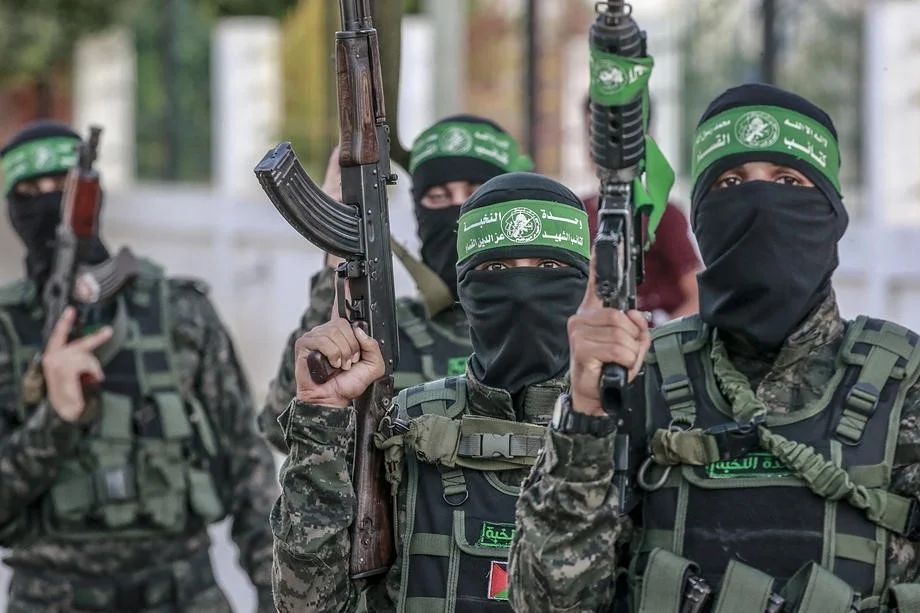
For years, a section of India’s political and media establishment attempted to portray Hamas as a distant Middle Eastern actor whose activities had little relevance to India’s internal security landscape. Whenever concerns were raised about growing ideological, financial and operational linkages between global Islamist organisations and radical networks in India, such warnings were routinely dismissed as alarmism.
The latest development in the investigation into the Pahalgam terror attack, however, indicates that Indian security agencies are no longer willing to view Hamas merely through the prism of the Israel-Palestine conflict.
In a significant revelation, the National Investigation Agency (NIA), while filing its chargesheet in the Pahalgam terror attack case, stated that further investigation is underway to establish links between Pakistan-backed terror outfits and Hamas. The agency specifically noted that it is probing connections between Lashkar-e-Taiba (LeT), its proxy The Resistance Front (TRF), Jaish-e-Mohammed (JeM), Al Qaeda affiliates, Hamas and other global terrorist organisations.
This is arguably the first time India’s premier anti-terror agency has formally brought Hamas within the ambit of a major terror investigation and signalled its intention to examine possible operational, ideological and financial linkages between the Gaza-based terrorist organisation and Pakistan-backed jihadist networks targeting India.
The development assumes even greater significance because evidence of Hamas-linked radicalisation and funding networks in India is not entirely new. In fact, available literature, intelligence assessments and testimonies of former Islamist operatives suggest that Hamas had already established links with radical organisations operating in India decades ago.
The NIA’s probe may therefore be uncovering not an entirely new phenomenon, but a network whose roots stretch back several decades.
The SIMI-Hamas connection that many forgot
One of the most significant examples of Hamas-linked influence in India emerges from the history of the banned Students Islamic Movement of India (SIMI).
SIMI was established in 1977 as the student wing of Jamaat-e-Islami-Hind (JIH), itself the Indian counterpart of Jamaat-e-Islami, founded by Islamist ideologue Abul Ala Maududi. Initially created to energise student activism within the broader Islamist movement, SIMI gradually evolved into a far more radical organisation.
Journal of Defence Studies (The Students Islamic Movement of India: The Story So Far – Anshuman Behera)
According to academic research cited in the Journal of Defence Studies, SIMI increasingly embraced positions that even Jamaat-e-Islami-Hind found difficult to defend. The relationship between the two organisations deteriorated sharply after disagreements over Palestinian leader Yasser Arafat’s visit to India in 1981. While JIH viewed Arafat positively, SIMI activists denounced him as a Western puppet and greeted him with black flags.
This hostility toward Arafat becomes particularly important when viewed through the Hamas lens.
Hamas and Arafat’s Fatah movement were bitter rivals. Hamas rejected the relatively pragmatic Palestinian nationalism represented by Fatah and instead promoted a transnational Islamist project rooted in the ideology of the Muslim Brotherhood. SIMI’s hostility toward Arafat mirrored Hamas’s own ideological orientation and reflected the broader Islamist currents that were influencing radical groups across the world.
The split between SIMI and JIH was not merely organisational. It reflected a deeper ideological shift toward a more militant and transnational vision of political Islam.
Why SIMI’s ideology resembled Hamas
Perhaps the most striking aspect of the SIMI-Hamas relationship was not financial assistance or organisational contact but ideological convergence.
Research on SIMI documented that the organisation openly rejected secularism, democracy and nationalism, describing them as anti-Islamic concepts. It advocated the restoration of the Khalifat or Islamic Caliphate, emphasised the supremacy of the global Muslim Ummah and endorsed armed jihad as a legitimate means of establishing Islamic dominance.
Journal of Defence Studies (The Students Islamic Movement of India: The Story So Far – Anshuman Behera)
The similarities with Hamas are difficult to ignore.
Like Hamas, SIMI viewed religious identity as superior to national identity. Like Hamas, it rejected secular political frameworks. Like Hamas, it regarded the establishment of an Islamic order as a religious obligation. And like Hamas, it viewed armed struggle as an acceptable instrument for achieving ideological objectives.
While Hamas sought to replace Israel with an Islamist state, SIMI increasingly articulated visions of an Islamic political order within India.
This ideological overlap created natural avenues for cooperation, networking and mutual support.
The Hamas founder who addressed a SIMI conference
Evidence of direct interaction between Hamas and SIMI emerged publicly in October 1999.
During the Ikhwan Conference organised by SIMI in Kanpur, which reportedly attracted more than 20,000 participants, speeches were delivered by several Islamist leaders. Among them was Sheikh Ahmed Yassin, the founder of Hamas, who addressed the gathering through a telephonic message.
Journal of Defence Studies (The Students Islamic Movement of India: The Story So Far – Anshuman Behera)
The event also featured figures linked to Jamaat-e-Islami Pakistan and other Islamist networks.
The symbolism of the conference was revealing.
This was not an isolated local gathering. It was an event that connected radical Islamist actors across multiple countries through a shared ideological framework. It demonstrated that SIMI was not operating as a purely domestic organisation concerned with local grievances. Instead, it increasingly saw itself as part of a broader global Islamist movement.
The conference became notorious for extremist slogans glorifying Al Qaeda founder Osama bin Laden. It illustrated how global jihadist narratives were being integrated into Indian radical networks years before the emergence of the Islamic State or the global war on terror framework that followed 9/11.
The presence of Hamas founder Sheikh Yassin in such a forum underscores that contacts between Hamas and Indian Islamist networks were neither accidental nor insignificant.
Former SIMI leader revealed Hamas funding
The most explosive aspect of the SIMI-Hamas relationship concerns funding.
According to disclosures made by Salim Sajid, a former financial secretary of SIMI who later turned against the organisation, Hamas was among the key sources of financial support for SIMI.
Journal of Defence Studies (The Students Islamic Movement of India: The Story So Far – Anshuman Behera)
His testimony indicated that SIMI was receiving funds from multiple international Islamist entities, including Hamas, Bangladesh-based Islami Chhatra Shibir, Saudi Arabia’s Jamayyatul Ansar and several organisations operating in the Gulf region.
These revelations are especially significant because funding networks often reveal deeper organisational relationships than public ideological statements.
Money is rarely transferred without expectations, influence or strategic objectives.
If Hamas was indeed helping finance SIMI, it would indicate that the Palestinian terror outfit viewed India as a theatre worthy of ideological investment and organisational expansion.
More importantly, such funding would demonstrate that Hamas’s activities extended far beyond the Israel-Palestine conflict and included participation in a wider ecosystem of transnational Islamist mobilisation.
Security agencies had already documented Hamas links
The testimony of former SIMI members was not the only source pointing toward Hamas connections.
Security agency investigations repeatedly identified links between SIMI and various extremist organisations across South Asia and the Middle East, including Hamas.
These findings reinforced concerns that SIMI was embedded within a broader international network of Islamist organisations sharing ideological goals, training methodologies and funding channels.
The common thread connecting these organisations was not nationality or ethnicity.
It was ideology.
Whether operating in Pakistan, Bangladesh, Saudi Arabia, Palestine or India, these groups subscribed to versions of political Islam that viewed secular democracy as illegitimate, prioritised religious identity above national identity and sought the eventual establishment of Islamic political authority.
This ideological commonality helped create a transnational ecosystem where resources, propaganda, finances and personnel could move across borders.
From SIMI to Indian Mujahideen and beyond
The story becomes even more troubling when one examines what happened after SIMI was banned in 2001.
The organisation did not simply disappear.
Several investigations and intelligence reports suggested that many former SIMI operatives migrated into other radical organisations, including Indian Mujahideen and later networks associated with the Popular Front of India (PFI).
Security agencies repeatedly warned that SIMI cadres were attempting to reorganise under new names and front organisations.
This pattern is hardly unique.
Terrorist organisations and extremist movements routinely create successor organisations, front groups and proxy entities to evade legal restrictions while preserving ideological continuity.
Lashkar-e-Taiba created charitable fronts. Jaish-e-Mohammed operated through multiple aliases. Islamist networks across the world have repeatedly adopted similar tactics.
The concern for Indian investigators is whether international relationships built during the SIMI era survived these organisational transformations.
If Hamas had relationships with SIMI networks in the past, did those connections vanish after the ban, or did they simply migrate into successor organisations and informal radical ecosystems?
This is precisely the type of question the NIA’s current investigation may now be attempting to answer.
Why the Pahalgam investigation matters
The NIA’s reference to Hamas comes amid growing concerns about cooperation between Pakistan-backed terror groups and global jihadist organisations.
Security officials have reportedly observed increasing interactions between Hamas and Pakistan-based groups such as Lashkar-e-Taiba and Jaish-e-Mohammed. The possibility that tactical methods, propaganda strategies and operational knowledge are being shared between these organisations cannot be dismissed lightly.
The October 7 Hamas attack on Israel demonstrated a level of planning, coordination and psychological warfare that attracted attention from terrorist organisations worldwide.
If elements of those tactics are being studied, adapted or shared among Pakistan-backed groups operating against India, the implications for Indian national security are profound.
The Pahalgam investigation is therefore not merely about identifying individual attackers.
It is about understanding whether a broader architecture of global jihadist cooperation is emerging, one that links Gaza, Pakistan and Kashmir through ideological affinity, operational collaboration and financial networks.
The uncomfortable reality
For years, many commentators attempted to compartmentalise terrorism.
Hamas was treated as a Palestinian issue. Lashkar-e-Taiba was viewed as a Pakistan problem. SIMI was described as a domestic radical organisation. PFI was often portrayed as merely a controversial socio-political movement.
The evidence accumulated over decades suggests a more complicated reality.
Extremist organisations frequently differ in language, geography and immediate political objectives. Yet many remain connected through shared ideological frameworks, common funding channels and overlapping organisational networks.
The history of Hamas’s association with SIMI serves as a reminder that terrorism rarely respects national boundaries. Organisations separated by thousands of kilometres can still collaborate when united by a common ideological vision.
As the NIA expands its probe into possible Hamas linkages in the Pahalgam terror attack, investigators may well uncover relationships that did not emerge overnight but were built over decades through networks that connected radical actors across South Asia and the Middle East.
The significance of the investigation lies precisely here. It is not merely about whether Hamas had a role in one particular attack. It is about determining whether India is confronting an increasingly interconnected ecosystem of Islamist extremism where local terror groups, Pakistan-backed proxies and global jihadist organisations function as different nodes of the same ideological network.
The story of Hamas funding SIMI, the participation of Hamas founder Sheikh Ahmed Yassin in SIMI’s events, the documented financial links exposed by former insiders, and the continuing migration of radical cadres into successor organisations suggest that the questions now being asked by the NIA are long overdue.
What the agency ultimately uncovers could reshape India’s understanding of how global jihadist movements have operated within the country for decades.