Artist TM Krishna spews venom against Vande Mataram, calls it ‘unfit’ as national anthem, labels Anandmath anti-Muslim; Read how he reveals deep hostility towards Hindu identity
Carnatic music artist TM Krishna, who is notorious for holding extreme political views, recently spewed venom against the national song ‘Vande Mataram’ and the Hindus. In a recent interview with the YouTube channel The Deshbhakt, where he was promoting his book, Krishna expressed his disdain for Vande Mataram, Anandmath and also the Hindu identity. Vande Mataram was written by the renowned Indian author and novelist Bankim Chandra Chatterjee and was introduced by him in his famous novel ‘Anandmath’. The novel is set against the backdrop of the Indian freedom struggle and the famine situation in Bengal. The words ‘Vande Mataram’ became a popular slogan among freedom fighters, who drew motivation and strength from it at a time when the country was reeling under British rule. The song captures the passion of the Indian freedom fighters for their country, which they revere as ‘mother’, and their resolve to free it from the clutches of slavery. Vande Mataram portrays Bharat Mata as a Hindu Goddess: Krishna However, Krishna, completely failing to appreciate the song’s devotional undertones, describes it as “complex” and claims it was not fit to become the country’s national anthem. “There is no way Vande Mataram could have been the national anthem of India, let me very simply say. Because Vande Mataram is a complex song…” Krishna asserted. He, then, goes on to justify his critical opinion by finding fault with the structure of the song and points out how the song was not written by Chatterjee in one stretch but in phases, as if that is a disqualifier for the song to be accepted as the national anthem. He compares the song ‘Jana Gana Mana’, the Indian national anthem written by Nobel Prize-winning Rabindranath Tagore, with Vande Mataram. While both songs celebrate India with different viewpoints, Krishna claims that Jana Gana Mana is more fit to be the national anthem than Vande Mataram, which he associates and restricts to the Hindu identity, which he clearly abhors. Furthermore, he points out a shift in the “tonality” in the last couple of stanzas of Vande Mataram and says that in these stanzas, Mother India has been portrayed as a “Hindu Goddess”, which is another grievance he carries with the song. Anandmath is an anti-Muslim book: Krishna He does not stop there with his Hindu hatred and goes on to peddle lies about the book ‘Anandmath’ by also making misleading claims about it. Krishna, who claims to have read two translations of Anandmath, declares the book to be not just anti-establishment (British and Muslim establishment at that time) but also anti-Muslim. “In the book, it is a song that is sung by Hindu Sanyasis, while they are attacking villages where Muslims live. It is a book that is establishing the superiority of the Hindu community and the need for their control coming back,” Krishna said. One might say that being an ‘artist’, Krishna is entitled to his opinion regarding the ‘structure’ or the ‘tone’ of the song. From criticising the structure of the song, he shifts to making sweeping generalisations about the song and creates a cult out of people who praise and support the song, and states, “And the fascinating thing is, all those who subscribe to ‘Vande Mataram’, in general, also said ‘Uniform Civil Code,’ also said ‘one language.’ Some of them also said there should be a mention of God in the Preamble (of the Constitution), and also said ‘anti-conversion.’ TM Krishna and his Hindu hatred As he keeps on critically talking about the song, it becomes clear that it is not the song that has deeply bothered him, but something bigger that he believes the song symbolises. “So, if you see, Vande Mataram symbolises an entire ecology of what they believe is India, which is a Hindu India, a dominant Hindu India, in which others can be accommodated if they agree to be emotionally subservient or they say (accept) that our forefathers were Hindu.” It becomes obvious from the above-quoted statements of Krishna that Anandmath or Vande Mataram are not the actual subjects of his vitriol, but it is actually the Hindu identity that he associates with them. Krishna tries to package his Hindu hatred as a genuine concern for the “secular” ethos of the country by insinuating that Hindu identity intrinsically contrasts with an egalitarian society. He presents his idea of India as one which accommodates people from all communities and does not discriminate against anyone based on religion or ideology. However, in saying so, Krishna exposes his hypocrisy and double standards. Years ago, in 2018, TM Krishna had openly admitted that he feels no empathy when RSS members are killed by communists or Islamists in places like Kerala. Not just that, he blatantly blamed the BJP for making him this “crass” and “inhuman”. Krishna, who lends lip service to the idea of giving space to all ideologies, has himself displayed intolerance towards the ideologies he is not pleased with, including th
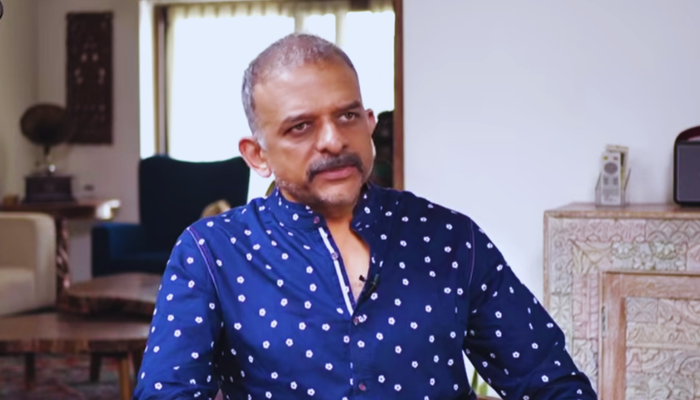

Carnatic music artist TM Krishna, who is notorious for holding extreme political views, recently spewed venom against the national song ‘Vande Mataram’ and the Hindus. In a recent interview with the YouTube channel The Deshbhakt, where he was promoting his book, Krishna expressed his disdain for Vande Mataram, Anandmath and also the Hindu identity.
Vande Mataram was written by the renowned Indian author and novelist Bankim Chandra Chatterjee and was introduced by him in his famous novel ‘Anandmath’. The novel is set against the backdrop of the Indian freedom struggle and the famine situation in Bengal.
The words ‘Vande Mataram’ became a popular slogan among freedom fighters, who drew motivation and strength from it at a time when the country was reeling under British rule. The song captures the passion of the Indian freedom fighters for their country, which they revere as ‘mother’, and their resolve to free it from the clutches of slavery.
Vande Mataram portrays Bharat Mata as a Hindu Goddess: Krishna
However, Krishna, completely failing to appreciate the song’s devotional undertones, describes it as “complex” and claims it was not fit to become the country’s national anthem. “There is no way Vande Mataram could have been the national anthem of India, let me very simply say. Because Vande Mataram is a complex song…” Krishna asserted. He, then, goes on to justify his critical opinion by finding fault with the structure of the song and points out how the song was not written by Chatterjee in one stretch but in phases, as if that is a disqualifier for the song to be accepted as the national anthem.
He compares the song ‘Jana Gana Mana’, the Indian national anthem written by Nobel Prize-winning Rabindranath Tagore, with Vande Mataram. While both songs celebrate India with different viewpoints, Krishna claims that Jana Gana Mana is more fit to be the national anthem than Vande Mataram, which he associates and restricts to the Hindu identity, which he clearly abhors. Furthermore, he points out a shift in the “tonality” in the last couple of stanzas of Vande Mataram and says that in these stanzas, Mother India has been portrayed as a “Hindu Goddess”, which is another grievance he carries with the song.
Anandmath is an anti-Muslim book: Krishna
He does not stop there with his Hindu hatred and goes on to peddle lies about the book ‘Anandmath’ by also making misleading claims about it. Krishna, who claims to have read two translations of Anandmath, declares the book to be not just anti-establishment (British and Muslim establishment at that time) but also anti-Muslim. “In the book, it is a song that is sung by Hindu Sanyasis, while they are attacking villages where Muslims live. It is a book that is establishing the superiority of the Hindu community and the need for their control coming back,” Krishna said.
One might say that being an ‘artist’, Krishna is entitled to his opinion regarding the ‘structure’ or the ‘tone’ of the song. From criticising the structure of the song, he shifts to making sweeping generalisations about the song and creates a cult out of people who praise and support the song, and states, “And the fascinating thing is, all those who subscribe to ‘Vande Mataram’, in general, also said ‘Uniform Civil Code,’ also said ‘one language.’ Some of them also said there should be a mention of God in the Preamble (of the Constitution), and also said ‘anti-conversion.’
TM Krishna and his Hindu hatred
As he keeps on critically talking about the song, it becomes clear that it is not the song that has deeply bothered him, but something bigger that he believes the song symbolises. “So, if you see, Vande Mataram symbolises an entire ecology of what they believe is India, which is a Hindu India, a dominant Hindu India, in which others can be accommodated if they agree to be emotionally subservient or they say (accept) that our forefathers were Hindu.”
It becomes obvious from the above-quoted statements of Krishna that Anandmath or Vande Mataram are not the actual subjects of his vitriol, but it is actually the Hindu identity that he associates with them. Krishna tries to package his Hindu hatred as a genuine concern for the “secular” ethos of the country by insinuating that Hindu identity intrinsically contrasts with an egalitarian society.
He presents his idea of India as one which accommodates people from all communities and does not discriminate against anyone based on religion or ideology. However, in saying so, Krishna exposes his hypocrisy and double standards. Years ago, in 2018, TM Krishna had openly admitted that he feels no empathy when RSS members are killed by communists or Islamists in places like Kerala. Not just that, he blatantly blamed the BJP for making him this “crass” and “inhuman”. Krishna, who lends lip service to the idea of giving space to all ideologies, has himself displayed intolerance towards the ideologies he is not pleased with, including the Hindu ideology.