After supporting Khalistanis who want to break India, Canadian govt objects to Trump officials secretly meeting Alberta separatists
As U.S. President Donald Trump continues to express his willingness to make Canada the 51st state of the United States, his government has now started to talk to separatist groups in Canada. As per reports, leaders of the Alberta Prosperity Project (APP), who want to make Alberta province an independent nation, had multiple meetings with Trump officials in Washington, DC. Canadian Prime Minister Mark Carney and other leaders of the country have objected to these meetings. PM Carney has urged the United States to respect Canada’s sovereignty following reports of the secret meetings. Speaking at a press conference after a gathering of provincial premiers, Carney stated, “I expect the US administration to respect Canadian sovereignty. I’m always clear in my conversations with President Trump to that effect.” He said that discussions about separatist movements in Alberta or Quebec did not arise in his direct talks with President Donald Trump, but he echoed sentiments from Alberta Premier Danielle Smith, supporting her call for non-interference. British Columbia Premier David Eby condemned the American action, labelling the separatists’ outreach to US officials as “treason”. Ahead of the premiers’ meeting in Ottawa, Eby remarked, “To go to a foreign country and to ask for assistance in breaking up Canada, there’s an old-fashioned word for that – and that word is treason.” He argued that while Canadians have the right to express views through referendums, seeking foreign aid to fragment the nation crosses a line, particularly from a US president who has shown little regard for Canadian independence. Eby described the actions as “completely inappropriate” and urged unity against external meddling. Alberta Premier Danielle Smith, whose province is at the centre of the controversy, distanced herself from the separatist efforts. She affirmed her support for “a strong and sovereign Alberta within a united Canada” and stated, “I would expect that the US administration would respect Canadian sovereignty and that they would confine their discussion about Alberta’s democratic process to Albertans and to Canadians.” However, Smith noted that polls suggest up to 30% of Albertans feel disillusioned, attributing this to years of federal policies under previous governments. She declined to “demonise” those supporting a referendum, acknowledging their “legitimate grievances” without endorsing separation. These comments came after a report by the Financial Times said that Trump administration has held three covert meetings with the separatists from Canada’s oil-rich province of Alberta. The Alberta Prosperity Project is planning for another meeting next month to seek a $500 billion credit facility to fund the independent province, if a referendum yet to be announced is passed. AAP legal counsel Jeff Rath said, “The US is extremely enthusiastic about a free and independent Alberta,” and added that his relationship with Trump admin is much stronger than Carney govt. While White House has confirmed the meetings saying they regularly meet civil society groups, an official denied offering any support for the separatists. The Alberta separatist movement, sometimes dubbed “Wexit” or Alberta sovereignty, was formed after longstanding grievances over federal resource policies, equalisation payments, and perceived eastern dominance. The APP promotes “faith, family, and freedom” as core values, and aims for a prosperous Alberta free from Ottawa’s “overreach”. Their key demands include low taxes, robust property rights, full resource ownership, and independence to negotiate trade deals directly. The movement gained momentum after Smith lowered the referendum threshold in 2025, allowing citizen-initiated petitions. A current petition, led by Mitch Sylvestre and endorsed by the APP, is seeking 177,000 signatures by early May 2026 to trigger a vote on the question: “Do you agree that the province of Alberta shall become a sovereign country and cease to be a province in Canada?” Organisers are aiming for over one million signatures to demonstrate widespread support, and meetings and rallies are planned at various places. This is unfolding against a backdrop of strained US-Canada relations, with Trump imposing 25% tariffs on Canadian goods and repeatedly talking about annexing Canada as the 51st state. Alberta’s oil wealth makes it a strategic target. While the separatists are aiming for an independent nation, a faction among them favours joining the USA as the 51st state. Notably, while the Canadian government is now objecting to the Trump administration talking to Alberta separatists, the Canadian government for decades has been supporting Khalistanis who want to break India and form an independent Khalistan state. Former Prime Minister Justin Trudeau even destroyed his country’s diplomatic relationship with India by accusing the Modi government of killing Khalistani terrorist Hardeep Singh Nijja
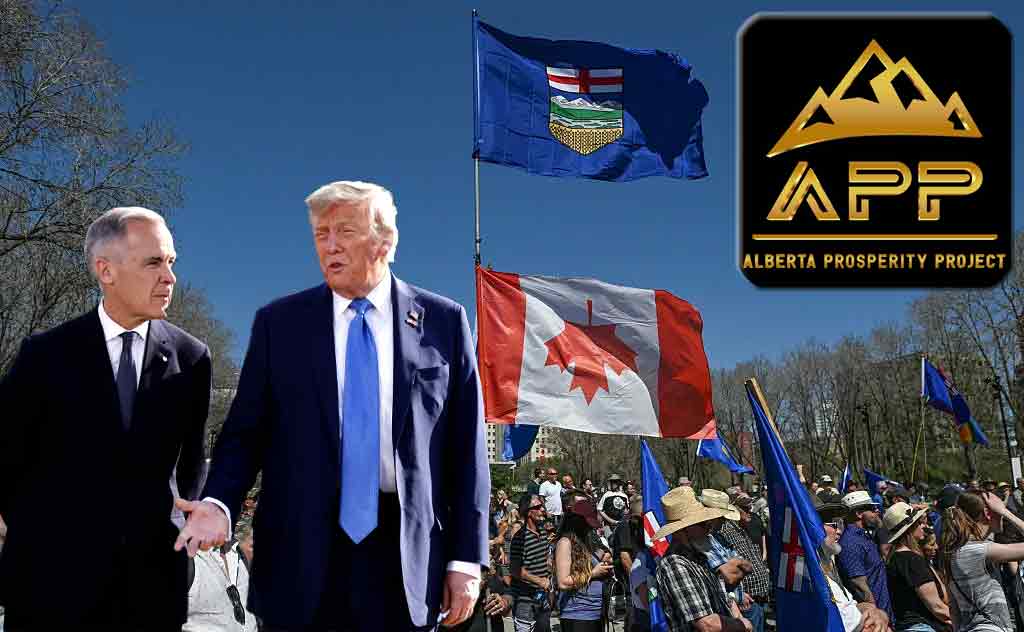

As U.S. President Donald Trump continues to express his willingness to make Canada the 51st state of the United States, his government has now started to talk to separatist groups in Canada. As per reports, leaders of the Alberta Prosperity Project (APP), who want to make Alberta province an independent nation, had multiple meetings with Trump officials in Washington, DC. Canadian Prime Minister Mark Carney and other leaders of the country have objected to these meetings.
PM Carney has urged the United States to respect Canada’s sovereignty following reports of the secret meetings. Speaking at a press conference after a gathering of provincial premiers, Carney stated, “I expect the US administration to respect Canadian sovereignty. I’m always clear in my conversations with President Trump to that effect.”
He said that discussions about separatist movements in Alberta or Quebec did not arise in his direct talks with President Donald Trump, but he echoed sentiments from Alberta Premier Danielle Smith, supporting her call for non-interference. British Columbia Premier David Eby condemned the American action, labelling the separatists’ outreach to US officials as “treason”. Ahead of the premiers’ meeting in Ottawa, Eby remarked, “To go to a foreign country and to ask for assistance in breaking up Canada, there’s an old-fashioned word for that – and that word is treason.”
He argued that while Canadians have the right to express views through referendums, seeking foreign aid to fragment the nation crosses a line, particularly from a US president who has shown little regard for Canadian independence. Eby described the actions as “completely inappropriate” and urged unity against external meddling.
Alberta Premier Danielle Smith, whose province is at the centre of the controversy, distanced herself from the separatist efforts. She affirmed her support for “a strong and sovereign Alberta within a united Canada” and stated, “I would expect that the US administration would respect Canadian sovereignty and that they would confine their discussion about Alberta’s democratic process to Albertans and to Canadians.”
However, Smith noted that polls suggest up to 30% of Albertans feel disillusioned, attributing this to years of federal policies under previous governments. She declined to “demonise” those supporting a referendum, acknowledging their “legitimate grievances” without endorsing separation.
These comments came after a report by the Financial Times said that Trump administration has held three covert meetings with the separatists from Canada’s oil-rich province of Alberta. The Alberta Prosperity Project is planning for another meeting next month to seek a $500 billion credit facility to fund the independent province, if a referendum yet to be announced is passed.
AAP legal counsel Jeff Rath said, “The US is extremely enthusiastic about a free and independent Alberta,” and added that his relationship with Trump admin is much stronger than Carney govt. While White House has confirmed the meetings saying they regularly meet civil society groups, an official denied offering any support for the separatists.

The Alberta separatist movement, sometimes dubbed “Wexit” or Alberta sovereignty, was formed after longstanding grievances over federal resource policies, equalisation payments, and perceived eastern dominance.
The APP promotes “faith, family, and freedom” as core values, and aims for a prosperous Alberta free from Ottawa’s “overreach”. Their key demands include low taxes, robust property rights, full resource ownership, and independence to negotiate trade deals directly. The movement gained momentum after Smith lowered the referendum threshold in 2025, allowing citizen-initiated petitions.
A current petition, led by Mitch Sylvestre and endorsed by the APP, is seeking 177,000 signatures by early May 2026 to trigger a vote on the question: “Do you agree that the province of Alberta shall become a sovereign country and cease to be a province in Canada?”

Organisers are aiming for over one million signatures to demonstrate widespread support, and meetings and rallies are planned at various places. This is unfolding against a backdrop of strained US-Canada relations, with Trump imposing 25% tariffs on Canadian goods and repeatedly talking about annexing Canada as the 51st state. Alberta’s oil wealth makes it a strategic target. While the separatists are aiming for an independent nation, a faction among them favours joining the USA as the 51st state.
Notably, while the Canadian government is now objecting to the Trump administration talking to Alberta separatists, the Canadian government for decades has been supporting Khalistanis who want to break India and form an independent Khalistan state. Former Prime Minister Justin Trudeau even destroyed his country’s diplomatic relationship with India by accusing the Modi government of killing Khalistani terrorist Hardeep Singh Nijjar, who was killed by gunmen in June 2023 in Surrey, British Columbia.
While Trump officials held talks with Albertian separatists in secret meetings, Canadian officials and ministers openly attend Khalistani events in Canada, which are regularly held. The Canadian government continues to support the Khalistanis who openly issue death threats to PM Narendra Modi, other Indian ministers and diplomats, and celebrate the assassination of former PM Indira Gandhi.
After the tariff assaults of Trump, Canadia government has realised the mistake of distancing itself from India, and has started efforts to improve trade relations. And now it is seeing the danger of foreign interference in separatist movements, as it is the target now.