Accounting fraud, fake revenue and more: Who is Rajesh Mehta and why is his company Rajesh Exports under the scanner of SEBI
On the 3rd of June 2026, market regulator Securities and Exchange Board of India (SEBI) issued an interim ex parte order prohibiting Bengaluru-based gems and jewellery firm Rajesh Exports Ltd (REL), its promoter-chairman and managing director Rajesh Mehta, from accessing the securities market. This essentially means that Rajesh Mehta cannot directly or indirectly buy, sell or deal in REL shares, until further orders. 99% of Rajesh Exports Ltd revenues are fictitious: Why SEBI initiated action against the Rajesh Mehta-led gold exporter The SEBI has accused Rajesh Mehta and the REL of massive revenue misstatement or misrepresentation totalling nearly Rs 15.15 lakh crore between FY 2020-21 and FY 2024-25. In simple terms, around 99.8% of REL and subsidiary-attributed revenues of the company’s reported revenue during FY 2020-21 and FY 2024-25 were fake. “From the aforesaid, it is prima facie evident that while REL’s consolidated financial performance is almost entirely (approx. 97%-99%) dependent on its overseas subsidiaries, particularly Valcambi SA, the company has systematically withheld the financial statements of these entities from the public domain. Furthermore, it has failed to provide the necessary underlying data (party-wise details of vendors, customers, etc.) to the Investigating Authority despite repeated summons,” the 109-page SEBI order reads. According to SEBI, Rajesh Exports Ltd failed to provide financial statements of its subsidiaries or step-down subsidiaries, including REL Singapore for FY 2023-24 to FY 2024-25, Bab AL Rayan Jewellery LLC for FY 2020-21 to FY 2024-25, GGR for calendar years 2024 as well as standalone financial statements 2020 to 2024, Valcambi USA Inc for calendar years 2020 to 2024, standalone financial statements of ACC Energy for FY 2022-23 to FY 2024-25. Further, the SEBI order stated that Rajesh Exports Ltd failed to provide the sales register, purchase register, breakup of customer-wise debtors, breakup of vendor-wise creditors, and list of related parties and transactions, all pertaining to REL’s subsidiaries, for the time period under investigation. “By failing to provide the above information, despite multiple emails and summons, REL obstructed the investigation and impaired SEBI’s ability to verify the authenticity of consolidated financial statements, thereby violating Section 11(2)(ia) and 11C(3) of the SEBI Act, 1992. Further, by failing to upload the audited financial statements of its subsidiaries/ step-down subsidiaries on its website, REL violated Regulation 46(2)(s) of the LODR Regulations and Section 136(1) of the Companies Act, 2013,” SEBI stated. What the prima facie findings of the SEBI investigation into Rajesh Exports Ltd revealed The SEBI analysis of the financial records of Rajesh Exports, Valcambi, and other subsidiaries showed that while REL reported revenue in lakhs of crores on a consolidated level, only a small fraction of it was on a standalone basis. In 2020-2021, while REL’s consolidated revenue was Rs 2,58,306 crore, the standalone revenue was merely Rs 2,060 crore. While both consolidated and standalone revenue grew between 2020-2021 and 2025-26, the disparity in both figures also continued. In FY 2025-26, REL’s consolidated revenue stood at Rs 7,78,716 crore, and its standalone revenue was Rs 9,189 crores. REL claimed that this huge difference in consolidated and standalone revenue is because most of their revenue is linked to their foreign-based subsidiaries, including Valcambi SA, which is REL’s core operating entity. The data shows that most of the other REL-linked entities, including GGR, are either holding companies with zero business operations or companies yet to commence operations. Based on the scrutiny of the financial records of the REL and its subsidiaries, SEBI’s prima facie findings indicate that 97%-99% of REL’s consolidated revenues were attributed to overseas subsidiaries and step-down subsidiaries. REL allegedly failed to furnish verifiable records supporting such revenues despite repeated summons. Moreover, SEBI states that REL Singapore and other subsidiaries admittedly had little or no substantive operations. “Valcambi SA, projected as the principal operating entity, disclosed only negligible standalone revenues in its audited financial statements on account of value addition/ processing charges,” SEBI stated. “The inflated unaudited revenues disclosed by GGR at the consolidated level is not supported either by audited standalone financial statements or by underlying transactional records or the concept of accounting,” it added. The market regulator stressed that the issue is not only the unavailability of certain information, but mainly that the revenues disclosed by the REL at the consolidated level appear incapable of independent verification despite repeated regulatory requisitions and opportunities granted over an extended period. “The
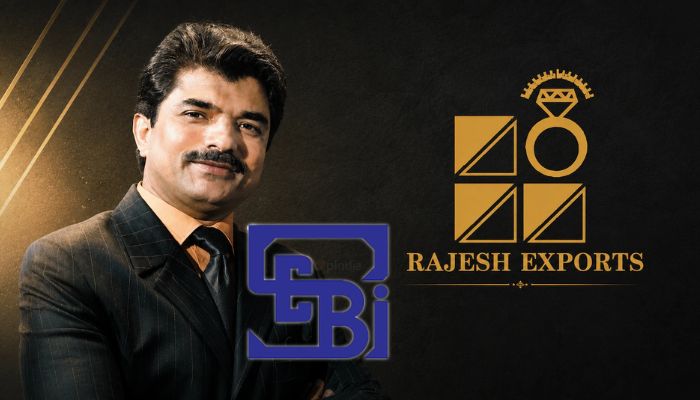
On the 3rd of June 2026, market regulator Securities and Exchange Board of India (SEBI) issued an interim ex parte order prohibiting Bengaluru-based gems and jewellery firm Rajesh Exports Ltd (REL), its promoter-chairman and managing director Rajesh Mehta, from accessing the securities market.
This essentially means that Rajesh Mehta cannot directly or indirectly buy, sell or deal in REL shares, until further orders.
99% of Rajesh Exports Ltd revenues are fictitious: Why SEBI initiated action against the Rajesh Mehta-led gold exporter
The SEBI has accused Rajesh Mehta and the REL of massive revenue misstatement or misrepresentation totalling nearly Rs 15.15 lakh crore between FY 2020-21 and FY 2024-25.
In simple terms, around 99.8% of REL and subsidiary-attributed revenues of the company’s reported revenue during FY 2020-21 and FY 2024-25 were fake.
“From the aforesaid, it is prima facie evident that while REL’s consolidated financial performance is almost entirely (approx. 97%-99%) dependent on its overseas subsidiaries, particularly Valcambi SA, the company has systematically withheld the financial statements of these entities from the public domain. Furthermore, it has failed to provide the necessary underlying data (party-wise details of vendors, customers, etc.) to the Investigating Authority despite repeated summons,” the 109-page SEBI order reads.
According to SEBI, Rajesh Exports Ltd failed to provide financial statements of its subsidiaries or step-down subsidiaries, including REL Singapore for FY 2023-24 to FY 2024-25, Bab AL Rayan Jewellery LLC for FY 2020-21 to FY 2024-25, GGR for calendar years 2024 as well as standalone financial statements 2020 to 2024, Valcambi USA Inc for calendar years 2020 to 2024, standalone financial statements of ACC Energy for FY 2022-23 to FY 2024-25.
Further, the SEBI order stated that Rajesh Exports Ltd failed to provide the sales register, purchase register, breakup of customer-wise debtors, breakup of vendor-wise creditors, and list of related parties and transactions, all pertaining to REL’s subsidiaries, for the time period under investigation.
“By failing to provide the above information, despite multiple emails and summons, REL obstructed the investigation and impaired SEBI’s ability to verify the authenticity of consolidated financial statements, thereby violating Section 11(2)(ia) and 11C(3) of the SEBI Act, 1992. Further, by failing to upload the audited financial statements of its subsidiaries/ step-down subsidiaries on its website, REL violated Regulation 46(2)(s) of the LODR Regulations and Section 136(1) of the Companies Act, 2013,” SEBI stated.
What the prima facie findings of the SEBI investigation into Rajesh Exports Ltd revealed
The SEBI analysis of the financial records of Rajesh Exports, Valcambi, and other subsidiaries showed that while REL reported revenue in lakhs of crores on a consolidated level, only a small fraction of it was on a standalone basis.
In 2020-2021, while REL’s consolidated revenue was Rs 2,58,306 crore, the standalone revenue was merely Rs 2,060 crore. While both consolidated and standalone revenue grew between 2020-2021 and 2025-26, the disparity in both figures also continued. In FY 2025-26, REL’s consolidated revenue stood at Rs 7,78,716 crore, and its standalone revenue was Rs 9,189 crores.
REL claimed that this huge difference in consolidated and standalone revenue is because most of their revenue is linked to their foreign-based subsidiaries, including Valcambi SA, which is REL’s core operating entity. The data shows that most of the other REL-linked entities, including GGR, are either holding companies with zero business operations or companies yet to commence operations.
Based on the scrutiny of the financial records of the REL and its subsidiaries, SEBI’s prima facie findings indicate that 97%-99% of REL’s consolidated revenues were attributed to overseas subsidiaries and step-down subsidiaries.
REL allegedly failed to furnish verifiable records supporting such revenues despite repeated summons.
Moreover, SEBI states that REL Singapore and other subsidiaries admittedly had little or no substantive operations.
“Valcambi SA, projected as the principal operating entity, disclosed only negligible standalone revenues in its audited financial statements on account of value addition/ processing charges,” SEBI stated.
“The inflated unaudited revenues disclosed by GGR at the consolidated level is not supported either by audited standalone financial statements or by underlying transactional records or the concept of accounting,” it added.
The market regulator stressed that the issue is not only the unavailability of certain information, but mainly that the revenues disclosed by the REL at the consolidated level appear incapable of independent verification despite repeated regulatory requisitions and opportunities granted over an extended period.
“The failure of REL to furnish transaction-level records, customer details, vendor confirmations, invoices, inventory trails, or other primary evidentiary material, coupled with the negligible standalone revenues disclosed by only the overseas operating entity and the absence of demonstrable substantive operations by others, renders the consolidated revenue figures of REL commercially implausible,” the SEBI order stated.
The SEBI investigation revealed that REL has prima facie misrepresented approximately 15,15,385 crores, representing 99.80% of its revenues, which are attributed to subsidiaries during the period FY 2020-21 to FY 2024-25.
“The aforesaid conduct appears to have prima facie enabled REL to portray an inflated and misleading picture of its operational scale, consolidated financial position and financial health before investors and the securities market,” SEBI stated.
Besides revenue inflation, the SEBI investigation also delved into the alleged non-genuine transactions linked to REL. The gold retailer reported sales of Rs 11,487 crore and purchases of Rs 11,488 crore with Affluence Shares and Stocks Pvt Ltd. This company, however, denied having any client relationship with REL and claimed that it dealt with Rajesh Mehta personally.
Allegedly, company funds were routed to Mehta-linked entities and then to his personal accounts. While mirrored in the company books, some funds were used for personal derivative trading without board approval or proper related-party (RPT) disclosures. Some of this money was later returned.
There are many other red flags highlighted in the SEBI order, including a Rs 10,35 crore investment in African gold mining. In this case, there was an apparent lack of proper documentation, valuation reports, and other data pertaining to customer, vendor, and subsidiary financials.
Notably, the investigation into Rajesh Exports was launched in March 2024, after SEBI received a shareholder complaint, which highlighted unusually large trade receivables outstanding for more than two years. Now, SEBI has issued an order barring Rajesh Exports and its managing director, Rajesh Mehta, from accessing the securities market.
While REL denies all the allegations brought against the company, the SEBI action has severely impacted not only Rajesh Exports but also Life Insurance Corporation (LIC). REL’s shares hit the 5% lower circuit on 4th June, trading at around Rs 104. The REL stock has already lost more than 80% in the last three years.
Meanwhile, LIC, which holds 10.8% stakes in REL, worth Rs 334 crore, witnessed its shares dip. As per reports, the broader investor losses since 2023 are around Rs 12,700 crore, impacting 194,000 shareholders.
From having a classic success story to SEBI at his doorstep: Who is Rajesh Mehta?
Born in Bengaluru on 20th June 1964, Rajesh Jaswanth Rai Mehta, is a self-made businessman from a Jain family, originally from Gujarat’s Morbi. Aspiring to become a doctor, Rajesh Mehta attended the National College; however, he did not complete his higher education. Mehta joined his family business and in 1985, he and along with his brother, Prashant Mehta, started a silver trading company from the money borrowed from their other brother, Bipin.
The Mehta brothers bought jewellery in Chennai and sold profitably in Gujarat and South India. Gradually, Rajesh Mehta built a wholesale jewellery business. Mehta popularised ethnic Indian designs across markets and operated Rajesh Art Jewellers for bartering.
In 1989, Rajesh Mehta established Rajesh Exports in a Bengaluru garage with just 10 workers. Reports say that this was India’s first organised gold jewellery manufacturing unit. Rajesh Export’s operations focused mainly on exports to the UAE, UK, Oman, Kuwait, the US, and Europe.
By 1992, Rajesh Exports recorded a turnover of Rs 20 million, which skyrocketed to Rs 1.2 billion by 1998. Rajesh Exports became India’s largest gold jewellery exporter or wholesaler by 1994.
In 1995, Rajesh Exports’ IPO raised Rs 10 crore. The company soon expanded into a full gold value chain, which comprises refining, manufacturing, and retailing. Rajesh Exports operates the Shubh Jewellers retail chain.
According to REL’s website, the firm processes 35% of the gold produced in the world.
Rajesh Exports stunned market experts when it acquired Switzerland-based Valcambi SA in 2015 in an all-cash $400 million transaction. Valcambi was the world’s largest gold refiner at that time. Valcambi, however, faced separate scrutiny post-acquisition allegation linked to alleged processing of ‘dirty gold’ from Dubai. Valcambi was even reported to have quit the Swiss Gold Association amidst the controversy.
Rajesh Exports was once a company ranked in the Fortune 500. It was touted as one of India’s largest listed firms by revenue, although it now turns out that most of the revenue in recent years was allegedly inflated, fake, to be precise.
From Udyog Shree, Jeweller of the Year (Karnataka government), Outstanding Businessman (China), to being enlisted among Forbes’s India’s richest 2017 list, Rajesh Mehta won many awards throughout his career. Rajesh Exports received government schemes and was among the awardees of Rs 18,100 crore PLI scheme for Advanced Chemistry Cell battery storage in 2022.
While Rajesh Exports came under SEBI scanner in 2024, many analysts and investors have been voicing suspicions about the extraordinarily high revenues, cash balances, and subsidiary opacity. Some even compared the story of Rajesh Exports to the Geetanjali Gems collapse, a major jewellery export scam.