A masterclass in power games: How Iran outplayed the United States in Switzerland
On the morning of June 21, 2026, the air above Lake Lucerne was fresh and chill. The arrival of high-ranking officials at the Müngenstock Resort was watched closely by the world. Qatar is the owner of this marvellous, luxury hotel in Switzerland, which is typically a peaceful spot for elite travellers to relax and unwind. However, it was the epicentre of global political unrest on this particular day. The Lake Lucerne Summit was the official name of this occasion, and it was supposed to mark the beginning of a new chapter; rather, it turned into a stage for drama. The atmosphere in the resort’s quiet hallways was heavy with pressure. Iran and the United States were having technical discussions. They wanted to execute a new agreement, a Memorandum of Understanding, or MoU, is the name given to this structure. The current conflict throughout West Asia, particularly in Lebanon, needs to be put to rest by the two parties. They also had to talk about really challenging issues, such as the safety of ships in the Strait of Hormuz, a small body of water where a significant portion of the world’s oil passes through, discuss selling oil, and lastly, they had to talk about Iran’s ‘frozen assets.’ Iran legitimately owns these billions of dollars, but the US had frozen them up in foreign institutions so Iran couldn’t access them. The most powerful individuals were assigned to the Swiss highlands to address these significant issues. Vice President JD Vance led the U.S. team while Foreign Minister Abbas Araghchi and Parliament Speaker Mohammad Bagher Ghalibaf led the Iranian delegation. Additionally, mediators were there to facilitate communication between the two adversaries. Shehbaz Sharif, the prime minister of Pakistan, and representatives from Qatar were among these mediators. When they arrived, the Americans hoped for a successful meeting. They wished to demonstrate to the world that they were moving forward. To be honest, though, the Iranian delegation’s conduct in Switzerland was a master class in diplomatic and psychological manipulation. The power of refusing a picture Small actions can have a major impact in geopolitics. Among the most crucial activities is the ‘photo op.’ Leaders stand next to each other, gaze at the reporters, smile, and shake hands at a scheduled photo session. This clear and simple image conveys a narrative to the public of working together, and making peace. These images are a major tool used by American politicians to demonstrate to supporters back home that they are capable leaders who can solve global issues. New footage captures the moment the Iranian delegation supposedly left the negotiation venue in Switzerland in "protest" over President Trump's threatsVP JD Vance proceeds to speak with Pakistani PM Shehbaz Sharif following the Iranians' exit. https://t.co/uGBtsyEnMp pic.twitter.com/l3nad3FSxz— The Kobeissi Letter (@KobeissiLetter) June 21, 2026 However, the Iranian delegation showed up on their own terms. They refused to provide the Americans with what they knew they wanted. The Iranians refused to enter the main room while the journalists were still inside, when the meeting was about to start. The Americans were forced to wait. They vehemently declined to participate in any kind of group photo with the United States. Even the tiniest, most fundamental symbolic gesture, a handshake, was refused by them. Then Foreign Minister Abbas Araghchi took a shrewd, well-thought-out step. He approached Shehbaz Sharif, the prime minister of Pakistan, and greeted him warmly. However, Araghchi avoided all contact with JD Vance, the vice president. Iran delivered a clear signal by embracing the mediator while disregarding the US Vice President. They claimed that while they appreciate their fellow neighbours, they don’t require American approval. This rigid refusal to shake hands immediately created a tense atmosphere, as reported live by DW News. The Iranians radiated complete confidence, revealing the Americans’ desperate need for a public win. A short meeting and a dramatic exit The confidential talks started when the media were eventually cleared out from the room. However, they were short lived with around eighty minutes being spent on the first round of talks. The meeting did not end due to a disagreement at the table but because of a threatening message received from across the ocean caused it to end. Donald Trump made a direct threat on his social media site, Truth Social, back home in the United States. The violence in West Asia infuriated him. If Iran would not immediately cease its friends from fighting in Lebanon, he added, the United States would ‘strike Iran very hard again…only harder!!’ Historically, a loud threat from an American leader could have caused a weaker country to panic. A weaker delegation could have pleaded with the Americans to agree to refrain from attacking. The Iranians, however, remained calm and persisted in making their
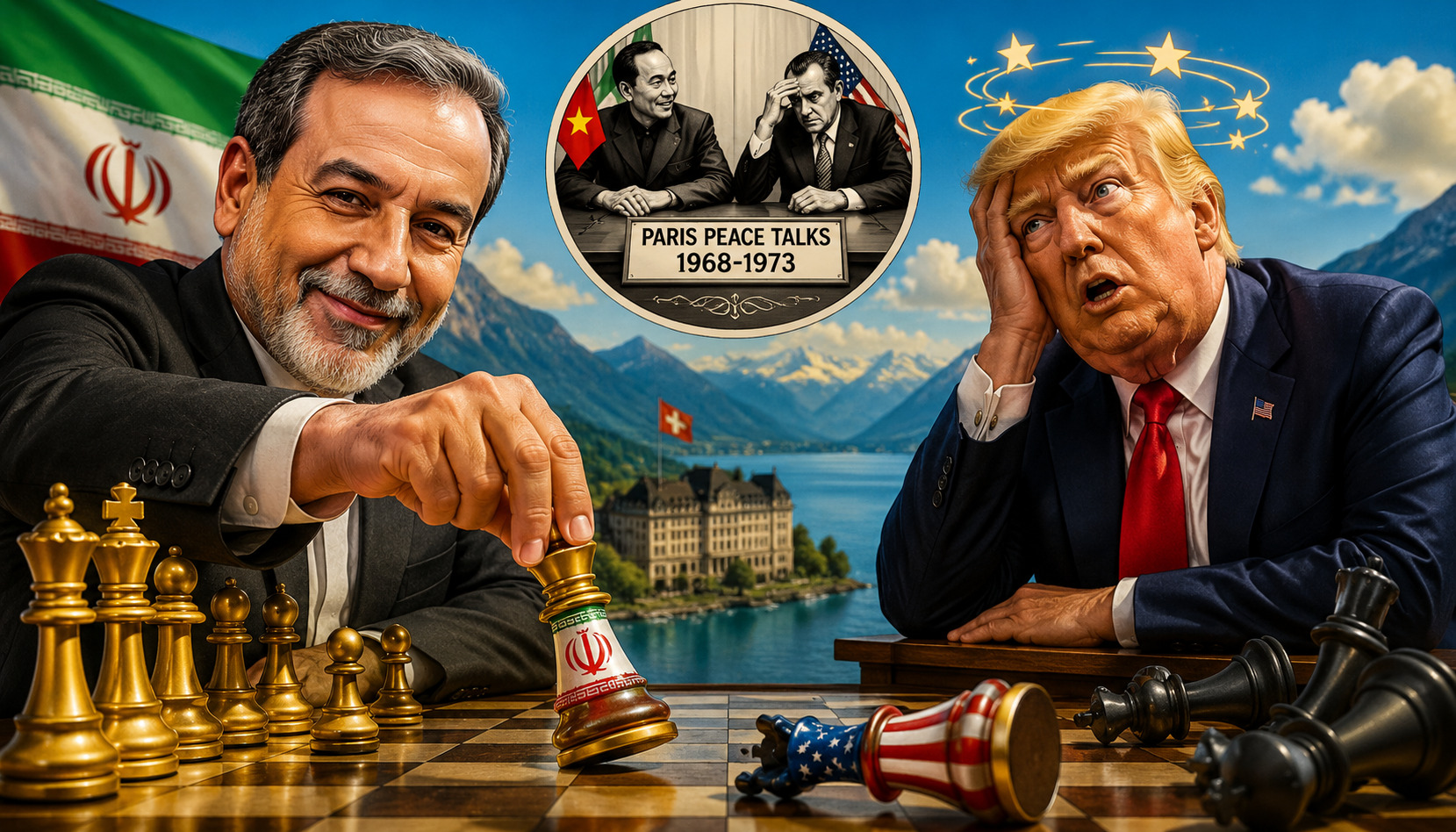
On the morning of June 21, 2026, the air above Lake Lucerne was fresh and chill. The arrival of high-ranking officials at the Müngenstock Resort was watched closely by the world. Qatar is the owner of this marvellous, luxury hotel in Switzerland, which is typically a peaceful spot for elite travellers to relax and unwind. However, it was the epicentre of global political unrest on this particular day. The Lake Lucerne Summit was the official name of this occasion, and it was supposed to mark the beginning of a new chapter; rather, it turned into a stage for drama.
The atmosphere in the resort’s quiet hallways was heavy with pressure. Iran and the United States were having technical discussions. They wanted to execute a new agreement, a Memorandum of Understanding, or MoU, is the name given to this structure. The current conflict throughout West Asia, particularly in Lebanon, needs to be put to rest by the two parties. They also had to talk about really challenging issues, such as the safety of ships in the Strait of Hormuz, a small body of water where a significant portion of the world’s oil passes through, discuss selling oil, and lastly, they had to talk about Iran’s ‘frozen assets.’ Iran legitimately owns these billions of dollars, but the US had frozen them up in foreign institutions so Iran couldn’t access them.
The most powerful individuals were assigned to the Swiss highlands to address these significant issues. Vice President JD Vance led the U.S. team while Foreign Minister Abbas Araghchi and Parliament Speaker Mohammad Bagher Ghalibaf led the Iranian delegation. Additionally, mediators were there to facilitate communication between the two adversaries. Shehbaz Sharif, the prime minister of Pakistan, and representatives from Qatar were among these mediators. When they arrived, the Americans hoped for a successful meeting. They wished to demonstrate to the world that they were moving forward.
To be honest, though, the Iranian delegation’s conduct in Switzerland was a master class in diplomatic and psychological manipulation.
The power of refusing a picture
Small actions can have a major impact in geopolitics. Among the most crucial activities is the ‘photo op.’ Leaders stand next to each other, gaze at the reporters, smile, and shake hands at a scheduled photo session. This clear and simple image conveys a narrative to the public of working together, and making peace. These images are a major tool used by American politicians to demonstrate to supporters back home that they are capable leaders who can solve global issues.
New footage captures the moment the Iranian delegation supposedly left the negotiation venue in Switzerland in "protest" over President Trump's threatsVP JD Vance proceeds to speak with Pakistani PM Shehbaz Sharif following the Iranians' exit. https://t.co/uGBtsyEnMp pic.twitter.com/l3nad3FSxz— The Kobeissi Letter (@KobeissiLetter) June 21, 2026
However, the Iranian delegation showed up on their own terms. They refused to provide the Americans with what they knew they wanted. The Iranians refused to enter the main room while the journalists were still inside, when the meeting was about to start. The Americans were forced to wait. They vehemently declined to participate in any kind of group photo with the United States. Even the tiniest, most fundamental symbolic gesture, a handshake, was refused by them.
Then Foreign Minister Abbas Araghchi took a shrewd, well-thought-out step. He approached Shehbaz Sharif, the prime minister of Pakistan, and greeted him warmly. However, Araghchi avoided all contact with JD Vance, the vice president. Iran delivered a clear signal by embracing the mediator while disregarding the US Vice President. They claimed that while they appreciate their fellow neighbours, they don’t require American approval. This rigid refusal to shake hands immediately created a tense atmosphere, as reported live by DW News. The Iranians radiated complete confidence, revealing the Americans’ desperate need for a public win.
A short meeting and a dramatic exit
The confidential talks started when the media were eventually cleared out from the room. However, they were short lived with around eighty minutes being spent on the first round of talks. The meeting did not end due to a disagreement at the table but because of a threatening message received from across the ocean caused it to end.
Donald Trump made a direct threat on his social media site, Truth Social, back home in the United States. The violence in West Asia infuriated him. If Iran would not immediately cease its friends from fighting in Lebanon, he added, the United States would ‘strike Iran very hard again…only harder!!’
Historically, a loud threat from an American leader could have caused a weaker country to panic. A weaker delegation could have pleaded with the Americans to agree to refrain from attacking. The Iranians, however, remained calm and persisted in making their demands. The Iranian delegation got up as Donald Trump started making his customary threats. After gathering their papers, they turned around and left the venue immediately.
This abrupt and forceful exit was covered in great detail by Channel News Asia. It wasn’t an emotional blunder to leave. It was a clever tactic. Reports from news organisations like Al Jazeera and Reuters later in the day stated that some private, quiet talks did go on through mediators, but the outside public no longer cared about the private discussions. Iran’s categorical rejection of American symbolism and its dramatic walkout dominated public optics, or how the event appeared to a worldwide audience.
A lesson from history: Winning the waiting game
We must examine the past in order to fully understand what Iran did at the Lake Lucerne Summit. This is not the first time a tiny country has outwitted a mighty superpower by employing cunning psychology.
The Paris Peace Talks from 1968 to 1973 used the exact same tactic. The US was attempting to put an end to the Vietnam War at this time. The North Vietnamese delegation was aware of the might and wealth of the US military. They therefore made the decision to use symbols, patience, and time to combat the Americans. According to Britannica’s historical account of the Paris Peace Accords, a controversial 10-week dispute over the actual design of the negotiating table caused the negotiations to stall. Is it supposed to be round or is it supposed to be square?
Paris Peace Talks: Vietnam war
A round table was demanded by North Vietnam and the Viet Cong to represent equal standing with South Vietnam and the United States. However, the United States and South Vietnam favoured a rectangular table because they thought it would better fit their delegates and represent their position. The actual negotiations were significantly delayed as a result of this dispute over protocol and symbolism. In the end, an oval shaped table with double tiers was employed, with a smaller round table in the middle for face to face conversations. This permitted both sides to maintain their stances on representation while the peace discussions could continue.
The North Vietnamese caused the Americans to wait for months by intentionally disagreeing over these insignificant, annoying matters.
The North Vietnamese maintained their high standards of discipline and composure throughout. Threats and pressure from the United States did not intimidate them and resisted being pressed. They were aware of a diplomatic secret. They were aware that the psychological balance may be shifted by controlling the timing and tiny gestures. You can make a far more powerful superpower appear weak, worn out, and desperate.
The Iranian delegation adopted a similar strategy in Switzerland. The most striking feature is their excellent awareness of symbols and strategy. They were aware that holding Vice President Vance back was a tactic and were also aware that it was a weapon to refuse a basic handshake. Iran was careful in every action, with each and every gesture being intentional.
The shifting balance of West Asia
It was like watching an intense chess match as the events at the Müngenstock Resort unfolded. The Iranian leaders appeared to be a few moves ahead of their opponents. It was obvious that the American delegation was having difficulty keeping up with them. The United States was eager for a speedy deal and a happy shot when they arrived at the table. They wished to appear powerful. Rather, the Iranian leaders left on their own terms, leaving them to sit in an empty room and read a furious social media post.
The world can now simply perceive the dramatic contrast that resulted from the Lake Lucerne Summit. Iran demonstrated that it is calm, well-behaved, and completely in charge of its own destiny. The US and Pakistan, on the other hand, seemed to be very reactive and easily outwitted. Instead of taking the lead, both appeared to be responding to typical events.
The days when Washington could compel other countries to submit with a single threat are officially finished. The Iranian delegation gained a significant psychological win by refusing to play a game they did not invent, maintaining their pride, and standing their ground. It is increasingly difficult to deny that Iran has emerged as one of the Middle East’s most important and dominant power.