2026: When the Western-dominated world order begins to crumble under India’s leadership
When countries on the periphery begin to speak the language of the centre, the global balance of power shifts. 2026 is the year when India will assume the presidency of BRICS (an intergovernmental organisation comprising ten countries: Brazil, China, Egypt, Ethiopia, India, Indonesia, Iran, Russia, South Africa and the United Arab Emirates) from 1st January. Formally, India will hold this responsibility for one year, that is, until December 31, 2026. However, it would be reductionist to see this as a mere calendar-based responsibility. India’s presidency is not just a routine diplomatic exercise; it marks a civilizational and geopolitical leadership shift. India is assuming this responsibility at a time when it is no longer a bystander in the global power game, but is in a position to write the rules. The time is gone when the Western media derided BRICS as a “loose club.” It is no longer limited to Brazil, Russia, India, China, and South Africa. The entry of countries like Saudi Arabia, the UAE, Iran, and Egypt has positioned it as an alternative to the petro-dollar system. The group produced approximately 42 per cent of the world’s oil in 2024. Today, BRICS contributes nearly 40 per cent to global GDP, which is significantly more than the Western elite club, the G-7. The BRICS group accommodates more than half the world’s population. It plays a decisive role on four fronts: energy, raw materials, manufacturing, and consumer markets. In addition to that, the BRICS countries hold 20 per cent of the world’s gold reserves. India: The Pivot Between the Poles At this historic juncture, India, which is set to assume leadership of BRICS, represents no single faction. This is the greatest strength of the country. India is a trusted strategic partner of Russia. It has deep economic and technological ties with the United States. It is both a competitor to China and a force to be reckoned with. Above all, India in present times is the natural voice of the Global South. Source: OpIndia Hindi For a long time, the West viewed India as a ‘soft state,’ a poor country, disorganised, and dependent on global aid. But over the past decade, under Prime Minister Narendra Modi’s leadership, India has completely shattered this myth. Today’s India is self-reliant. It has a world-class digital public infrastructure. It has earned global trust through vaccine diplomacy. At the G20, it placed the Global South at the centre, and now that vision is extending to BRICS. This is, in effect, the global expansion of Indian nationalism. India’s nationalism is no longer confined to borders. It is an assertion of civilizational leadership. The biggest blow to Western dominance This isn’t just India’s story. Countries outside the centre of the global order are now asking: why should Washington dictate their policies? Why should their culture be labelled regressive? Why should their sovereignty remain confined to IMF files? Under the leadership of PM Narendra Modi, India stands as the answer to these questions – without bowing down, without asking for Western certification. The West knows that without India, BRICS can neither expand nor gain credibility. China’s global image is aggressive. It is accused of trapping many countries in debt through the Belt and Road Initiative (BRI). It is viewed with suspicion in South Asia and the Indo-Pacific. Source: OpIndia Hindi The dollar is inevitably crumbling The West doesn’t fear any military force. It fears the emergence of alternatives to the dollar. Trade in local currencies, alternative payment mechanisms, and a shift away from the dollar in energy transactions – all of these are weakening the very system on which American power rests. Remember, America’s strength comes not from its military, but from the necessity of the dollar. BRICS, under India’s leadership, will accelerate the process of eliminating that necessity. In August of this year, India took a historic step toward challenging the dominance of the US dollar (USD) by issuing an official circular allowing BRICS countries to conduct 100% of their trade in Indian rupees. Source: OpIndia Hindi 2026: Not just India’s BRICS chairmanship, but also a year of direction-setting 2026 is not just the year of India’s BRICS presidency. It is a time when the US will be grappling with internal polarisation, Europe will be facing energy and demographic crises, and the Global South will have decisively questioned the Western model. Against this backdrop, if India establishes BRICS as a common platform for development, sovereignty, and multipolarity, America’s “we make the rules” monopoly will automatically weaken. This is not anti-Americanism, but rather the process of dismantling the US-centric world order. Today, India neither offers explanations, nor demands certifications, nor relies on the narrative of borrowing. The BRICS presidency will provide India with the opportunity to demonstrate t
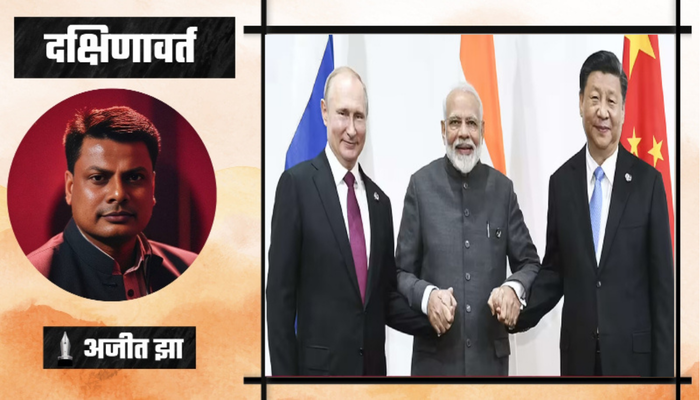

When countries on the periphery begin to speak the language of the centre, the global balance of power shifts. 2026 is the year when India will assume the presidency of BRICS (an intergovernmental organisation comprising ten countries: Brazil, China, Egypt, Ethiopia, India, Indonesia, Iran, Russia, South Africa and the United Arab Emirates) from 1st January.
Formally, India will hold this responsibility for one year, that is, until December 31, 2026. However, it would be reductionist to see this as a mere calendar-based responsibility. India’s presidency is not just a routine diplomatic exercise; it marks a civilizational and geopolitical leadership shift. India is assuming this responsibility at a time when it is no longer a bystander in the global power game, but is in a position to write the rules.
The time is gone when the Western media derided BRICS as a “loose club.” It is no longer limited to Brazil, Russia, India, China, and South Africa. The entry of countries like Saudi Arabia, the UAE, Iran, and Egypt has positioned it as an alternative to the petro-dollar system. The group produced approximately 42 per cent of the world’s oil in 2024.
Today, BRICS contributes nearly 40 per cent to global GDP, which is significantly more than the Western elite club, the G-7. The BRICS group accommodates more than half the world’s population. It plays a decisive role on four fronts: energy, raw materials, manufacturing, and consumer markets. In addition to that, the BRICS countries hold 20 per cent of the world’s gold reserves.
India: The Pivot Between the Poles
At this historic juncture, India, which is set to assume leadership of BRICS, represents no single faction. This is the greatest strength of the country. India is a trusted strategic partner of Russia. It has deep economic and technological ties with the United States. It is both a competitor to China and a force to be reckoned with. Above all, India in present times is the natural voice of the Global South.

For a long time, the West viewed India as a ‘soft state,’ a poor country, disorganised, and dependent on global aid. But over the past decade, under Prime Minister Narendra Modi’s leadership, India has completely shattered this myth.
Today’s India is self-reliant. It has a world-class digital public infrastructure. It has earned global trust through vaccine diplomacy. At the G20, it placed the Global South at the centre, and now that vision is extending to BRICS.
This is, in effect, the global expansion of Indian nationalism. India’s nationalism is no longer confined to borders. It is an assertion of civilizational leadership.
The biggest blow to Western dominance
This isn’t just India’s story. Countries outside the centre of the global order are now asking: why should Washington dictate their policies? Why should their culture be labelled regressive? Why should their sovereignty remain confined to IMF files?
Under the leadership of PM Narendra Modi, India stands as the answer to these questions – without bowing down, without asking for Western certification.
The West knows that without India, BRICS can neither expand nor gain credibility. China’s global image is aggressive. It is accused of trapping many countries in debt through the Belt and Road Initiative (BRI). It is viewed with suspicion in South Asia and the Indo-Pacific.

The dollar is inevitably crumbling
The West doesn’t fear any military force. It fears the emergence of alternatives to the dollar. Trade in local currencies, alternative payment mechanisms, and a shift away from the dollar in energy transactions – all of these are weakening the very system on which American power rests.
Remember, America’s strength comes not from its military, but from the necessity of the dollar. BRICS, under India’s leadership, will accelerate the process of eliminating that necessity. In August of this year, India took a historic step toward challenging the dominance of the US dollar (USD) by issuing an official circular allowing BRICS countries to conduct 100% of their trade in Indian rupees.

2026: Not just India’s BRICS chairmanship, but also a year of direction-setting
2026 is not just the year of India’s BRICS presidency. It is a time when the US will be grappling with internal polarisation, Europe will be facing energy and demographic crises, and the Global South will have decisively questioned the Western model.
Against this backdrop, if India establishes BRICS as a common platform for development, sovereignty, and multipolarity, America’s “we make the rules” monopoly will automatically weaken. This is not anti-Americanism, but rather the process of dismantling the US-centric world order.
Today, India neither offers explanations, nor demands certifications, nor relies on the narrative of borrowing. The BRICS presidency will provide India with the opportunity to demonstrate to developing nations that the path to modernity lies not in imitating the West, but in advancing on its own terms.
India is no longer an emerging power, but is moving towards becoming a determining power
India will chair BRICS in 2026, but the real question isn’t how many summits it will host. The real question is: will India guide global discourse? Will it legitimise alternatives to the dollar? Will it be able to balance China’s aggression and Western arrogance?
The answer lies in India’s global rise under the leadership of Narendra Modi. It suggests that India is no longer a rising power, but a determining power. This fact is making the world’s old rulers uneasy.
After 2026, the question will no longer be whether the West will fall; it will be whether the West can rise. The question will be: how gracefully will it accept this decline? India stands at a turning point in history, where nationalism appears to stand alongside humanity for the first time. This is India’s rise. This is the meaning of BRICS.
This truth may seem uncomfortable to the narrative of Western dominance created by left-liberal discourse, but this is the truth of 2026.
(This article is the translation of the original article published on OpIndia Hindi.)