100 years of CPI: Communists of India should introspect, what has their imported ideology given this country apart from chaos, violence and hollow grandstanding
As the Communist Party of India completes 100 years, its leaders and sympathisers are marking the occasion with celebration and nostalgia. However, Centenaries are not meant only for remembrance as they are moments for serious evaluation. Political movements do not earn relevance by age alone, they earn it by outcomes. Over the past century, Indian Communism has presented itself as the voice of the underprivileged, workers and peasants. It has claimed itself as a long-term remedy for Indian democracy and morally superior to the other political traditions. Yet, despite this self-image, the communist movement today stands electorally diminished, ideologically rigid, and increasingly disconnected from India’s social and economic realities. This brings up an inevitable question that cannot be dismissed with catchphrases or romanticism about the past: Did Indian Communism actually serve India or did it ultimately damage the nation’s political, economic and social fabric? This article attempts to answer that question not through rhetoric or ideological prejudice, but through historical record, political conduct, and measurable outcomes. Because after 100 years, an ideology deserves neither automatic reverence nor automatic rejection but it deserves an honest audit. Domain of Communism: Not Indian, Never Indigenous Communism did not rise from Indian social, cultural, or economic realities. It was a European ideological product born of the specific conditions of 19th-century Europe. It was rapid industrialisation, factory labour, and sharp class divisions between capital owners and industrial workers. The theory was developed by Karl Marx, who analysed European capitalism, and later it was adopted by Vladimir Lenin, who advocated a tightly controlled, vanguard-led revolution to seize state power. Both thinkers operated in homogeneous, industrial societies, where economic class was the primary social identity. Their framework assumed: A clear oppressor–oppressed binary A violent rupture as the path to justice Centralised control as the solution to inequality India, however, was never structured this way. Indian society is civilisational, plural, and layered. It is shaped by community, region, faith, language, and tradition, not just economic class. Historically, social change in India occurred through reform movements, accommodation, and gradual evolution rather than the destruction of existing structures. That fundamental mismatch explains why Communism struggled to gain deep societal acceptance in India. An ideology built on rigid binaries could not sustain itself in a civilisation that thrives on plurality, negotiation, and continuity. Indian society is civilisational and plural, but Communism is rigid and binary. This contradiction lies at the heart of Communism’s long-term irrelevance in India. Ideology Above Nation: Quit India movement and the China War In addition to failing to produce results, Indian Communism is accused of prioritising ideology over the national interest. There are two noteworthy examples of this contradiction. The Quit India Movement (1942): When CPI stood apart from the nation In August 1942, India witnessed one of the most decisive mass uprisings against British rule, the Quit India movement. It was led by Mahatma Gandhi and embraced across regions, communities, and political traditions. But the Communist Party of India chose to oppose the movement. The CPI was officially opposed to the Quit India movement, and the reason might shock you: it was not strategic but an ideological alignment. At that time, the Soviet Union had entered the Second World War on the Allied side following Nazi Germany’s invasion. Since Britain was now an ally of the USSR, CPI categorised the war as a “people’s war” against fascism and instructed its cadres to avoid disrupting the British war effort. It discourages strikes and protests against the British. In several cases, Communist functionaries cooperated with colonial authorities. While millions of Indians faced arrests, firing, and imprisonment, CPI stood aside not because India was unready for freedom, but because Moscow’s priorities demanded restraint. The 1962 China War: Silence, confusion, and ideological sympathy A similar pattern re-emerged two decades later during the Sino-Indian War, when Chinese forces crossed Indian borders in Ladakh and Arunachal Pradesh. At a moment of national crisis, India expected political unity and moral clarity. Instead, large sections of the Communist movement displayed ambiguity and ideological sympathy towards China. It led eventually to a split in the CPI, with the pro-Chinese faction leaving the parent party to form the Communist Party of India (Marxist). Ideological dislocation, however, was only one dimension of Indian Communism’s failure. More damaging was the manner in which sections of the Communist movement gradually abandoned democratic politics altoget
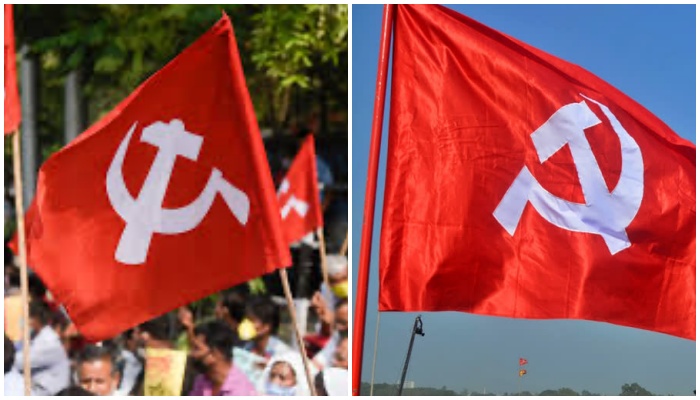

As the Communist Party of India completes 100 years, its leaders and sympathisers are marking the occasion with celebration and nostalgia. However, Centenaries are not meant only for remembrance as they are moments for serious evaluation. Political movements do not earn relevance by age alone, they earn it by outcomes.
Over the past century, Indian Communism has presented itself as the voice of the underprivileged, workers and peasants. It has claimed itself as a long-term remedy for Indian democracy and morally superior to the other political traditions. Yet, despite this self-image, the communist movement today stands electorally diminished, ideologically rigid, and increasingly disconnected from India’s social and economic realities.
This brings up an inevitable question that cannot be dismissed with catchphrases or romanticism about the past:
Did Indian Communism actually serve India or did it ultimately damage the nation’s political, economic and social fabric?
This article attempts to answer that question not through rhetoric or ideological prejudice, but through historical record, political conduct, and measurable outcomes. Because after 100 years, an ideology deserves neither automatic reverence nor automatic rejection but it deserves an honest audit.
Domain of Communism: Not Indian, Never Indigenous
Communism did not rise from Indian social, cultural, or economic realities. It was a European ideological product born of the specific conditions of 19th-century Europe. It was rapid industrialisation, factory labour, and sharp class divisions between capital owners and industrial workers. The theory was developed by Karl Marx, who analysed European capitalism, and later it was adopted by Vladimir Lenin, who advocated a tightly controlled, vanguard-led revolution to seize state power.
Both thinkers operated in homogeneous, industrial societies, where economic class was the primary social identity. Their framework assumed:
A clear oppressor–oppressed binary
A violent rupture as the path to justice
Centralised control as the solution to inequality
India, however, was never structured this way. Indian society is civilisational, plural, and layered. It is shaped by community, region, faith, language, and tradition, not just economic class. Historically, social change in India occurred through reform movements, accommodation, and gradual evolution rather than the destruction of existing structures. That fundamental mismatch explains why Communism struggled to gain deep societal acceptance in India. An ideology built on rigid binaries could not sustain itself in a civilisation that thrives on plurality, negotiation, and continuity. Indian society is civilisational and plural, but Communism is rigid and binary. This contradiction lies at the heart of Communism’s long-term irrelevance in India.
Ideology Above Nation: Quit India movement and the China War
In addition to failing to produce results, Indian Communism is accused of prioritising ideology over the national interest. There are two noteworthy examples of this contradiction.
The Quit India Movement (1942): When CPI stood apart from the nation
In August 1942, India witnessed one of the most decisive mass uprisings against British rule, the Quit India movement. It was led by Mahatma Gandhi and embraced across regions, communities, and political traditions. But the Communist Party of India chose to oppose the movement. The CPI was officially opposed to the Quit India movement, and the reason might shock you: it was not strategic but an ideological alignment. At that time, the Soviet Union had entered the Second World War on the Allied side following Nazi Germany’s invasion. Since Britain was now an ally of the USSR, CPI categorised the war as a “people’s war” against fascism and instructed its cadres to avoid disrupting the British war effort. It discourages strikes and protests against the British. In several cases, Communist functionaries cooperated with colonial authorities. While millions of Indians faced arrests, firing, and imprisonment, CPI stood aside not because India was unready for freedom, but because Moscow’s priorities demanded restraint.
The 1962 China War: Silence, confusion, and ideological sympathy
A similar pattern re-emerged two decades later during the Sino-Indian War, when Chinese forces crossed Indian borders in Ladakh and Arunachal Pradesh. At a moment of national crisis, India expected political unity and moral clarity. Instead, large sections of the Communist movement displayed ambiguity and ideological sympathy towards China. It led eventually to a split in the CPI, with the pro-Chinese faction leaving the parent party to form the Communist Party of India (Marxist).
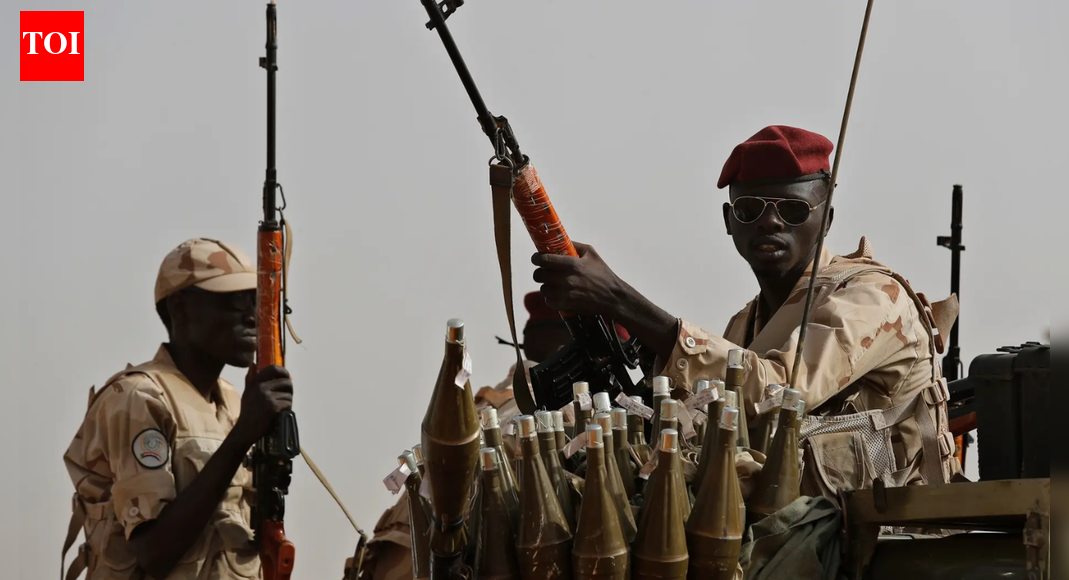
Ideological dislocation, however, was only one dimension of Indian Communism’s failure. More damaging was the manner in which sections of the Communist movement gradually abandoned democratic politics altogether and embraced armed insurgency as a legitimate political tool. From the late 1960s onward, Communist ideology in India did not merely oppose the state, but it actively waged war against it. What followed was not a struggle for workers’ rights but a prolonged campaign of violence marked by assassinations, massacres, destruction of public infrastructure, and systematic intimidation of civilians. The victims were not colonial rulers or capitalist elites but ordinary Indians: tribals, farmers, elected representatives, policemen, and daily-wage workers. To understand the real human cost of Indian Communism, one must examine not slogans or manifestos, but the trail of blood left behind by Communist insurgent violence.
TOP 10 DEADLIEST KILLINGS BY COMMUNIST INSURGENTS IN INDIA
Dantewada Massacre (2010), Chhattisgarh
On 6 April 2010, Maoist cadres of the Communist Party of India (Maoist) carried out a meticulously planned ambush in the Dantewada district of Chhattisgarh, killing 76 personnel of the Central Reserve Police Force. The attack involved the use of landmines followed by heavy automatic gunfire against a patrol returning from a counter-insurgency operation. It remains one of the deadliest assaults on Indian security forces since independence and marked a turning point in the state’s Left Wing Extremism operations.
Jeeram Ghati Massacre (2013), Chhattisgarh
On 25 May 2013, Maoist insurgents ambushed a Congress party convoy in the Jeeram Ghati area of Bastar. It killed 27 people, including senior political leaders. The attack targeted an elected political leadership during a public outreach programme, underscoring the Maoist strategy of eliminating democratic representatives rather than engaging in electoral politics. The incident was widely condemned as an attack on India’s democratic process itself.
Nayagarh Armoury Attack (2008), Odisha
In February 2008, Maoist cadres launched a coordinated night assault on the Nayagarh police armoury in Odisha. Fifteen policemen were killed, weapons were looted, and government infrastructure was destroyed. The operation demonstrated the insurgents’ ability to carry out complex, multi-pronged attacks and significantly strengthened Maoist armed capacity in the region.
Sukma Attack (2017), Chhattisgarh
On 24 April 2017, Maoists ambushed a CRPF patrol in the Chintalnar area of Sukma district, killing 25 security personnel. It involved improvised explosive devices and close-range firing, exploiting difficult terrain and intelligence leaks. It highlighted the Maoist insurgency’s continued operational strength despite years of counterinsurgency measures.
Aranpur IED Attack (2023), Chhattisgarh
In April 2023, Maoist insurgents detonated a pressure IED in Dantewada’s Aranpur area, killing 10 District Reserve Guard personnel and a civilian driver. The attack targeted a vehicle involved in a routine anti-insurgency movement, again reflecting the Maoist practice of using indiscriminate explosives on public roads.
Senari Village Massacre (1999), Bihar
In March 1999, the Maoist Communist Centre (MCC), a predecessor group aligned with later Maoist formations, massacred 34 civilians in Senari village, Bihar. Most victims belonged to economically weaker sections. The killings involved execution-style shootings and were justified by insurgents as part of a class struggle, exposing the gap between Maoist rhetoric and actual victims.
Bara Massacre (1992), Bihar
In February 1992, Maoist militants attacked Bara village in Gaya district, killing 37 civilians. The massacre was one of the earliest large-scale incidents of left-wing extremist violence against unarmed villagers and played a key role in shaping Bihar’s long cycle of retaliatory violence and instability.
Latehar Police Van Blast (2016), Jharkhand
In July 2016, Maoists triggered a landmine explosion in Latehar district, Jharkhand, killing eight police officers travelling in a patrol vehicle. The attack was part of a sustained campaign against routine policing and state presence in rural areas.
Sukma Road-Opening Party Attack (2018), Chhattisgarh
In March 2018, Maoist cadres ambushed a CRPF road-opening party in Sukma district, killing nine security personnel. The attack targeted development-linked security operations, reinforcing the insurgents’ opposition to infrastructure expansion in tribal regions.
Giridih Landmine Blast (2007), Jharkhand
In October 2007, Maoists detonated a landmine under a civilian vehicle in the Giridih district, killing 14 civilians. The incident demonstrated the indiscriminate nature of Maoist violence, where civilians frequently became collateral casualties in attacks aimed at the state.
Conclusion: A Hundred Years, No Redemption
After a century of existence, Indian Communism cannot be judged by intent, theory, or rhetoric. It must be judged by record. That record shows an ideology that arrived from outside India, misunderstood Indian society, subordinated national interest to foreign centres of power, and repeatedly chose ideology over country. When electoral relevance declined, sections of the movement abandoned democracy altogether and turned to violence, leaving behind thousands of dead civilians, security personnel, and shattered communities.
This is not a story of an ideology betrayed by circumstances. It is the story of an ideology that failed because it could not adapt to India’s civilisational reality, political pluralism, or democratic ethos. The centenary of the Communist Party of India is therefore not a moment for celebration, but for reckoning. After 100 years, Indian Communism has not liberated the poor, strengthened democracy, or protected national sovereignty. It has only proven one thing conclusively: an imported ideology that places itself above the nation will ultimately damage both the nation and itself.