Why do older wolf siblings return from hunts to feed and protect newborn pups instead of leaving the pack? A six-year study has the answer
Arctic wolf packs exhibit cooperative pup-rearing behaviors beyond simple family loyalty. Older siblings and other adults actively feed and guard young pups near the den. Food is commonly transferred by regurgitation, ensuring pups receive nourishment from returning hunters. This shared effort helps young wolves survive a vulnerable developmental stage. The study observed wild Arctic wolves over six summers in Canada.
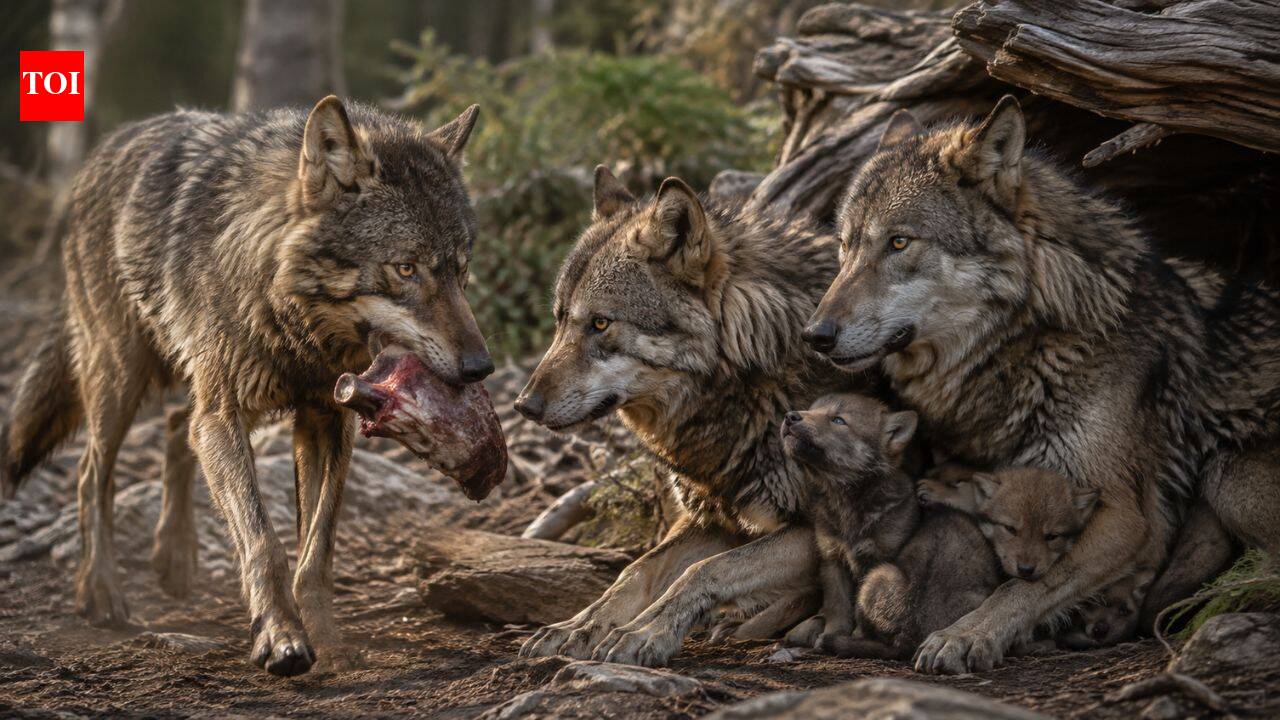
Arctic wolf packs exhibit cooperative pup-rearing behaviors beyond simple family loyalty. Older siblings and other adults actively feed and guard young pups near the den. Food is commonly transferred by regurgitation, ensuring pups receive nourishment from returning hunters. This shared effort helps young wolves survive a vulnerable developmental stage. The study observed wild Arctic wolves over six summers in Canada.