Who is Delcy Rodriguez? Venezuela’s Vice President who has taken charge on Supreme Court’s order after President Maduro’s capture by the US
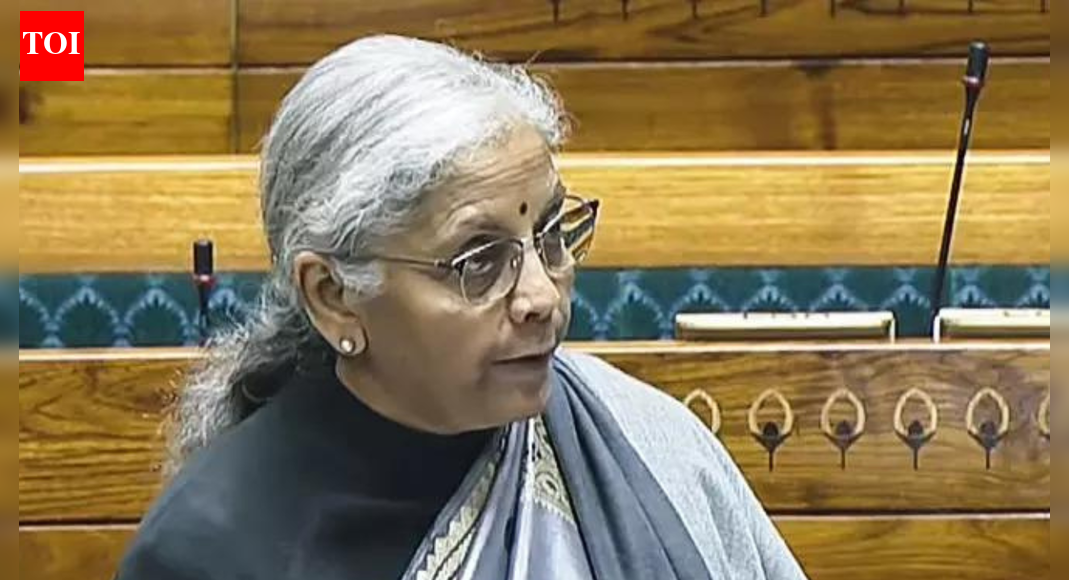
After the armed forces of the United States invaded Venezuela and captured President Nicolás Maduro along with his wife Cilia Flores, the country’s Supreme Court on Saturday ordered Vice President Delcy Rodríguez to assume the role of acting president. The announcement came after U.S. President Donald Trump said that American forces will be in the country and run it till a proper transition can take place. The Supreme Court’s order has come as a setback for the opposition, who were celebrating the capture of the President and hoping to form the government. #BREAKING: Venezuela's Supreme Court has ordered Vice President Delcy Rodríguez to assume the charge of interim President of Venezuela. pic.twitter.com/kFvs93Jfyq— Aditya Raj Kaul (@AdityaRajKaul) January 4, 2026 According to a report by Reuters, in a ruling issued by its Constitutional Chamber, the Supreme Court said Rodriguez would temporarily take charge to ensure the continuity of the Venezuelan state. The court stated that she would assume “the office of President of the Bolivarian Republic of Venezuela, to guarantee administrative continuity and the comprehensive defence of the Nation” during what it described as the “forced absence” of President Maduro. The court added that it would continue deliberations to decide the legal framework required to maintain governance, sovereignty, and national defence in the current situation. The ruling comes at a time of extreme tension between Caracas and Washington, with conflicting claims emerging over who now holds power in Venezuela. The Supreme Court of Venezuela also said that it rejects and condemns the extremely serious military aggression carried out by the United States against the people and territory of Venezuela, as well as the capture of Maduro and his wife. It said that the American action violates the Constitution and laws of Venezuela, as well as international law and the Charter of the United Nations. Who is Delcy Rodríguez? Delcy Rodríguez is one of the most powerful and recognisable figures in Venezuelan politics. Born on 18th May, 1969, in Caracas, Rodríguez is 56 years old and comes from a deeply political and revolutionary family background. She is the daughter of Jorge Antonio Rodriguez, a left-wing guerrilla leader who founded the Liga Socialista party in the 1970s. Her father is remembered by supporters of Venezuela’s socialist movement as a revolutionary figure who fought against what he saw as imperialist influence in Latin America. This legacy played a major role in shaping Delcy Rodriguez’s political worldview from an early age. Rodríguez studied law at the Central University of Venezuela, one of the country’s most prestigious institutions. Trained as an attorney, she entered public life during the rise of the Bolivarian movement and quickly built a reputation as a sharp, outspoken defender of Venezuela’s socialist government. Rapid rise through the political ranks Delcy Rodríguez first gained national prominence when she served as Venezuela’s Minister of Communication and Information between 2013 and 2014, where she was responsible for shaping the government’s media strategy during a period of political unrest. From 2014 to 2017, Rodriguez served as Venezuela’s foreign minister. During this time, she became known internationally for her combative defence of the Maduro government against criticism from the United States, the European Union, and regional blocs. One of the most notable moments of her tenure came in 2017, when she attempted to attend a Mercosur trade bloc meeting in Buenos Aires after Venezuela had been suspended from the group, leading to a diplomatic standoff. In 2017, Maduro appointed Rodriguez as the head of the pro-government Constituent Assembly, a powerful body that effectively sidelined the opposition-led National Assembly. The Constituent Assembly played a key role in expanding Maduro’s powers and reshaping Venezuela’s political institutions, further cementing Rodríguez’s status as one of his most trusted allies. In June 2018, Maduro named Rodriguez vice president. Announcing the appointment on X (formerly Twitter), Maduro described her as “a young woman, brave, seasoned, daughter of a martyr, revolutionary and tested in a thousand battles.” Rodriguez’s key role in Venezuela’s Economy and Oil sector Beyond her political influence, Rodriguez has also been at the centre of Venezuela’s economic decision-making. Over the years, she has simultaneously held the roles of vice president, finance minister, and oil minister, giving her enormous control over the country’s economic direction. In August 2024, Maduro formally added the oil ministry to Rodriguez’s portfolio, tasking her with managing Venezuela’s most critical industry at a time of escalating US sanctions. Oil remains the backbone of Venezuela’s economy, and Rodríguez was responsible for navigating sanctions, maintaining exports, and managing relations with
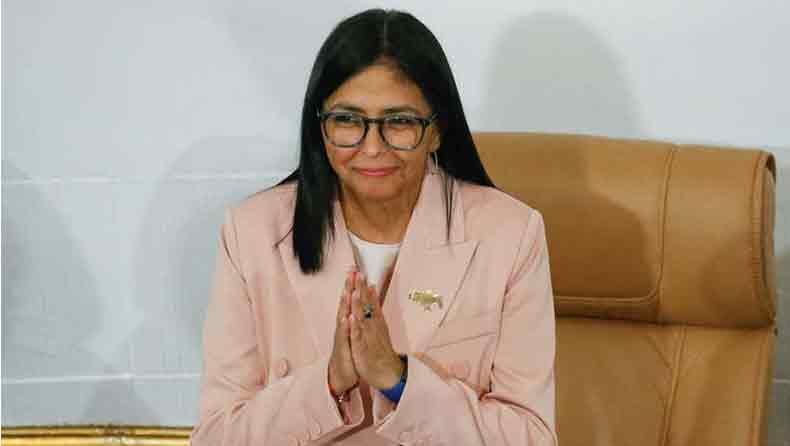

After the armed forces of the United States invaded Venezuela and captured President Nicolás Maduro along with his wife Cilia Flores, the country’s Supreme Court on Saturday ordered Vice President Delcy Rodríguez to assume the role of acting president. The announcement came after U.S. President Donald Trump said that American forces will be in the country and run it till a proper transition can take place.
The Supreme Court’s order has come as a setback for the opposition, who were celebrating the capture of the President and hoping to form the government.
#BREAKING: Venezuela's Supreme Court has ordered Vice President Delcy Rodríguez to assume the charge of interim President of Venezuela. pic.twitter.com/kFvs93Jfyq
— Aditya Raj Kaul (@AdityaRajKaul) January 4, 2026
According to a report by Reuters, in a ruling issued by its Constitutional Chamber, the Supreme Court said Rodriguez would temporarily take charge to ensure the continuity of the Venezuelan state. The court stated that she would assume “the office of President of the Bolivarian Republic of Venezuela, to guarantee administrative continuity and the comprehensive defence of the Nation” during what it described as the “forced absence” of President Maduro.
The court added that it would continue deliberations to decide the legal framework required to maintain governance, sovereignty, and national defence in the current situation. The ruling comes at a time of extreme tension between Caracas and Washington, with conflicting claims emerging over who now holds power in Venezuela.
The Supreme Court of Venezuela also said that it rejects and condemns the extremely serious military aggression carried out by the United States against the people and territory of Venezuela, as well as the capture of Maduro and his wife. It said that the American action violates the Constitution and laws of Venezuela, as well as international law and the Charter of the United Nations.
Who is Delcy Rodríguez?
Delcy Rodríguez is one of the most powerful and recognisable figures in Venezuelan politics. Born on 18th May, 1969, in Caracas, Rodríguez is 56 years old and comes from a deeply political and revolutionary family background.
She is the daughter of Jorge Antonio Rodriguez, a left-wing guerrilla leader who founded the Liga Socialista party in the 1970s. Her father is remembered by supporters of Venezuela’s socialist movement as a revolutionary figure who fought against what he saw as imperialist influence in Latin America. This legacy played a major role in shaping Delcy Rodriguez’s political worldview from an early age.
Rodríguez studied law at the Central University of Venezuela, one of the country’s most prestigious institutions. Trained as an attorney, she entered public life during the rise of the Bolivarian movement and quickly built a reputation as a sharp, outspoken defender of Venezuela’s socialist government.
Rapid rise through the political ranks
Delcy Rodríguez first gained national prominence when she served as Venezuela’s Minister of Communication and Information between 2013 and 2014, where she was responsible for shaping the government’s media strategy during a period of political unrest.
From 2014 to 2017, Rodriguez served as Venezuela’s foreign minister. During this time, she became known internationally for her combative defence of the Maduro government against criticism from the United States, the European Union, and regional blocs. One of the most notable moments of her tenure came in 2017, when she attempted to attend a Mercosur trade bloc meeting in Buenos Aires after Venezuela had been suspended from the group, leading to a diplomatic standoff.
In 2017, Maduro appointed Rodriguez as the head of the pro-government Constituent Assembly, a powerful body that effectively sidelined the opposition-led National Assembly. The Constituent Assembly played a key role in expanding Maduro’s powers and reshaping Venezuela’s political institutions, further cementing Rodríguez’s status as one of his most trusted allies.
In June 2018, Maduro named Rodriguez vice president. Announcing the appointment on X (formerly Twitter), Maduro described her as “a young woman, brave, seasoned, daughter of a martyr, revolutionary and tested in a thousand battles.”
Rodriguez’s key role in Venezuela’s Economy and Oil sector
Beyond her political influence, Rodriguez has also been at the centre of Venezuela’s economic decision-making. Over the years, she has simultaneously held the roles of vice president, finance minister, and oil minister, giving her enormous control over the country’s economic direction.
In August 2024, Maduro formally added the oil ministry to Rodriguez’s portfolio, tasking her with managing Venezuela’s most critical industry at a time of escalating US sanctions. Oil remains the backbone of Venezuela’s economy, and Rodríguez was responsible for navigating sanctions, maintaining exports, and managing relations with both state-owned companies and the struggling private sector.
Interestingly, despite her socialist credentials, Rodriguez has applied relatively orthodox economic policies in recent years in an effort to rein in runaway inflation and stabilise the economy. This approach has earned her influence even among segments of Venezuela’s battered private sector.
She also works closely with her brother, Jorge Rodriguez, who currently heads Venezuela’s National Assembly. Together, the siblings form a powerful political axis at the heart of Maduro’s government.
Trump’s claim: Rodríguez “Sworn in” as President
The situation took a dramatic turn when US President Donald Trump made a series of explosive statements earlier on Saturday, 3rd January. Trump claimed that Delcy Rodriguez had already been “sworn in” as Venezuela’s president and suggested that she was willing to cooperate with Washington.
Trump went even further, declaring that the United States would be “running Venezuela in the immediate future.” His remarks created confusion and sparked international concern, as they appeared to signal a direct challenge to Venezuela’s sovereignty.
These claims were immediately disputed by Venezuelan officials and contradicted by events unfolding in Caracas.
Rodríguez pushes back, demands proof of life for Maduro
Less than two hours after Trump’s comments, Delcy Rodriguez addressed the nation in a televised message broadcast on state television. Speaking from Caracas, despite earlier reports that she was in Russia, Rodríguez made it clear that she rejected the US narrative entirely.
#NOW Venezuelan Vice President Delcy Rodríguez addressed the nation, urging calm and demanding the immediate release of Maduro by the United States pic.twitter.com/4Qr7Pfu2nU
— Conflict Radar (@Conflict_Radar) January 3, 2026
“There is only one president in this country, and his name is Nicolás Maduro Moros,” Rodriguez said firmly. She insisted that Maduro remained Venezuela’s legitimate leader despite his capture by US.
Rodriguez also demanded that the US government provide proof of life for Maduro and his wife, Cilia Flores. Her message, delivered in audio and televised formats, questioned the legality and morality of the US operation.
#BREAKING: Venezuela’s Vice President Delcy Rodríguez demands US free President Maduro and calls him the country’s only rightful leader during speech. Calls his capture a kidnapping. She says, Venezuela is ready to defend itself and natural resources. Appeals for calm. pic.twitter.com/VstU1xM3uQ
— Aditya Raj Kaul (@AdityaRajKaul) January 3, 2026
“What is being done to Venezuela is a barbarity,” she said. “We are determined to be free.”
Accusing the US of regime change agenda
In her address, Rodriguez accused the United States of launching an illegal invasion under false pretences. She said Venezuela had long warned that an aggression was underway and claimed the real objective was regime change.
“We had already warned that the masks had fallen off,” she said. “This aggression seeks regime change in Venezuela, and with it, the seizure of our energy, mineral and natural resources.”
Her remarks directly challenged Trump’s triumphant tone and made clear that Washington’s plans would face serious resistance from Venezuela’s leadership.
A show of unity against US claims
Significantly, Rodriguez delivered her speech alongside members of what she called Venezuela’s National Defence Council. The group included the defence minister, the attorney general, and the heads of the legislature and judiciary.
This unified appearance was a clear signal that Venezuela’s institutions were closing ranks, directly contradicting Trump’s assertion that the United States would soon control the country. Venezuelan state television repeatedly identified Rodríguez as vice president during the broadcast, reinforcing the message that Maduro remained the country’s president.
Both Venezuela’s defence minister and attorney general also publicly criticised Trump and condemned the US military action, calling it a violation of international law.
Trump, however, remained defiant. In a news conference, he warned Venezuelan political and military leaders to comply with US demands, saying that “what happened to Maduro can happen to them.”
Despite this threat, Rodríguez’s swift and forceful response suggested that Maduro’s supporters are not backing down. Her statements made it clear that, in their view, Maduro’s detention does not end his presidency.
As Venezuela enters a volatile new chapter, Delcy Rodríguez has emerged as a central figure, not as a replacement for Maduro, but as his fiercest defender. Whether the Supreme Court’s interim arrangement can hold amid mounting international pressure remains to be seen, but one thing is clear: the battle over Venezuela’s leadership is far from settled.