US rescues injured soldier from deep inside Iran: How the sophisticated operation unfolded and why the ‘ground war impossible’ narrative is now busted
US President Donald Trump on April 5 posted on social media about a significant combat search and rescue (CSAR) operation that the US forces, aided by the CIA, have pulled off in the ongoing war with Iran. “WE GOT HIM”, Trump declared, terming the operation one of the “most daring Search and Rescue Operations in U.S. History”, he informed that the Weapons Systems Officer, who was stranded in Iran after the April 3 incident where the US lost an F-15E Strike Eagle aircraft inside Iran, has been successfully rescued from deep inside Iranian territory. The CSAR operation has become one of the most discussed events in the ongoing Operation Epic Fury, the US war against Iran. Here is a breakdown of the events that unfolded. The April 3 shoot down On April 3, an F-15E Strike Eagle engaged in a combat mission over the Iranian sky and was shot down somewhere in southwestern Iran, amid the rugged terrain in the Zagros Mountains. Media reports have described the area as somewhere in the Kohgiluyeh or Khuzestan provinces. It was the first confirmed loss of a manned US fighter jet inside Iranian territory, because it meant that the pilots were most likely to be captured alive by Iranian forces. The two-person crew in the F-15E, a pilot and a weapons systems officer managed to eject safely, but they landed in completely different areas, separately. Speculations were rife in the media and social media, because, capturing US crew alive was definitely going to be a major barganing piece for Iran in the ongoing war. The pilot was located and rescued on the same day. Reports say that two Jolly Green II Black Hawks responded to the pilot’s beacon and managed to evacuate him, despite coming under Iranian fire. The helicopters sustained firing, and the crew were injured, but they managed to land safely in an unnamed US base. This was no small feat in itself, because it is extremely difficult to locate, land and successfully evacuate a stranded and injured pilot inside enemy territory amid an ongoing war, especially when there are no US troops on the ground in Iran. On the same day, an A-10 Thunderbolt II ‘Warthog’ was hit by Iranians while circling in the search and rescue corridor. The pilot, however, flew on and managed to eject inside Kuwaiti airspace. The second man, a Weapons Systems Officer The WSO who had landed away from his pilot managed to evade capture for nearly 36-48 hours. He is believed to have used complex SERE (Survival, Evasion, Resistance, Escape) training despite injuries. The WSO reportedly hiked far away from the crash site, climbed a ridge that was roughly 7500 feet and hid himself inside crevices before activating communication. He maintained intermittent, encrypted communication to evade detection by Iranians. The Iranians had already launched an aggressive manhunt to locate the WSO, engaging locals and trained personnel to hunt down the WSO. A steep bounty of $60,000 was also announced for the capture of the crew, as soon as the news of the F-15E crashing was out. The CSAR operation The CSAR operation, launched by the US to rescue their man from Iranian territory is being described as one of the most sophisticated, and daring missions that needed multi-domain coordination and hundreds of personnel and the best available military tech. A team of Navy Seals, working with Delta Force operators, Air Force Pararescue Jumpers were reportedly engaged by the US administration to rescue the WSO. CIA was actively involved in the operation too, engaging ground assets and an elaborate electronic disinformation campaign to confuse the Iranians about the location of the WSO. The US engaged MQ9 Reaper drones and other aircraft to blow up any approaching Iranian convoys in a broad radius around the WSO while the rescue team tried to reach his location. ‘Area saturation’ tactic was employed to overwhelm Iranian air defences. The NYT has reported that US attack aircraft dropped bombs and opened fire on Iranian convoys to keep them away from the area where the WSO was hiding. The rescue team is believed to have reached the WSO, even engaging in firefight with some locals while approaching. The WSO was extracted and evacuated amid active firefight. Reports indicate that the CSAR operation was activated almost as soon as the WSO activated his locator beacon. The missing F-15 pilot evaded capture by climbing an elevated ridge and sending out evac beacons.From that point, multiple aircraft were dispatched, decimating enemy forces all day in an attempt to secure a safe evacuation zone.Upon finally reaching the operator with SF… pic.twitter.com/slmVn7spCE— AF Post (@AFpost) April 5, 2026 Most remarkably, no personnel died in the complex operation. US says it blew up its own aircraft to prevent Iranians from getting their hands on tech Images of US aircraft blown to pieces have been circulated on social media. While Iran claims to have shot down these a
US President Donald Trump on April 5 posted on social media about a significant combat search and rescue (CSAR) operation that the US forces, aided by the CIA, have pulled off in the ongoing war with Iran.
“WE GOT HIM”, Trump declared, terming the operation one of the “most daring Search and Rescue Operations in U.S. History”, he informed that the Weapons Systems Officer, who was stranded in Iran after the April 3 incident where the US lost an F-15E Strike Eagle aircraft inside Iran, has been successfully rescued from deep inside Iranian territory.
The CSAR operation has become one of the most discussed events in the ongoing Operation Epic Fury, the US war against Iran. Here is a breakdown of the events that unfolded.
The April 3 shoot down
On April 3, an F-15E Strike Eagle engaged in a combat mission over the Iranian sky and was shot down somewhere in southwestern Iran, amid the rugged terrain in the Zagros Mountains. Media reports have described the area as somewhere in the Kohgiluyeh or Khuzestan provinces. It was the first confirmed loss of a manned US fighter jet inside Iranian territory, because it meant that the pilots were most likely to be captured alive by Iranian forces.
The two-person crew in the F-15E, a pilot and a weapons systems officer managed to eject safely, but they landed in completely different areas, separately. Speculations were rife in the media and social media, because, capturing US crew alive was definitely going to be a major barganing piece for Iran in the ongoing war.
The pilot was located and rescued on the same day. Reports say that two Jolly Green II Black Hawks responded to the pilot’s beacon and managed to evacuate him, despite coming under Iranian fire. The helicopters sustained firing, and the crew were injured, but they managed to land safely in an unnamed US base.
This was no small feat in itself, because it is extremely difficult to locate, land and successfully evacuate a stranded and injured pilot inside enemy territory amid an ongoing war, especially when there are no US troops on the ground in Iran.
On the same day, an A-10 Thunderbolt II ‘Warthog’ was hit by Iranians while circling in the search and rescue corridor. The pilot, however, flew on and managed to eject inside Kuwaiti airspace.
The second man, a Weapons Systems Officer
The WSO who had landed away from his pilot managed to evade capture for nearly 36-48 hours. He is believed to have used complex SERE (Survival, Evasion, Resistance, Escape) training despite injuries.
The WSO reportedly hiked far away from the crash site, climbed a ridge that was roughly 7500 feet and hid himself inside crevices before activating communication. He maintained intermittent, encrypted communication to evade detection by Iranians.
The Iranians had already launched an aggressive manhunt to locate the WSO, engaging locals and trained personnel to hunt down the WSO. A steep bounty of $60,000 was also announced for the capture of the crew, as soon as the news of the F-15E crashing was out.
The CSAR operation
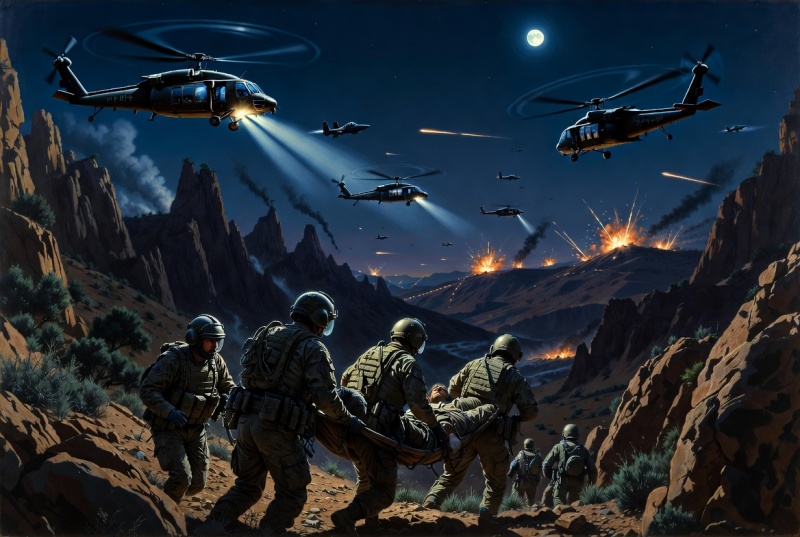
The CSAR operation, launched by the US to rescue their man from Iranian territory is being described as one of the most sophisticated, and daring missions that needed multi-domain coordination and hundreds of personnel and the best available military tech.
A team of Navy Seals, working with Delta Force operators, Air Force Pararescue Jumpers were reportedly engaged by the US administration to rescue the WSO. CIA was actively involved in the operation too, engaging ground assets and an elaborate electronic disinformation campaign to confuse the Iranians about the location of the WSO.
The US engaged MQ9 Reaper drones and other aircraft to blow up any approaching Iranian convoys in a broad radius around the WSO while the rescue team tried to reach his location. ‘Area saturation’ tactic was employed to overwhelm Iranian air defences. The NYT has reported that US attack aircraft dropped bombs and opened fire on Iranian convoys to keep them away from the area where the WSO was hiding.
The rescue team is believed to have reached the WSO, even engaging in firefight with some locals while approaching. The WSO was extracted and evacuated amid active firefight. Reports indicate that the CSAR operation was activated almost as soon as the WSO activated his locator beacon.
The missing F-15 pilot evaded capture by climbing an elevated ridge and sending out evac beacons.From that point, multiple aircraft were dispatched, decimating enemy forces all day in an attempt to secure a safe evacuation zone.Upon finally reaching the operator with SF… pic.twitter.com/slmVn7spCE— AF Post (@AFpost) April 5, 2026
Most remarkably, no personnel died in the complex operation.
US says it blew up its own aircraft to prevent Iranians from getting their hands on tech
Images of US aircraft blown to pieces have been circulated on social media. While Iran claims to have shot down these aircraft, US says that the aircraft, two MC-130J (each worth around $100 million) were ‘stuck’ during the operation, unable to take off, and hence the US forces blew them up with explosives to prevent sensitive technology from reaching enemy hands.
BIG: After evacuating the second crew member of the downed F-15E, the U.S. had to destroy two HC-130J Combat King II rescue aircraft and two helicopters that, for unknown reasons, were unable to leave Iran.The aircraft were blown up on the ground to prevent them from falling… pic.twitter.com/McytCnmnq5— Clash Report (@clashreport) April 5, 2026
Reports say that an MH-6 Little Bird and an F-16 have also been damaged in the rescue operation. These are in addition to the F-15E and the A-10 Warthog that were destroyed on April 3.
Why this rescue operation is remarkable: Demolition of the ‘ground war impossible’ bogey
The daring, action-movie style rescue operation is significant for two reasons. First, it reestablished the ‘leave no man behind’ policy of the US military, where they risk anything and go to unbelievable lengths to rescue their personnel. It is already being hailed as among the most sophisticated and challenging CSAR operations in the history of modern warfare.
Second, the operation has dealt a blow to the Iranian narrative that US forces are incapable of launching a ground war in the ongoing conflict. The rescue displayed that the US is capable of carrying out group operations deep inside the enemy territory, amid extremely hostile conditions.
BREAKING: "WE GOT HIM! My fellow Americans, over the past several hours, the United States Military pulled off one of the most daring Search and Rescue Operations in U.S. History."President Trump announces an American service member has been rescued from Iran, says the… pic.twitter.com/BQnXYU6LaQ— Fox News (@FoxNews) April 5, 2026
Since the beginning of the Iran war, Iranian officials and state media have repeatedly claimed that US and Israeli operations were confined to the air domain, and the attacking forces were incapable of carrying out ground operations, because of Iran’s rugged terrain and dominance of Iran’s ground forces. That idea has been shattered.
Though the CSAR mission to extract the WSO was extensively aided by air power, it involved remarkable and cutting edge ground capabilities under extremely hostile conditions.
The WSO had hidden himself, braving the cold in the high terrain of mountain ridges. The extraction force, reportedly a SEAL Team Six, Delta Force and Pararescue Jumpers inserted via helicopters, possibly moved on foot or with small vehicles, engaged in direct firefights with the IRGC and managed to successfully evacuate the wounded WSO from high-elevation ridges and crevices.
The US-Iran war is far from over, but the rescue operation is going to be counted among the most sophisticated missions in modern warfare, probably inspiring movies and books in the near future.