UK launches independent probe into Pakistani Grooming Gangs after decades of institutional failures: Read how previous probes failed and why new inquiry is announced
The British government has announced a statutory independent inquiry into the Pakistani grooming gangs, which targeted and sexually exploited thousands of minors across the country. The inquiry panel, headed by the former Children’s Commissioner, Anne Elizabeth Longfield, will, inter alia, examine how factors such as ethnicity, religion and culture of the perpetrators and the victims influenced the offending patterns and institutional response to the group-based exploitation. To maintain transparency and provide regular updates relating to its work, the public hearings to be organised by the inquiry will be livestreamed, and their transcripts will be published after each hearing. The findings of the inquiry will be published progressively instead of being published altogether in a final report. The inquiry has a maximum period of three years. till March 2029, and a budget of £65m to conclude their investigation. Talking about the independent inquiry, Longfield said that it intends to address the systemic failures which led to victims of child sexual abuse being disbelieved, dismissed or blamed. “Children across England and Wales were and are sexually abused and exploited. When they asked for help, they were too often disbelieved, dismissed or blamed. That is the reality this inquiry exists to address,” Longfield said. “Victims and survivors have every right to ask whether this inquiry will be any different from those that came before. My answer is this: where we can, we will publish our findings as we go, not in a single report years from now. There will be no opportunity for institutions to quietly manage what we find. We will follow the evidence wherever it leads. We will not flinch from uncomfortable truths,” she added. On December 9, 2025, the Home Secretary, Shabana Mahmood, published the draft terms of reference of the inquiry, laying down the scope of the inquiry, and announced the name of Baroness Anne Elizabeth Longfield as the inquiry panel’s chairperson. The panel includes two other panellists, Zoë Billingham CBE, a former Inspector at His Majesty’s Inspectorate of Constabulary and current Chair of Norfolk and Suffolk NHS Foundation Trust, and Eleanor Kelly CBE, the former Chief Executive of Southwark Council. The panel consulted with victims and other stakeholders on the draft terms of reference, and the final terms of reference, prepared in agreement with the Home Secretary, were published on March 31, 2026. The final terms of reference will be laid before the Parliament on 13 April 2026, when the inquiry will start its work. Scope of operations of the inquiry panel As per the terms of reference published by the inquiry, it will look into the failures of institutions, including the police, local authorities, health services, social care services and schools in tackling grooming gangs in England and Wales, while focusing on the experiences of victims and survivors during and after abuse. The inquiry aims to scrutinise a wider (and non-exhaustive) range of organisations with an extended time frame for issues that it can cover, from 1 January 1996 to 31 March 2029. A separate inquiry into group-based child sexual abuse in Scotland will be established by the Scottish Government. The inquiry will have the power to summon witnesses to give evidence and organisations to produce any documents. The panel can refer to criminal conduct by professionals to Operation Beaconport, the national policing operation launched last year to review hundreds of previously closed investigations. The panel will conduct local investigations in areas where significant response failures have been identified with respect to child sexual exploitation by grooming gangs. Oldham has been confirmed among the first such areas where the investigation will be conducted. The terms of reference will be laid down before the Parliament on 13th April. Previous investigations into Pakistani grooming gangs After several cases of organised child sexual abuse by grooming gangs primarily comprising Pakistani men, and the failure of public authorities came to light in areas like Derby, Rochdale and Oxford, several local-level inquiries into the organised crime were conducted. In July 2014, the then Home Secretary Theresa May announced a non-statutory inquiry panel to look into how authorities responded to the incidents of organised sexual exploitation by these grooming gangs. Following objections by the victims, the inquiry panel was upgraded in February 2015, under the Inquiries Act 2005 and was conferred the power to compel witnesses. In March 2015, a statutory inquiry, the Independent Inquiry into Child Sexual Abuse (IICSA), was established to examine cases of organised child sexual abuse across England and Wales. The IICSA published its final report, containing 20 recommendationsin October 2022, including improvements in data collection and the maintenance of records relating to cases of child sexual abus
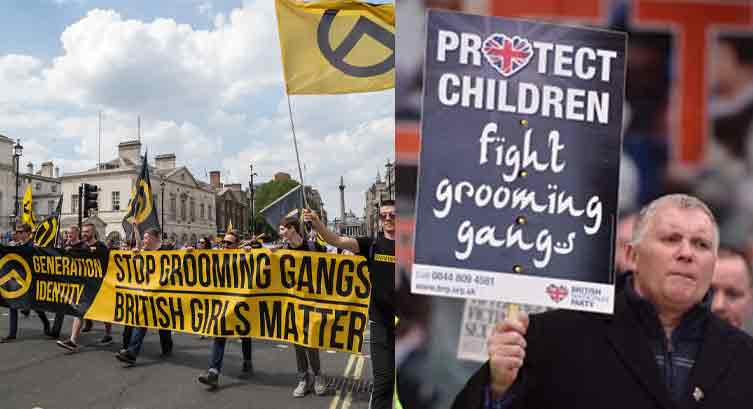
The British government has announced a statutory independent inquiry into the Pakistani grooming gangs, which targeted and sexually exploited thousands of minors across the country. The inquiry panel, headed by the former Children’s Commissioner, Anne Elizabeth Longfield, will, inter alia, examine how factors such as ethnicity, religion and culture of the perpetrators and the victims influenced the offending patterns and institutional response to the group-based exploitation.
To maintain transparency and provide regular updates relating to its work, the public hearings to be organised by the inquiry will be livestreamed, and their transcripts will be published after each hearing. The findings of the inquiry will be published progressively instead of being published altogether in a final report. The inquiry has a maximum period of three years. till March 2029, and a budget of £65m to conclude their investigation.
Talking about the independent inquiry, Longfield said that it intends to address the systemic failures which led to victims of child sexual abuse being disbelieved, dismissed or blamed. “Children across England and Wales were and are sexually abused and exploited. When they asked for help, they were too often disbelieved, dismissed or blamed. That is the reality this inquiry exists to address,” Longfield said. “Victims and survivors have every right to ask whether this inquiry will be any different from those that came before. My answer is this: where we can, we will publish our findings as we go, not in a single report years from now. There will be no opportunity for institutions to quietly manage what we find. We will follow the evidence wherever it leads. We will not flinch from uncomfortable truths,” she added.
On December 9, 2025, the Home Secretary, Shabana Mahmood, published the draft terms of reference of the inquiry, laying down the scope of the inquiry, and announced the name of Baroness Anne Elizabeth Longfield as the inquiry panel’s chairperson. The panel includes two other panellists, Zoë Billingham CBE, a former Inspector at His Majesty’s Inspectorate of Constabulary and current Chair of Norfolk and Suffolk NHS Foundation Trust, and Eleanor Kelly CBE, the former Chief Executive of Southwark Council. The panel consulted with victims and other stakeholders on the draft terms of reference, and the final terms of reference, prepared in agreement with the Home Secretary, were published on March 31, 2026. The final terms of reference will be laid before the Parliament on 13 April 2026, when the inquiry will start its work.
Scope of operations of the inquiry panel
As per the terms of reference published by the inquiry, it will look into the failures of institutions, including the police, local authorities, health services, social care services and schools in tackling grooming gangs in England and Wales, while focusing on the experiences of victims and survivors during and after abuse. The inquiry aims to scrutinise a wider (and non-exhaustive) range of organisations with an extended time frame for issues that it can cover, from 1 January 1996 to 31 March 2029. A separate inquiry into group-based child sexual abuse in Scotland will be established by the Scottish Government.
The inquiry will have the power to summon witnesses to give evidence and organisations to produce any documents. The panel can refer to criminal conduct by professionals to Operation Beaconport, the national policing operation launched last year to review hundreds of previously closed investigations. The panel will conduct local investigations in areas where significant response failures have been identified with respect to child sexual exploitation by grooming gangs. Oldham has been confirmed among the first such areas where the investigation will be conducted. The terms of reference will be laid down before the Parliament on 13th April.
Previous investigations into Pakistani grooming gangs
After several cases of organised child sexual abuse by grooming gangs primarily comprising Pakistani men, and the failure of public authorities came to light in areas like Derby, Rochdale and Oxford, several local-level inquiries into the organised crime were conducted. In July 2014, the then Home Secretary Theresa May announced a non-statutory inquiry panel to look into how authorities responded to the incidents of organised sexual exploitation by these grooming gangs. Following objections by the victims, the inquiry panel was upgraded in February 2015, under the Inquiries Act 2005 and was conferred the power to compel witnesses.
In March 2015, a statutory inquiry, the Independent Inquiry into Child Sexual Abuse (IICSA), was established to examine cases of organised child sexual abuse across England and Wales. The IICSA published its final report, containing 20 recommendationsin October 2022, including improvements in data collection and the maintenance of records relating to cases of child sexual abuse, setting up separate Child Protection Authorities for England and Wales, stricter background checks for staff working with children, mandatory reporting of child sexual abuse, victim support and legal reforms. In May 2023, many of the IICSA recommendations were accepted by the government, but none were implemented. Meanwhile, many local investigations were carried out into the organised sexual exploitation, but they proved inefficient as they were limited in scope and powers.
In July 2024, the Oldham Council unanimously approved a motion for the council’s chief executive to write to the Home Secretary requesting a Home Office-led Public Inquiry into Child Sexual Exploitation in the borough of Oldham. However, the request was rejected by the Minister for Safeguarding and Violence Against Women and Girls, Jess Phillips. Subsequently, the issue came to be discussed widely by the public and the media at the national and international levels.
In January 2025, the then Home Secretary, Yvette Cooper, told the House of Commons that none of IICSA’s recommendations had been implemented. Cooper made two announcements: first, that the government would create a timeline to recommend the IICSA implementations, and second, she directed Baroness Louise Casey of Blackstock to conduct a rapid national audit of the scale and nature of gang-based exploitation across the country. In April 2025, the government published the time-table of the implementation of the IICSA recommendations.
What led to the announcement of the national inquiry
In the rapid national audit report published in June 2025, Baroness Louise Casey highlighted that the authorities were reluctant to act in cases of gang-based sexual exploitation due to the ethnicity of perpetrators. As most of the accused were Pakistani Muslims, police feared that they will be accused of racial bias if any action was taken, and chose to ignore the cases.
It was in response to Baroness Casey’s national audit that the government decided to establish a national inquiry to address the gaps in the previous inquiries, such as the rule of ethnicities and cultural backgrounds of the victims and perpetrators and to make recommendations for a stronger legal framework, better data collection and maintenance, and improved coordination between authorities.
According to Yvette Cooper, Baroness Casey’s national audit had not recommended “another overarching inquiry” on the model of IICSA, but had instead recommended a time-limited inquiry with a more specific purpose “to challenge what the audit describes as continued denial, resistance and local wrangling among local agencies”.
Organised sexual exploitation of minors by Pakistani grooming gangs in the UK
According to the official figures, it is estimated that nearly 19,000 minors in England were sexually groomed in 2019 alone. Reportedly, the local authorities in England have identified around 18,700 suspected victims in 2018-19, up from 3,300 five years ago. The highest rates of child grooming victims in Britain were reported in areas including Birmingham, Lancashire, and Bradford.
In 2015, the Birmingham Mail, West Midlands Police published a Child Sexual Exploitation Problem Profile, which detailed the similarities in the modus operandi of the on-street and online grooming gangs there with those in Rotherham. The 2015 report found that out of the 75 grooming suspects identified, a large proportion are from a Pakistani ethnic background (62%), 12% are White and 5% African Caribbean.