UGC ‘equity’ Regulation: Explicit bias against ‘general caste’, uncanny similarities with Congress’ Communal Violence Bill, no safeguard for false SC/ST complaints and more
On January 13, 2026, the University Grant Commission (UGC) announced the Promotion of Equity in Higher Education Institutions Regulations, 2026, replacing the earlier 2012 framework. It is rooted in the National Education Policy (NEP) 2020’s emphasis on “equity and inclusion” and it claims that its aim is to institutionalise procedures to deal with discrimination in Indian colleges and universities. The stated goal of the Regulation is, “to eradicate discrimination only on the basis of religion, race, gender, place of birth, caste, or disability, particularly against the members of scheduled castes and scheduled tribes, socially and educationally backward classes, economically weaker sections, persons with disabilities, or any of them, and to promote full equity and inclusion amongst the stakeholders in higher education institutions”. While this bare reading would hardly raise an eyebrow because that’s how affirmative action has been in this country for decades, the subsequent wording of the notification does not make it “particularly against” but “exclusively for” individuals belonging to the SC/ST/OBC category, and entirely ruling out members of general caste as possible victims of discrimination on basis of their caste identity. To achieve the aforementioned stated goal, the UGC mandates the creation of Equal Opportunity Centres, Equity Committees, round-the-clock helplines, and time-bound grievance redressal systems across all higher education institutions in the country. The regulation significantly expands the role of institutional authorities in monitoring behaviour, adjudicating grievances, and enforcing compliance, at a time when campuses are becoming increasingly venues for social, political, and ideological contestation. It represents a shift from advisory guidelines to a compliance-driven framework. The design and execution of such a regulatory regime have significant ramifications for due process, academic autonomy, and institutional neutrality. While the goal of reducing discrimination is both important and reasonable, the regulations framed under ‘Promotion of Equity in Higher Education Institutions Regulations, 2026’ have come under severe criticism for their provisions, which strengthen a dangerous stereotype where those belonging to the general castes have been ruled out as victims of any possible discrimination based on caste. The regulations also impose no penalty for false complaints of caste discrimination, thereby furthering the patently false assumption that any complaint by an individual belonging to the SC/ST category is de facto true and that any individual belonging to the general caste category is a criminal ab initio, making the Regulation wildly draconian. What the regulation says The UGC Promotion of Equity Regulations apply to all higher education institutions in India, including central, state, private, and deemed universities. The regulation covers all the stakeholders, including students, faculty, staff, and institutional authorities, and came into force upon its publication in the Official Gazette. The regulation adopts a broad definition of discrimination, covering both explicit and implicit acts that impair equality of treatment or violate human dignity. Discrimination is defined on grounds such as caste, religion, gender, disability, and place of birth, with particular and exclusive emphasis on SCs, STs, OBCs, EWS, and persons with disabilities. To implement these provisions, every institution must establish an Equal Opportunity Centre (EOC). The EOC functions as the nodal body for promoting equity, providing counselling, coordinating with external agencies, maintaining complaint portals, and overseeing inclusion-related initiatives. Where a college lacks sufficient faculty, these functions are transferred to the affiliating university. Each EOC operates through an Equity Committee, chaired by the Head of the Institution and comprising faculty members, staff, students, and civil society representatives, with mandatory representation from disadvantaged groups. The committee is responsible for inquiring into complaints of discrimination and submitting recommendations for action. The regulation also introduces ‘Equity Squads’ and ‘Equity Ambassadors’ to monitor campus spaces and report potential violations, as well as a 24×7 Equity Helpline accessible to all stakeholders. Complaints may be filed online, in writing, or via the helpline, with provisions for confidentiality. Complaints that prima facie disclose criminal offences are to be forwarded to the police. Core structural flaws in the Regulation The structural design of the UGC Promotion of Equity Regulations, 2026, raises serious concerns about procedural balance and institutional fairness. The framework prioritises speed, perception, and compliance, but leaves critical gaps in safeguards, clarity, and due process, thereby furthering dangerous stereotypes, assuming guilt, and
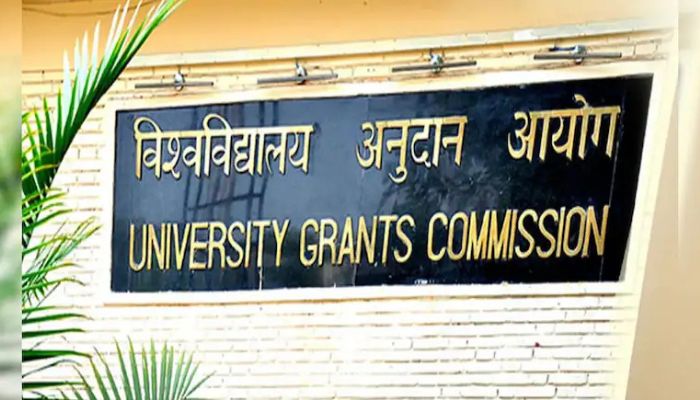

On January 13, 2026, the University Grant Commission (UGC) announced the Promotion of Equity in Higher Education Institutions Regulations, 2026, replacing the earlier 2012 framework. It is rooted in the National Education Policy (NEP) 2020’s emphasis on “equity and inclusion” and it claims that its aim is to institutionalise procedures to deal with discrimination in Indian colleges and universities.
The stated goal of the Regulation is, “to eradicate discrimination only on the basis of religion, race, gender, place of birth, caste, or disability, particularly against the members of scheduled castes and scheduled tribes, socially and educationally backward classes, economically weaker sections, persons with disabilities, or any of them, and to promote full equity and inclusion amongst the stakeholders in higher education institutions”.
While this bare reading would hardly raise an eyebrow because that’s how affirmative action has been in this country for decades, the subsequent wording of the notification does not make it “particularly against” but “exclusively for” individuals belonging to the SC/ST/OBC category, and entirely ruling out members of general caste as possible victims of discrimination on basis of their caste identity.
To achieve the aforementioned stated goal, the UGC mandates the creation of Equal Opportunity Centres, Equity Committees, round-the-clock helplines, and time-bound grievance redressal systems across all higher education institutions in the country. The regulation significantly expands the role of institutional authorities in monitoring behaviour, adjudicating grievances, and enforcing compliance, at a time when campuses are becoming increasingly venues for social, political, and ideological contestation. It represents a shift from advisory guidelines to a compliance-driven framework.
The design and execution of such a regulatory regime have significant ramifications for due process, academic autonomy, and institutional neutrality.
While the goal of reducing discrimination is both important and reasonable, the regulations framed under ‘Promotion of Equity in Higher Education Institutions Regulations, 2026’ have come under severe criticism for their provisions, which strengthen a dangerous stereotype where those belonging to the general castes have been ruled out as victims of any possible discrimination based on caste. The regulations also impose no penalty for false complaints of caste discrimination, thereby furthering the patently false assumption that any complaint by an individual belonging to the SC/ST category is de facto true and that any individual belonging to the general caste category is a criminal ab initio, making the Regulation wildly draconian.
What the regulation says
The UGC Promotion of Equity Regulations apply to all higher education institutions in India, including central, state, private, and deemed universities. The regulation covers all the stakeholders, including students, faculty, staff, and institutional authorities, and came into force upon its publication in the Official Gazette.
The regulation adopts a broad definition of discrimination, covering both explicit and implicit acts that impair equality of treatment or violate human dignity. Discrimination is defined on grounds such as caste, religion, gender, disability, and place of birth, with particular and exclusive emphasis on SCs, STs, OBCs, EWS, and persons with disabilities.
To implement these provisions, every institution must establish an Equal Opportunity Centre (EOC). The EOC functions as the nodal body for promoting equity, providing counselling, coordinating with external agencies, maintaining complaint portals, and overseeing inclusion-related initiatives. Where a college lacks sufficient faculty, these functions are transferred to the affiliating university.
Each EOC operates through an Equity Committee, chaired by the Head of the Institution and comprising faculty members, staff, students, and civil society representatives, with mandatory representation from disadvantaged groups. The committee is responsible for inquiring into complaints of discrimination and submitting recommendations for action.
The regulation also introduces ‘Equity Squads’ and ‘Equity Ambassadors’ to monitor campus spaces and report potential violations, as well as a 24×7 Equity Helpline accessible to all stakeholders. Complaints may be filed online, in writing, or via the helpline, with provisions for confidentiality. Complaints that prima facie disclose criminal offences are to be forwarded to the police.
Core structural flaws in the Regulation
The structural design of the UGC Promotion of Equity Regulations, 2026, raises serious concerns about procedural balance and institutional fairness. The framework prioritises speed, perception, and compliance, but leaves critical gaps in safeguards, clarity, and due process, thereby furthering dangerous stereotypes, assuming guilt, and demonising those belonging to the general category, while disregarding false complaints and their impact on the lives of innocent students.
Absence of safeguards against false SC/ST complaints: Presumption of ‘general caste’ guilt
One of the most critical omissions in the regulation is the lack of an explicit provision addressing malicious or knowingly false complaints. The framework provides substantial attention to protecting complaints through confidentiality, rapid inquiry timelines, and anti-retaliation safeguards. It is silent on the consequences for misuse.
The handling of the false allegations is left entirely to vague institutional rules and administrative discretion. Essentially, the Regulation only states that anyone aggrieved by a committee report may appeal the decision within 30 days, and the Ombudsman must dispose of the appeal within 30 days of receiving it.
There are no provisions that put a punitive cost on false complaints and allegations, making it easy for anyone belonging to the SC/ST category hurl an unsubstantiated allegation and send a general caste individual to prison, based on little to no evidence.
As a result, there is an imbalance of risk: the cost of filing is low, but the consequences for the accused may include reputational harm, academic disruption, psychological stress and even prison.
There is substantial proof that such false accusations have resulted in prolonged incarcerations of innocent people.
In January 2025, during a division-bench workshop on the SC/ST Act and its implementation held in Jabalpur, Madhya Pradesh High Court judge Vivek Agarwal raised concerns over the rampant misuse of this Act. He also expressed concern over the misuse of laws related to crimes against women.
Justice Agarwal, the chief guest at the event held on 12th January 2025, stressed the need for a sincere investigation and an honest prosecution of matters related to the SC/ST Act. He urged prosecution and police officials to investigate cases to thoroughly distinguish between genuine and false accusations. He said, “If we have the right, we also have the duty to ensure that an innocent person is not wrongfully punished. It is imperative to filter out inconsistencies and bring out the truth.”
Justice Agrawal warned the public prosecution and police administration that there is a provision for compensation in the SC/ST Act. Therefore, as soon as such cases come to light, many middlemen also become active and trap innocent people in the name of getting compensation for the complainant. He highlighted how middlemen or brokers exploit the legal system by filing bogus cases under the SC/ST Act to obtain compensation for victims and then claim a share of the payout.
“Many times, people are falsely implicated in SC/ST. Investigating officers should take care that in such cases, innocent people are not implicated, and the guilty should not escape. In this case, the administration, police and judiciary are lacking somewhere. Therefore, during the investigation, we should keep in mind that our credibility is not being damaged because of the middlemen. If we have the right, we also have the duty to ensure that an innocent person is not wrongfully punished. It is imperative to filter out inconsistencies and bring out the truth,” Justice Agarwal said.
In 2024, a case came to light in which the judge quashed criminal proceedings against a general caste individual, saying that provisions of the stringent SC/ST Act were being invoked to protect the land mafia.
In Aligarh, a family had extorted lakhs by filing false SC/ST cases. They had filed 15 fake cases in 10 years to extort money from individuals belonging to the general caste.
This is, of course, only the tip of the iceberg.
In fact, with rising false complaints against the SC/ST Act, even the courts have taken cognisance of the menace and, in several cases, sent the complainant to prison over their false accusation.
In October 2025, a special SC/ST court in Lucknow sentenced a woman to 3 years in jail for filing a false complaint, remarking that such cases under the SC/ST Act are on the rise.
The woman has been sentenced to six months’ simple imprisonment under Section 182 of the Indian Penal Code (giving false information to a public servant) and three years under Section 211 (false charge of offence made with intent to injure).
In July 2025, former CJI BR Gavai also commented on how the SC/ST Act cannot be invoked to settle personal scores. The case was a land allotment dispute between two SC groups, but the complainant had invoked the SC/ST Act. The case involved allegations that a land allotment dispute was maliciously used to falsely implicate a Scheduled Caste man under the SC/ST Act, even though the conflict was between two SC groups.
“Prosecution needs to be quashed at an early stage to prevent undue harassment of the accused where there is clear legal infirmity in the prosecution case, such as the allegations, even if taken at their face value, do not disclose an offence or the entire case is a bad faith exercise weaponized to settle personal scores, rather than seeking justice,” the bench had said.
There is substantial evidence that an overwhelming number of cases filed under the SC/ST Act are false. Several are to settle personal scores, use the act to tip the scales of justice in their favour unduly or even owing to hatred against individuals belonging to the general caste, owing to their caste identity.
Under such circumstances, there would be no logical explanation for why the Promotion of Equity in Higher Education Institutions Regulations, 2026 would have no provisions or stringent punitive measures against false complaints, marking the absence of clear deterrents against bad-faith complaints.
The regulation risks incentivising misuse rather than discouraging.
Selective neutrality in definition of ‘Discrimination’: Neutrality in gender, not in caste identity
The law adopts a broad definition of discrimination, which includes latent bias and behaviour that could compromise equality of treatment or dignity, in addition to overt acts. This width adds subjectivity and interpretive uncertainty. More importantly, the regulation applies neutrality selectively across categories. According to the law, “gender” means and includes male, female, and third gender. Under ‘Gender’, the framework is explicitly neutral, without any caveats, covering men, women, and the third gender without turning any group into the de facto perpetrator. This is notable, as it departs from the common policy tendency to load gender protections in favour of women by default.
However, a similar neutrality is absent from the treatment of caste.
According to the regulation, “caste-based discrimination’’ means discrimination only based on caste or tribe against the members of the scheduled castes, scheduled tribes, and other backwards classes. In everyday institutional settings, individuals are often socially identified and categorised through surnames rather than personal attributes. For example, a student named Rohit Sharma is far more likely to encounter categorisation based on caste-indicative identity than on gender. Yet the regulation conceptually frames caste-based discrimination almost exclusively around predefined disadvantaged groups, without explicitly acknowledging that caste-based bias can also operate outside those categories.
If neutrality is both feasible and desirable in the case of gender, the lack of a comparable explicit, category-agnostic articulation for caste indicates a design mismatch and/or a wilful ignorance of ground realities.
In other words, if the Regulation can acknowledge that men and women, both could be the victims of discrimination based on gender identity, one has to ask and wonder why the regulation failed to acknowledge that those belonging to any caste could be subjected to caste-based discrimination. The regulation almost explicitly evaluates discrimination based on a victim’s identity, which is to say that if the caste identity of a victim is not what is considered “historically oppressed”, then they, under no circumstances, can be victims of oppression or discrimination on the basis of their caste identity – a conclusion which is certainly not backed by ground realities. Such framing of discrimination does not facilitate equity or justice; it divides, endangers and instigates.
Concentration of power within the Institution
The grievance redressal framework concentrates substantial authority within the institution itself. The institution’s head appoints and oversees the Equity Committee, which investigates allegations of prejudice. The same authority is also responsible for taking action in response to the committee’s conclusions.
External oversight is introduced only at the appellate stage through the Ombudsperson (an individual appointed by the University Grants Commission). By this time, initial findings and administrative action may already have produced irreversible consequences. This structure leaves the process vulnerable to institutional risk-aversion, political pressure, or ideological alignment, particularly in contentious cases. The absence of an independent external member at the first stage weakens the mechanism’s credibility and perceived impartiality.
Equal Opportunity Centre – problematic inclusion of NGOs and “Civil Society Members”
The Regulation provides that, “Every HEI shall establish an Equal Opportunity Centre to oversee the effective implementation of policies and programmes for disadvantaged groups; to provide guidance and counselling regarding academic, financial, social, and other matters; and to enhance the diversity within the campus. Provided that if a college does not have at least five faculty members to establish the Equal Opportunity Centre, the functions of the Equal Opportunity Centre of the college shall be performed by the Equal Opportunity Centre of the university to which the college is affiliated”.
For this purpose, the Regulation says that these EOCs would be established in “coordination with civil society, local media, police, district administration, non-government organisations working in the field, faculty members, staff, and parents to realise the objective of these regulations”.
The inclusion of civil society members and NGOs is problematic in the composition, given how, historically, such entities have only deepened the fissures in the Hindu society for political ends.
Let us consider the ‘Dalit rights’ organisation Equality Labs, for example. Under the new Regulation, Equality Lab would qualify as a civil society member organisation and an NGO, to ensure that the “objectives of these regulations” are realised.
Equality Labs is a radical Left organisation in the US that has actively worked against Hindus for several years. Disinfo Lab published a detailed report on ‘Operation Tupac’ where they decoded the various organisations that were working on a concert to exploit the fault lines in India. Equality Labs found a detailed mention in it.
The report says:
One key organization that operates on the Caste Faultline in the US is Equality Labs, which was formed in 2016 as an Ambedkarite South Asian power-building organization in the US with the motive to combat ‘Caste Discrimination’. Equality Labs was founded by Thenmozhi Soundararajan, a Dalit techie, artist, and activist born and brought up in the US. While the organization claims to be progressive and aims to combat caste discrimination, it also strives hard to succinctly paint India as a nation with an endemic caste problem and widespread oppression, a colonial-era narrative widely purported by the British to justify their imposition of Western value systems. Another co-founder of Equality Labs is Sharmin Hossain, a Bangladeshi American, who served as the Political Director before rendering her resignation in March 2021. 3 In April 2021, she founded a new organization Queer Crescent, which is described as a political home for LGBTQI+ Muslims.
In 2018, Equality Labs published a caste report in the US with the assistance of several organizations such as IAMC, OFMI, and Alliance for Justice and Accountability (AJA)- a coalition of Dalit organizations alongside IAMC, OFMI, and Hindus for Human Rights (HfHR).
In July 2020, the California Department of Fair Employment and Housing and two Indian origin employees in the USA filed a lawsuit against IT firm Cisco Systems Inc. on the grounds of caste discrimination against one of its Indian-American employees. 7 The suit alleged that a Dalit employee at the IT company (referred to as John Doe) was discriminated against by two of his fellow Indian origin colleagues, Sundar Iyer and Ramana Kompella beginning in November 2016. The lawsuit also referred to the 2018 caste report of Equality Labs. Soon after the lawsuit, Equality Labs and its founder Thenmozhi Soundararajan further raked up the issue by appearing on various media platforms.
Apart from working on the caste line, Equality Labs takes deep interest in the internal matters of India and works on different trajectories which coincidentally also happen to be the fault lines in India. Equality Labs became active during the Citizenship Amendment Act (CAA) protests which were happening in India. During that time, Equality Labs collated CAA, National Register of Citizens (NRC), and National Population Register (NPR) with Genocide in India and released a one-page pamphlet on that.
It also released a toolkit titled “organizing against Hindu Fascism” to organize protests and run online campaigns against the Indian establishment. The toolkit gave sample tweets as well as creativity to run the campaigns and also hold protests. The password to access the toolkit is “rejectcaa”. The toolkit also calls for supporting various news platforms and advocacy groups such as AltNews, Internet Freedom Foundation, and The Software Freedom Law Centre – SFLC.
On November 14, 2017, Equality Labs founder Thenmozhi Soundarajan and Pieter Friedrich staged a protest at the California Department of Education against changing the subject of the caste system in India from California History and Social Sciences Curriculum. OFMI, was founded by Pieter Friedrich, a self-proclaimed expert on South Asia, and ally of Khalistanis terrorist Bhajan Singh Bhinder. OFMI was jointly run by Bhajan Singh Bhinder and his employee Pieter Friedrich, who once worked with the ISI to send weapons to India for terror attacks in the 1990s, according to the research by Disinfo Lab.
In May 2019, Equality Labs’ founder also hosted an event alongside Sikhs For Justice (SFJ) terrorist Gurpatwant Pannu, which is a proscribed Khalistanis terror outfit. HinduPACT, which shared the photograph, said that it was from an event that took place on 22nd May 2019. This particular event shows a much larger sinister plan, as it was just one day before the Lok Sabha 2019 elections results were announced. On the same day, Soundararajan’s Equality Lab, in partnership with South Asian Americans Leading Together (SAALT), then-API Chaya, and the office of representative Pramila Jayapal held a congressional briefing on caste discrimination in the US in Washington DC. Notably, that briefing was based on the dubious survey conducted by Equality Labs on caste discrimination. The same survey led to the SB403 bill.
Now, according to the new regulations, this Jamaat-e-Islami, Khalistani and anti-Hindu elements backed organisation would be an appropriate partner to ensure the realisation of equality, equity and fairness in Indian universities, since it claims to focus on Dalit rights. With the lack of safeguards against all denominations and the presumption of guilt, the Regulation would inevitably end up accepting the partnership of such organisations that explicitly work against the interests of India and Hindus, facilitating injustice rather than equality.
Absence of a defined standard of proof: General caste to prove negative, no burden of proof of complainant
The regulation does not specify any standard of proof to guide inquiries. There is no clarity on the evidentiary threshold required, the burden of proof, or the relative weight to be assigned to testimony, documentation, or circumstantial evidence. In the absence of such guidance, inquiries risk becoming narrative-driven rather than evidence-driven, with outcomes shaped by perception and interpretation rather than verifiable facts. This weakens fundamental principles of due process and creates the possibility of inconsistent outcomes across institutions, undermining both fairness and legal robustness.
In fact, when the Regulation presumes guilt of one section (the general caste), it explicitly shifts the burden of proof and lowers the standard, owing to the presumption of guilt. The individual who files the complaint would essentially not have to prove that he was discriminated against, but the accused would have to prove a negative – that he has not done what he is being accused of, which would be almost impossible, not only because it is difficult to prove a negative in such cases but also because he has already been presumed guilty under the new Regulations.
Speed-driven process and its consequences
While the regulation focuses on swift actions to prevent institutional inertia, its aggressive timelines prioritise speed over procedural depth. Complex cases involving serious allegations, academic judgment, interpersonal conflict, or competing narratives require time and careful examination to deliver justice.
According to these guidelines, the committee shall meet within 24 hours to take appropriate action; the Equity Committee shall submit its report to the Head of the Institution within 15 working days; and the Head of the Institution shall initiate further action as per the rules of the HEI within 7 working days.
The result is a framework that risks overcorrection. It encourages defensive decision-making by institutions seeking compliance rather than careful adjudication. Over time, this may chill academic interaction, discourage candid engagement, and replace deliberative processes with precautionary enforcement.
What could have been done better
While the regulation extends strong procedural protections to complainants from SC/ST or OBC groups, it does not create or provide corresponding safeguards for the general category. The absence of explicit deterrents against malicious complaints, a defined standard of proof, or an independent first-stage oversight mechanism affects all stakeholders.
A more robust framework would have avoided this draconian approach by adopting symmetrical safeguards. This could have included explicit provisions addressing bad-faith complaints, clearer evidentiary standards, and neutral articulation across all categories. Similar to the regulation’s approach to gender, which is explicitly inclusive without presuming disadvantage. Such measures would have strengthened the regulation’s credibility and reduced perceptions of selective fairness.
By failing to clearly distinguish between protection against discrimination and protection against procedural misuse, the regulation leaves room for mistrust and misinterpretation. Addressing this gap would not have diluted the regulation’s equity objectives. It would have reinforced them by ensuring that fairness operates in both directions.
Intent vs Design: A rehash of Communal Violence Bill
The objective of the UGC Promotion of Equity Regulations, 2026, is to ensure that campuses uphold the constitutional promise of equality and dignity, and that faculty, staff, and students are protected from unjust treatment.
However, Intent cannot replace sound design on its own. A framework that seeks to protect the rights of every person must itself be anchored in due process, evidentiary clarity, and procedural balance. By prioritising speed, perception, and institutional compliance while leaving critical safeguards undefined, the regulation risks replacing one form of arbitrariness with another. Equity mechanisms that operate without clear standards, symmetrical protections, or safeguards against misuse can unintentionally generate fear, self-censorship, and defensive decision-making within academic spaces.
In fact, one could safely say that this UGC Regulation is no better than the Communal Violence Bill, which the Congress government wanted to introduce when it was in power.
The draft of the Communal Violence Bill, officially referred to as the Prevention of Communal and Targeted Violence (Access to Justice and Reparations) Bill, 2011, would have been one of the most disastrous laws if enacted. The Bill assumed that only religious or linguistic minorities and people from the Scheduled Castes and Tribes could be the victims of communal violence, conveniently ignoring all ground realities. Finance Minister Arun Jaitley had correctly said then that the bill was anti-majority and presumed that the majority community is always to blame for the communal violence. The current regulation appears to be a regurgitation of the draconian Communal Violence Bill, which was drafted by a group of 32 “civil society members” and NGOs, with foreign links and nefarious antecedents.
It is also true that in the recent past, the anti-Brahmin rhetoric has reached a feverish pitch, with the scale of discrimination tipping squarely against those considered ‘general caste’. A 2024 research, for example, concluded that the same hate that Nazis had for jews was being normalised against Brahmins by DEI programs.
Nazi hate against Brahmins: What a research paper said
A recent study published by Rutgers University and the Network Contagion Research Institute (NCRI) titled INSTRUCTING ANIMOSITY: HOW DEI PEDAGOGY PRODUCES THE HOSTILE ATTRIBUTION BIAS, revealed that DEI programs are spreading negative stereotypes and animosity against certain religious, racial and caste groups like the Brahmins while evoking unwarranted sympathy for the Muslim community.
While evaluating the impact of caste sensitivity training, the research used caste sensitivity training materials from the anti-Brahmin Caste activism group Equality Labs as the experimental condition or intervention text, designed to evaluate the effects of DEI rhetoric. The researchers also used neutral academic sources as control text (neutral text). There were two respondent groups that received intervention and control text respectively.
After both the respondent groups read the assigned texts, they were given a neutral scenario with no explicit caste indicators to measure their perceptions of caste-based bias. The study found that exposure to the Equality Labs intervention led to significantly higher perceptions of microaggressions, perceived harm, and assumptions of bias during the interview process (increases of 32.5%, 15.6%, and 11%, respectively) compared to the control condition.
Further assessment found that participants who read the Equality Labs text showed more willingness—19%— to punish the administrator in the fictional scenario provided to them and about 47% of them perceived Hindus as “racist” compared to the participants who read the neutral text. This indicates that DEI content instead of eliminating, is actually creating prejudices against Hindus, particularly the so-called “upper-caste” Hindus like Brahmins, who are already at the receiving end of hate campaigns of the anti-Hindu elements.
Similarly, when the participants who read the DEI-inspired material looked at modified past statements from German despot Adolf Hitler and his autobiography Mein Kampf that replaced the word “Jew” with “Brahmin,” they were more likely to agree that Brahmins were ‘parasites’ (+35.4%), ‘viruses’ (+33.8%), and ‘the devil personified’ (+27.1%).”
The Rutgers-NCRI research findings indicate that contrary to the supposed purpose of DEI programs, the hatred Nazis had for Jews is being normalised by some DEI programs against Brahmins. The Jewish holocaust in Nazi Germany did not happen overnight, it was a culmination of the gradual but virulent spread of propaganda and hostile sentiments against Jews. While the Jewish people have over the centuries been subjected to expulsions, segregation, and violence in various parts of the world, after the defeat of Germany in World War I and the economic depression of 1929, hatred against Jews intensified to an unprecedented extent. From speeches, and pamphlets to the 1935 Nuremberg Laws stripping Jews of citizenship rights to anti-Jew violence, segregation, and eventual condemnation of Jews to concentration and death camps where they were gassed to death, the hatred against Jews was systematically propagated and this hatred magnified over time and resulted in the Jewish Holocaust. It must be remembered that dehumanising rhetoric always precedes genocides.
OpIndia wrote at the time that while the Islamo-leftist cabal would dismiss the argument that Brahmins face an existential threat and a threat of potential genocide, even those in the Hindu Dharmic fold would find this apprehension as exaggerated. However, much like Jews, Brahmins too have seen their fair share of misery and persecution. One notable example was the anti-Brahmin riots in Maharashtra in 1948, which followed MK Gandhi’s assassination by Nathuram Godse, a Chitpavan Brahmin. During this time, Gandhi supporters and Congress leaders attacked Brahmins, resulting in genocidal violence and persecution. The rioters killed numerous Brahmins and destroyed their houses and properties.
The killings and exodus of Kashmiri Pandits in 1980s at the hands of Islamists serves as a grim reminder and a cautionary tale that anti-Brahmin violence in an independent India was very much possible, it happened and may happen again if the propagation of hatred against Brahmins continues to go unchecked and rather celebrated as advocacy of ‘social justice’.
The Brahmin-hating ‘activists’ and organisations are using all means at hand from cinema, media, politics, to even DEI programs to instil and normalise the idea of hating Brahmins despite there being no requisite of doing so. As the Rutgers-NCRI research findings revealed, even the hateful rhetoric of Jewish genocidaire Adolf Hitler seems justified when presented in the context of Brahmins, it can be understood that the anti-Brahmin elements are infiltrating the minds of neutral people and instilling the same extent of hatred against Brahmins as Hitler and Nazis harboured for Jews.
Even in contemporary times, calls for violence against Brahmins are casually given by anti-Brahmin elements without having to face any stringent legal consequences whatsoever. In fact, Brahmin bashing, negative caricaturing and demonisation are accepted as signifiers of progressiveness, liberalism, and an equalitarian mindset in the Brahmin-hating left-liberal ecosystem.
Accurate equity cannot be built on procedural imbalance or the threat of reputational and institutional harm. It must rest on fairness that works in both directions by protecting those who face discrimination while also safeguarding individuals from unsubstantiated or bad-faith allegations. A regulation meant to protect dignity must itself be disciplined by clarity, restraint, and respect for due process.
NOTE: We have sent a detailed questionnaire to the Chairman of UGC, Dr Vineet Joshi. This article will be updated with his response if and when we get a reply.