Sheikh Hasina attack accused, money laundering convict, and known for Hinduphobia: Meet Tarique Rahman, Khaleda Zia’s son set to stir Bangladesh’s political cauldron
Tarique Rahman, the 60-year-old acting chairman of the radical Bangladesh Nationalist Party (BNP), which is supported by the Islamist group Jamaat-e-Islami, is anticipated to return to Dhaka on 25th December (Thursday), ahead of the February 2026 national elections. He lived in self-imposed exile in London for nearly 17 years. Tarique is scheduled to leave London at 6:15 pm (12:15 am Bangladesh time) on Biman Bangladesh Airlines flight BG-202 from Heathrow Airport. His spouse, Dr Zubaida Rahman and their daughter, Zaima Rahman, are going to join him. He is expected to land at Hazrat Shahjalal International Airport in Dhaka on Christmas Day at 11:55 am. “With your prayers, I will return to the country on the 25th. I request that everyone refrain from going to the airport that day. Those who respect this request will be showing respect for the party and the country,” Tarique declared at a Victory Day event in London on 16th December. He added that anybody who disregards this request and proceeds to the airport shall be deemed to be acting in their own interest. On the other hand, the BNP has prepared extensively for rallies and receptions in the nation’s capital, as well as in other locations. Meet the “crown prince” of Bangladeshi politics Tarique is the eldest son of the nation’s army commander as well as former president Ziaur Rahman and former prime minister Khaleda Zia, who held office for three terms and is chairman of the BNP. He is frequently referred to as the “crown prince” of Bangladeshi politics. Tarique was born on 20th November 1967 while the nation existed as East Pakistan. He was briefly imprisoned as a youngster during the 1971 independence struggle, which the BNP emphasises by referring to him as “one of the youngest prisoners of war.” His father, Ziaur Rahman, became a powerful army commander after Sheikh Mujibur Rahman, the founder of Bangladesh and father of former prime minister Sheikh Hasina, was assassinated in a coup in 1975. Tarique was 15 when Ziaur Rahman was killed. He joined the University of Dhaka’s Department of International Relations in the 1980s after completing his undergraduate studies at BAF Shaheen College, which is also in the national capital. He then joined the BNP at the age of 23. He took part in demonstrations against Hussain Muhammad Ershad’s military regime. However, his career has been distinguished by considerable controversies and grave accusations. According to a 2006 United States embassy cable, Tarique was labelled as the BNP’s “heir apparent” who “inspires few but unnerves many.” He was also described as “phenomenally corrupt” and a “symbol of kleptocratic government and violent politics,” by other cables. However, Tarique was instrumental in his mother’s 1991 national election campaign. He aggressively started anti-government rallies under the pretence of justice for the oppressed during the Awami League’s rule from 1996 to 2001. The rivalry between Zia and Hasina was known as the “Battle of Begums.” Political heir to self-imposed exile Tarique became a prominent member of the BNP and was regarded as his mother’s political heir in the early 2000s. However, a tumultuous time in Bangladeshi politics caused his career to fall apart. During an anti-corruption campaign in 2007, he was arrested and imprisoned for nearly 18 months. The BNP leader received bail on 3rd September 2008, after which he immediately flew to the UK for medical treatment and stayed there ever since with his family. He was deemed culpable in multiple cases. He was also fined 200 million taka and sentenced to seven years in prison by Bangladesh’s high court in 2016 for money laundering. The decision reversed a Dhaka court’s 2013 acquittal of Tarique on allegations that he and a companion embezzled $2.5 millions to Singapore between 2003 and 2007. According to reports, he was in contact with the United States administration to discuss “bilateral issues,” and a similar meeting happened in 2013 as the Anti-Corruption Commission filed 12 complaints against him and his close accomplice, Giasuddin Al Mamun. Jon Danilowicz, who was the US Mission to Bangladesh’s deputy commander from 2012 to 2014, even supported Tarique’s return as the BNP’s acting chairman. Furthermore, a special court in Dhaka sentenced him to life in prison on 10th October 2018. He was found guilty by the court of multiple charges of murder and criminal conspiracy in connection with a grenade explosion on 21st August 2004 that killed 24 people and wounded Sheikh Hasina in Dhaka. The attack transpired when Khaleda Zia served as the prime minister of the country. Interestingly, the Bangladesh Supreme Court’s appellate division affirmed the high court ruling clearing Tarique and others in the case less than a month after the Hasina government fell on 5th August of last year. Meanwhile, he continued to play a significant role in the BNP and was later named acting chairman. Hatred
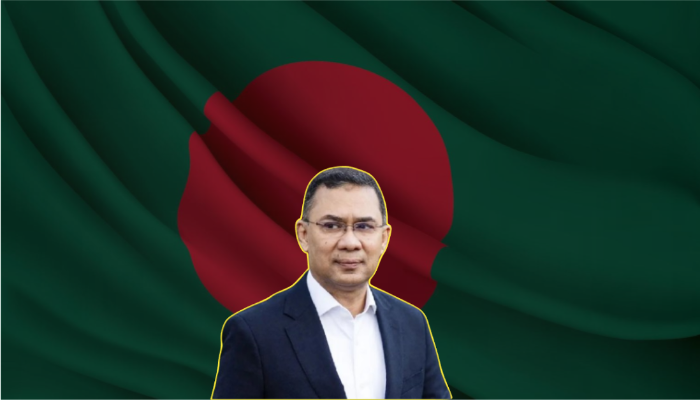

Tarique Rahman, the 60-year-old acting chairman of the radical Bangladesh Nationalist Party (BNP), which is supported by the Islamist group Jamaat-e-Islami, is anticipated to return to Dhaka on 25th December (Thursday), ahead of the February 2026 national elections. He lived in self-imposed exile in London for nearly 17 years.
Tarique is scheduled to leave London at 6:15 pm (12:15 am Bangladesh time) on Biman Bangladesh Airlines flight BG-202 from Heathrow Airport. His spouse, Dr Zubaida Rahman and their daughter, Zaima Rahman, are going to join him. He is expected to land at Hazrat Shahjalal International Airport in Dhaka on Christmas Day at 11:55 am.
“With your prayers, I will return to the country on the 25th. I request that everyone refrain from going to the airport that day. Those who respect this request will be showing respect for the party and the country,” Tarique declared at a Victory Day event in London on 16th December. He added that anybody who disregards this request and proceeds to the airport shall be deemed to be acting in their own interest. On the other hand, the BNP has prepared extensively for rallies and receptions in the nation’s capital, as well as in other locations.
Meet the “crown prince” of Bangladeshi politics
Tarique is the eldest son of the nation’s army commander as well as former president Ziaur Rahman and former prime minister Khaleda Zia, who held office for three terms and is chairman of the BNP. He is frequently referred to as the “crown prince” of Bangladeshi politics.
Tarique was born on 20th November 1967 while the nation existed as East Pakistan. He was briefly imprisoned as a youngster during the 1971 independence struggle, which the BNP emphasises by referring to him as “one of the youngest prisoners of war.” His father, Ziaur Rahman, became a powerful army commander after Sheikh Mujibur Rahman, the founder of Bangladesh and father of former prime minister Sheikh Hasina, was assassinated in a coup in 1975.
Tarique was 15 when Ziaur Rahman was killed. He joined the University of Dhaka’s Department of International Relations in the 1980s after completing his undergraduate studies at BAF Shaheen College, which is also in the national capital. He then joined the BNP at the age of 23. He took part in demonstrations against Hussain Muhammad Ershad’s military regime. However, his career has been distinguished by considerable controversies and grave accusations.
According to a 2006 United States embassy cable, Tarique was labelled as the BNP’s “heir apparent” who “inspires few but unnerves many.” He was also described as “phenomenally corrupt” and a “symbol of kleptocratic government and violent politics,” by other cables.
However, Tarique was instrumental in his mother’s 1991 national election campaign. He aggressively started anti-government rallies under the pretence of justice for the oppressed during the Awami League’s rule from 1996 to 2001. The rivalry between Zia and Hasina was known as the “Battle of Begums.”
Political heir to self-imposed exile
Tarique became a prominent member of the BNP and was regarded as his mother’s political heir in the early 2000s. However, a tumultuous time in Bangladeshi politics caused his career to fall apart. During an anti-corruption campaign in 2007, he was arrested and imprisoned for nearly 18 months. The BNP leader received bail on 3rd September 2008, after which he immediately flew to the UK for medical treatment and stayed there ever since with his family. He was deemed culpable in multiple cases.
He was also fined 200 million taka and sentenced to seven years in prison by Bangladesh’s high court in 2016 for money laundering. The decision reversed a Dhaka court’s 2013 acquittal of Tarique on allegations that he and a companion embezzled $2.5 millions to Singapore between 2003 and 2007.
According to reports, he was in contact with the United States administration to discuss “bilateral issues,” and a similar meeting happened in 2013 as the Anti-Corruption Commission filed 12 complaints against him and his close accomplice, Giasuddin Al Mamun. Jon Danilowicz, who was the US Mission to Bangladesh’s deputy commander from 2012 to 2014, even supported Tarique’s return as the BNP’s acting chairman.
Furthermore, a special court in Dhaka sentenced him to life in prison on 10th October 2018. He was found guilty by the court of multiple charges of murder and criminal conspiracy in connection with a grenade explosion on 21st August 2004 that killed 24 people and wounded Sheikh Hasina in Dhaka. The attack transpired when Khaleda Zia served as the prime minister of the country.
Interestingly, the Bangladesh Supreme Court’s appellate division affirmed the high court ruling clearing Tarique and others in the case less than a month after the Hasina government fell on 5th August of last year. Meanwhile, he continued to play a significant role in the BNP and was later named acting chairman.
Hatred for Hinduism and the role in armed militancy in India
The heir to the BNP has expressed his severe Hinduphobia and insulted sacred texts. “Scriptures of the Hindu religion do not offer any moral teaching – all the religious scriptures are porn scripts,” he barked in a Facebook live in 2023. Tarique had a tight relationship with Nurul Haque Nur, the convenor of the Gono Odhikar Parishad, who wanted to remove Sheikh Hasina by any means necessary.
Nur had declared, “Yes, I have indulged in a conspiracy with foreign intelligence agencies, including Mossad. In my bid to unseat the government, I held a meeting with Mendi N Safadi, a Mossad agent, to hatch a conspiracy to unseat this government,” in a Facebook Live from Saudi Arabia.
The removal of Sheikh Hasina is already perceived as a regime change operation orchestrated by the United States with the assistance of vested interests within the country.
Moreover, retired deputy director general of India’s Defence Intelligence Agency (DIA), Major General Gaganjit Singh, revealed that the Bangladesh Nationalist Party (BNP) and Jamaat coalition were arming militant factions in India after ten trucks full of weapons were confiscated at Chittagong in April 2004.
ULFA leader Anup Chetia alias Golap Barua, who was in Dhaka jail, disclosed that the massive ammunition was intended for the banned United Liberation Front of Asom (ULFA) and similar other outfits in northeastern India to destabilise the country.
Singh stated that Chetia “was operating in close coordination with Directorate General of Forces Intelligence (DGFI) and some National Security Intelligence (NSI) officials who had close links with Tareque Rahman (current acting chairman of BNP) and his cronies in what was then referred to as Hawa Bhaban (political office of BNP)” while talking to India Today.
Hawa Bhaban became infamous as the most secure, powerful and alternative powerhouse during the BNP-Jamaat coalition government (2001–2006). Tarique, along with his meticulously selected group of “crooked” confidants, permitted several malicious schemes, including the grenade attack on Sheikh Hasina, the leader of the opposition at the time.
Additionally, terrorists of the Lashkar-e-Taiba, who collaborated with Inter-Services Intelligence (ISI) on the arms shipment, were also present at the planning stage meetings.
Notably, now the anti-India and Hinduphobic leader’s Bangladesh return coincides with increased political tension, widespread violence, particularly directed at the minority Hindu community, the takeover by extremist forces, attacks on the media, arrests and controversies regarding the trajectory of the interim government headed by Muhammad Yunus, along with rapidly deteriorating relations with India.