SC rules that nation’s interest lie above rights of terror accused in 2010 Jnaneshwari Express sabotage case: Here is everything you need to know about it
Hearing a Special Leave Petition filed by the Central Bureau of Investigation (CBI) against the Calcutta High Court’s order granting bail to the accused in the 2010 Jnaneshwari Express derailment case, the Supreme Court, on Thursday (11th December), held that the national interest lies above personal liberty. A bench of Justices Sanjay Karol and NK Singh criticised the Calcutta High Court for granting bail to the accused and said that “acts of barbarity cannot be excused”. “…the rights of an individual are always subservient to the nation’s interest, the High Court fell in error in granting bail,” the court noted in the judgment. “While the Constitution permits the members of the public, be it whichever group/section of society they belong to, to oppose, within the permits of the law, a stand taken by the State, such acts of barbarity cannot be excused,” it added. The Court, however, refused to interfere with the order of the High Court and did not reverse the bail granted to the accused. It quoted the painfully slow pace of the trial and the years spent by the accused in jail as the reason for not reversing the High Court’s order. “…It is a matter of record that an earlier application for bail, about a decade ago in the year 2016, had been rejected with the High Court recording that examination of the remaining witnesses should be completed within a year. If in 2022, the Court finds that despite such direction and also the passage of nearly six years, the same could not be achieved, it cannot be said to have not considered the case in its proper light,” the apex court said. “…The trial being at an advanced stage is also not something that can be, in this case, a ground to send the respondent-accused behind bars. The trial is of the year 2010, and as we stand at the end of 2025, still 28 witnesses are to be examined. We may note that the glacial pace at which the trial has proceeded cannot justify the incarceration of the accused, particularly when they have already been in prison for a dozen years, and once out, have not given the authorities reason to seek urgent cancellation, or even stay on the impugned judgment when this Court issued notice, or even anytime thereafter,” the Court stated. “…This Court does not interfere against the grant of bail unless circumstances warranting such an exercise of power are plainly present in a given set of circumstances,” it adding “interfering with the liberty of the accused, at this stage, particularly when nothing else holds against them, would not be justified”. On November 9, 2022, the Calcutta High Court granted bail to one of the accused in the Jnaneshwari Express derailment case. Subsequently, on February 28, 2023, the High Court released eleven accused on bail, followed by the release of another accused on bail on June 13, 2023. The CBI approached the Supreme Court against the judgments/orders of the High Court. Background of the case In a horrific incident on May 28, 2010, the Jnaneshwari Express, passing between Kehmasoli and Sardiha stations on the Kharagpur-Tatanagar section of the Kharagpur division, had a head-on collision with a goods train. The incident turned out to be a well-thought-out conspiracy in which the accused damaged the rail tracks near Rajabandh to cause the accident. The conspiracy was carried out on the intervening night of 27th -28th May 2010 by the accused persons. “The pandral clips of the railway tracks were removed, with the knowledge and intention that grievous hurt would be caused to the passengers of a train. This action caused the derailment of the train, which thereafter collided with an oncoming goods train from the opposite direction, causing widespread loss of life,” as stated in the Supreme Court judgment. In addition to that, a loss of 25 crores approx was caused to the Government due to the destruction of property. An FIR was registered on June 9, 2010, against unidentified persons under Sections 120B, 302, 307, 323, 325, 326, 440, 212 of the Indian Penal Code,1860, Sections 150/151 of the Indian Railways Act, 1989, and Sections 16/18 of the Unlawful Activities (Prevention) Act, 1967. During the investigation of the case, the motive behind the crime was found to be the resentment among the Maoist cadres due to the deployment of a joint force of State Police and Central Paramilitary Force in the jurisdiction of Jhargram Police Station to combat the capture of Rasua village by the Maoists. The accused worked with the common intention and hatched a conspiracy to pressure the Government to withdraw the Joint Forces from the Jhargram Police Station area and create terror. Directions given by the Supreme Court relating to the delay in the trial Even though the Supreme Court refused to reverse the bail order of the Calcutta High Court, it issued a set of directions to the trial court to speed up the trial of the case. It directed the trial court to record the status and reasons in an order
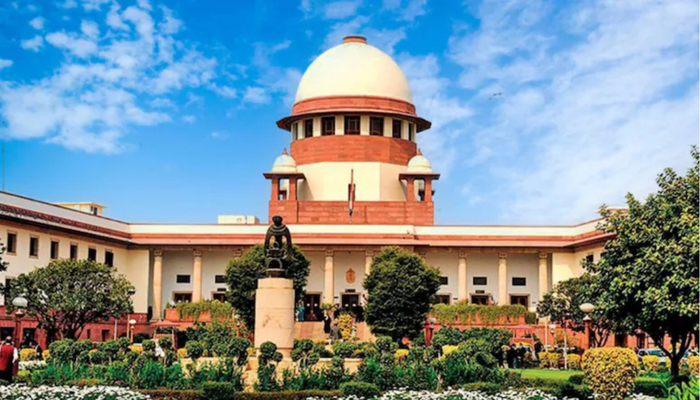

Hearing a Special Leave Petition filed by the Central Bureau of Investigation (CBI) against the Calcutta High Court’s order granting bail to the accused in the 2010 Jnaneshwari Express derailment case, the Supreme Court, on Thursday (11th December), held that the national interest lies above personal liberty.
A bench of Justices Sanjay Karol and NK Singh criticised the Calcutta High Court for granting bail to the accused and said that “acts of barbarity cannot be excused”. “…the rights of an individual are always subservient to the nation’s interest, the High Court fell in error in granting bail,” the court noted in the judgment. “While the Constitution permits the members of the public, be it whichever group/section of society they belong to, to oppose, within the permits of the law, a stand taken by the State, such acts of barbarity cannot be excused,” it added.
The Court, however, refused to interfere with the order of the High Court and did not reverse the bail granted to the accused. It quoted the painfully slow pace of the trial and the years spent by the accused in jail as the reason for not reversing the High Court’s order.
“…It is a matter of record that an earlier application for bail, about a decade ago in the year 2016, had been rejected with the High Court recording that examination of the remaining witnesses should be completed within a year. If in 2022, the Court finds that despite such direction and also the passage of nearly six years, the same could not be achieved, it cannot be said to have not considered the case in its proper light,” the apex court said.
“…The trial being at an advanced stage is also not something that can be, in this case, a ground to send the respondent-accused behind bars. The trial is of the year 2010, and as we stand at the end of 2025, still 28 witnesses are to be examined. We may note that the glacial pace at which the trial has proceeded cannot justify the incarceration of the accused, particularly when they have already been in prison for a dozen years, and once out, have not given the authorities reason to seek urgent cancellation, or even stay on the impugned judgment when this Court issued notice, or even anytime thereafter,” the Court stated.
“…This Court does not interfere against the grant of bail unless circumstances warranting such an exercise of power are plainly present in a given set of circumstances,” it adding “interfering with the liberty of the accused, at this stage, particularly when nothing else holds against them, would not be justified”.
On November 9, 2022, the Calcutta High Court granted bail to one of the accused in the Jnaneshwari Express derailment case. Subsequently, on February 28, 2023, the High Court released eleven accused on bail, followed by the release of another accused on bail on June 13, 2023. The CBI approached the Supreme Court against the judgments/orders of the High Court.
Background of the case
In a horrific incident on May 28, 2010, the Jnaneshwari Express, passing between Kehmasoli and Sardiha stations on the Kharagpur-Tatanagar section of the Kharagpur division, had a head-on collision with a goods train. The incident turned out to be a well-thought-out conspiracy in which the accused damaged the rail tracks near Rajabandh to cause the accident. The conspiracy was carried out on the intervening night of 27th -28th May 2010 by the accused persons.
“The pandral clips of the railway tracks were removed, with the knowledge and intention that grievous hurt would be caused to the passengers of a train. This action caused the derailment of the train, which thereafter collided with an oncoming goods train from the opposite direction, causing widespread loss of life,” as stated in the Supreme Court judgment. In addition to that, a loss of 25 crores approx was caused to the Government due to the destruction of property.
An FIR was registered on June 9, 2010, against unidentified persons under Sections 120B, 302, 307, 323, 325, 326, 440, 212 of the Indian Penal Code,1860, Sections 150/151 of the Indian Railways Act, 1989, and Sections 16/18 of the Unlawful Activities (Prevention) Act, 1967. During the investigation of the case, the motive behind the crime was found to be the resentment among the Maoist cadres due to the deployment of a joint force of State Police and Central Paramilitary Force in the jurisdiction of Jhargram Police Station to combat the capture of Rasua village by the Maoists. The accused worked with the common intention and hatched a conspiracy to pressure the Government to withdraw the Joint Forces from the Jhargram Police Station area and create terror.
Directions given by the Supreme Court relating to the delay in the trial
Even though the Supreme Court refused to reverse the bail order of the Calcutta High Court, it issued a set of directions to the trial court to speed up the trial of the case. It directed the trial court to record the status and reasons in an order for the trial that had remained pending for so many years.
It further asked the trial court to conduct a day-to-day hearing of the case and grant adjournments only in exceptional circumstances. The Court directed the Administrative Judge of the High Court nominated by the Chief Justice of the Calcutta High Court to seek a report from the Trial judge every four weeks to ensure compliance with its directions.
Referring to the Crimes in India Report, 2023, published by the National Crimes Records Bureau, the Supreme Court highlighted that the total number of cases pending for investigation in 2023 under the UAPA was 394919 and 479420, respectively. The Court instructed the State Legal Services Authority to take steps to inform undertrials of their right to representation, either by counsel of their own choice or through a legal aid counsel.
In addition to that, it directed the Chief Justices of all the High Courts to examine the number of cases pending within their States under laws such as the UAPA. It further directed the Chief Justices to ascertain the number of special courts/ sessions courts dealing with such offences, and see if there is any shortage of courts, judges, and public prosecutors in such cases, to eliminate the reasons for delay.