RBI cancels banking licence of Paytm Payments Bank: Read why the decision was taken and what it means for users
The Reserve Bank of India (RBI) on Friday, 24th April, cancelled the banking licence of PayTM Payments Bank, bringing an end to its operations as a bank after years of regulatory scrutiny. The decision comes more than two years after the central bank had first imposed restrictions on the entity over multiple rule violations. Breaking || RBI Cancels Paytm Payments Bank Licence– Banking Licence Cancelled With Immediate Effect– Paytm Payments Bank Barred From All Operations– RBI Moves High Court For Closure— TIMES NOW (@TimesNow) April 24, 2026 Why RBI canceled the licence As per the RBI’s order issued on Friday, 24th April, Paytm Payments Bank will not be allowed to continue banking activities under the Banking Regulations Act. Further, the central bank clarified that running the bank the way it was doing was in no way beneficial for the depositors and the public at large. “Banks’ affairs or management are not in the interests of the depositors or the public,” says the RBI’s statement. Additionally, it added that the bank did not meet the stipulated requirements of getting a payments bank license. The RBI further said that the management’s conduct was “prejudicial to the interest of the depositors,” which is a serious concern for any financial institution. Based on these findings, the central bank has decided to close down the banking firm. However, it has assured the clients that the bank has enough capital to return all deposits made. The Paytm Payments Bank is an Indian payments bank company established in 2015 under One 97 Communications. The bank started as a payment bank where it could only accept small savings and deposits, but without offering any loan services like traditional banks. What the RBI said in its order Explaining its decision, the RBI cited specific legal provisions under the Banking Regulation Act, 1949. It said that the bank failed to meet the conditions required to continue holding a banking licence. “Thus, the bank is not complying with provisions of Section 22 (3) (c) of the Banking Regulations Act. No useful purpose or public interest would be served by allowing the bank to continue,” the RBI said. The Reserve Bank of India (RBI) has cancelled the banking licence issued to Paytm Payments Bank Limited under Section 22(4) of the Banking Regulation Act, 1949 (‘BR Act’) effective from close of business on April 24, 2026. Consequently, Paytm Payments Bank Limited is prohibited… pic.twitter.com/B746of2bah— ANI (@ANI) April 24, 2026 The central bank also noted that the bank did not comply with the terms of its licence, which is a violation under Section 22 (3)(g) of the Act. As a result, it has now been barred from carrying out any form of banking business with immediate effect. Under the RBI scanner since 2018 Paytm Payments Bank has been facing regulatory scrutiny for several years now. As far back as 2018, the RBI had flagged multiple issues related to compliance, especially around know-your-customer (KYC) norms. One major concern was that a single PAN card was linked to multiple accounts, raising fears that rules could be bypassed. The RBI also found that transactions were being allowed beyond prescribed limits in some cases, which increased the risk of money laundering. An audit conducted in June 2018 revealed serious gaps in how new customers were being onboarded. Proper verification processes were not always followed, leading the RBI to order the bank to stop adding new customers until it fixed these issues. Over time, the RBI continued to tighten its grip on the bank. RBI’s decision comes more than two years after it first imposed restrictions on PPBL and over a year after severe business curbs were placed on the entity. The RBI’s scrutiny of Paytm Payments Bank dates back to at least March 2022, when the regulator directed the bank to stop onboarding new customers with immediate effect due to “material supervisory concerns.” The situation became worse in January 2024 when the RBI instructed the bank not to accept any more new deposits owing to concerns related to customer identification, fund usage, and weak technology systems. The restrictions were originally set to take effect from February 29, 2024, but were later extended to March 15, 2024, to allow customers and merchants time to make alternative arrangements. Customers were allowed to withdraw or utilise their existing balances without restrictions, and pipeline transactions initiated before the cutoff were to be settled by mid-March 2024. The 2024 curbs effectively halted most banking activities at PPBL while the parent company, One97 Communications (Paytm), worked to migrate operations and partnerships. Despite these measures, the bank continued to operate in a highly restricted manner until the full licence cancellation. The RBI also imposed a penalty of ₹5.39 crore in October 2023 for non-compliance with regulatory guidelines. Among the concerns raised were vio
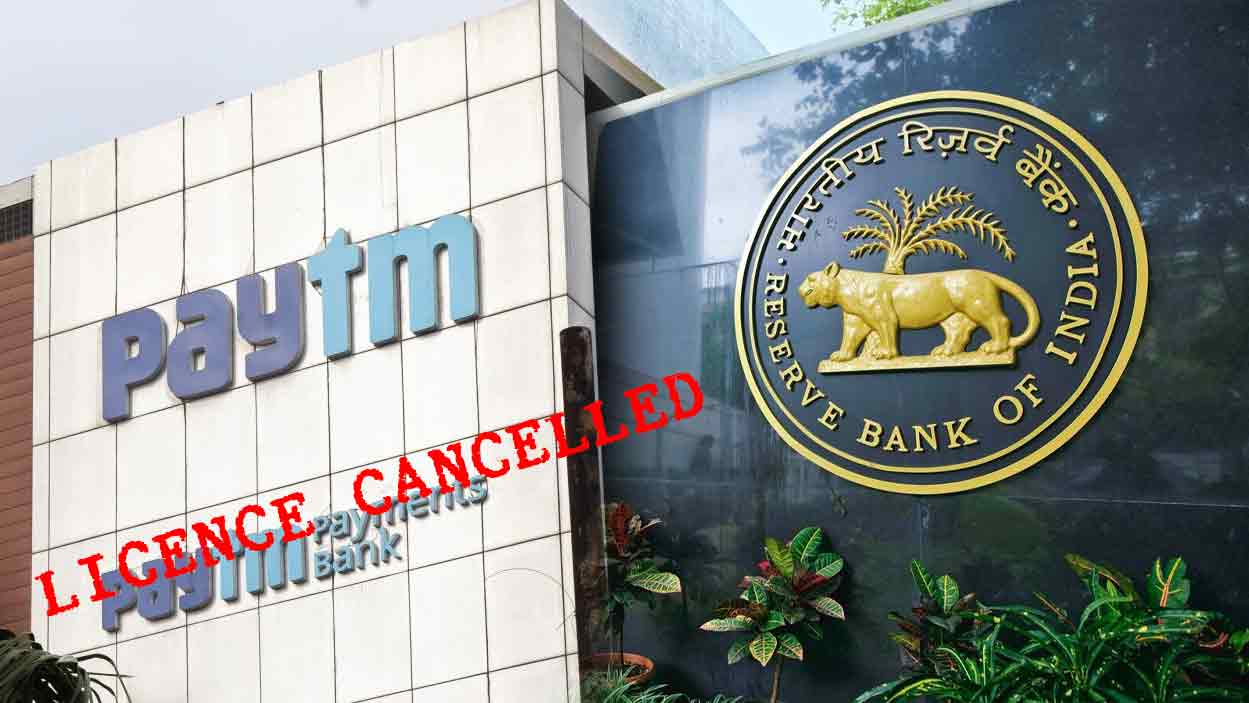
The Reserve Bank of India (RBI) on Friday, 24th April, cancelled the banking licence of PayTM Payments Bank, bringing an end to its operations as a bank after years of regulatory scrutiny. The decision comes more than two years after the central bank had first imposed restrictions on the entity over multiple rule violations.
Breaking || RBI Cancels Paytm Payments Bank Licence– Banking Licence Cancelled With Immediate Effect– Paytm Payments Bank Barred From All Operations– RBI Moves High Court For Closure— TIMES NOW (@TimesNow) April 24, 2026
Why RBI canceled the licence
As per the RBI’s order issued on Friday, 24th April, Paytm Payments Bank will not be allowed to continue banking activities under the Banking Regulations Act. Further, the central bank clarified that running the bank the way it was doing was in no way beneficial for the depositors and the public at large.
“Banks’ affairs or management are not in the interests of the depositors or the public,” says the RBI’s statement. Additionally, it added that the bank did not meet the stipulated requirements of getting a payments bank license.
The RBI further said that the management’s conduct was “prejudicial to the interest of the depositors,” which is a serious concern for any financial institution. Based on these findings, the central bank has decided to close down the banking firm. However, it has assured the clients that the bank has enough capital to return all deposits made.
The Paytm Payments Bank is an Indian payments bank company established in 2015 under One 97 Communications. The bank started as a payment bank where it could only accept small savings and deposits, but without offering any loan services like traditional banks.
What the RBI said in its order
Explaining its decision, the RBI cited specific legal provisions under the Banking Regulation Act, 1949. It said that the bank failed to meet the conditions required to continue holding a banking licence.
“Thus, the bank is not complying with provisions of Section 22 (3) (c) of the Banking Regulations Act. No useful purpose or public interest would be served by allowing the bank to continue,” the RBI said.
The Reserve Bank of India (RBI) has cancelled the banking licence issued to Paytm Payments Bank Limited under Section 22(4) of the Banking Regulation Act, 1949 (‘BR Act’) effective from close of business on April 24, 2026. Consequently, Paytm Payments Bank Limited is prohibited… pic.twitter.com/B746of2bah— ANI (@ANI) April 24, 2026
The central bank also noted that the bank did not comply with the terms of its licence, which is a violation under Section 22 (3)(g) of the Act. As a result, it has now been barred from carrying out any form of banking business with immediate effect.
Under the RBI scanner since 2018
Paytm Payments Bank has been facing regulatory scrutiny for several years now. As far back as 2018, the RBI had flagged multiple issues related to compliance, especially around know-your-customer (KYC) norms.
One major concern was that a single PAN card was linked to multiple accounts, raising fears that rules could be bypassed. The RBI also found that transactions were being allowed beyond prescribed limits in some cases, which increased the risk of money laundering.
An audit conducted in June 2018 revealed serious gaps in how new customers were being onboarded. Proper verification processes were not always followed, leading the RBI to order the bank to stop adding new customers until it fixed these issues.
Over time, the RBI continued to tighten its grip on the bank. RBI’s decision comes more than two years after it first imposed restrictions on PPBL and over a year after severe business curbs were placed on the entity. The RBI’s scrutiny of Paytm Payments Bank dates back to at least March 2022, when the regulator directed the bank to stop onboarding new customers with immediate effect due to “material supervisory concerns.”
The situation became worse in January 2024 when the RBI instructed the bank not to accept any more new deposits owing to concerns related to customer identification, fund usage, and weak technology systems. The restrictions were originally set to take effect from February 29, 2024, but were later extended to March 15, 2024, to allow customers and merchants time to make alternative arrangements.
Customers were allowed to withdraw or utilise their existing balances without restrictions, and pipeline transactions initiated before the cutoff were to be settled by mid-March 2024. The 2024 curbs effectively halted most banking activities at PPBL while the parent company, One97 Communications (Paytm), worked to migrate operations and partnerships. Despite these measures, the bank continued to operate in a highly restricted manner until the full licence cancellation.
The RBI also imposed a penalty of ₹5.39 crore in October 2023 for non-compliance with regulatory guidelines. Among the concerns raised were violations of KYC norms and the failure to maintain a clear separation between the bank and its parent company, One 97 Communications.
Impact on Paytm and its ecosystem
The RBI’s action had a major impact on Paytm’s overall business. Shares of One 97 Communications saw a sharp fall, and its integrated payments system faced disruptions. Services like wallets, FASTag, and merchant settlements were affected.
To deal with the situation, Paytm had to partner with other banks like Axis Bank and Yes Bank to continue offering payment services, including UPI. It also had to shift its infrastructure and users, which increased costs and led to some customers and merchants moving to competitors like Google Pay and PhonePe.
What it means for users
For banking customers, the RBI has clarified that their money is safe. The central bank has stated that it has enough liquidity to repay all depositors during the winding-up process.
At the same time, services on the Paytm app will continue as usual. The company has said that features like UPI payments, mobile recharges, QR payments, and payment gateway services will not be affected. This is because Paytm Payment Bank is a separate entitty, and not linked to the payment services platform.
One 97 Communications has also clarified that it has no financial exposure to the payments bank, as it had already written off its investment earlier. It added that other services like Paytm Money and Paytm Gold will continue to operate normally.
The cancellation of Paytm Payments Bank’s licence sends a strong signal from the RBI about the importance of compliance in the financial sector.