PM Modi asks Indians not to buy gold for a year: Read how gold imports burden economy, cause massive Forex outflow and widen trade deficit
On 10th April (Sunday), Prime Minister Narendra Modi urged for the conservation of foreign exchange reserves amid the crisis in West Asia. He asked people to promote domestic travel rather than unnecessary international travel, foreign weddings and vacations. He also requested Indians to refrain from buying non-essential gold for a year to lessen the strain on foreign exchange outflows. “Gold purchases are another area where foreign exchange is used extensively. In the national interest, we must resolve not to purchase gold for a year,” PM Modi conveyed while addressing a Bharatiya Janata Party (BJP) rally in Hyderabad. Amid ongoing conflict in West Asia and growing fuel supply concerns, Prime Minister Narendra Modi made 7 appeals to the people of IndiaImage Source: MyGov India pic.twitter.com/JEj3Wg5OYG— OpIndia.com (@OpIndia_com) May 11, 2026 Gold is usually considered as a “safe haven” asset amid geopolitical turmoils. Hence, investors flock to acquire it in times of dispute or unpredictability. However, rising crude oil prices are also fuelling concerns about protracted inflation and soaring interest rates across the globe. Hence, the matter has turned out to be more complicated. How West Asia war impacted the economy and Gold investment Oil prices have jumped again as worries about disruptions in the Strait of Hormuz intensified following President Donald Trump’s rejection of Iran’s recent peace proposal. Global inflation risks are boosted by rising oil costs, which led central banks such as the US Federal Reserve to maintain higher interest rates for longer. This consequently has an adverse effect on gold since it doesn’t provide yield or interest. Investors frequently favour interest-bearing assets, including bonds and fixed-income instruments over bullion when interest rates remain substantial. On the other hand, India is one of the biggest importers of gold in the world and procurement increases dramatically during holidays and the marriage season. The country pays for the majority of its gold imports using foreign currency, because domestic gold production is minimal and the growing global gold prices put an additional financial strain on its coffers. An uptick during a time of excessive crude prices exacerbates the trade gap and imposes greater pressure on the rupee and foreign exchange stock. The higher consumption causes a dollar drain and expands the nation’s import bill. Moreover, global gold prices have been volatile due to the consistent fight between Iran and the United States, with bullion markets responding dramatically to each provocation and setback in the ceasefire. Therefore, the appeal made by PM Modi is a proactive move to strengthen the finances by shaping the spending habits of people. This is important since India’s enormous yearly demand for gold is largely met by supplies from abroad. The action is linked to the mounting economic difficulties triggered by the elevated cost of energy and tensions in the Middle East. The accelerating impact on vulnerable foreign reserves India’s foreign exchange reserves are squeezed by its hefty gold shipments which account for about 9% of its entire import bill and are second only to crude oil. The projected value of these imports in FY26 was $72 billion. The matter has been made worse by the ongoing strife which has pushed up costs of fundamental goods like fertiliser and oil. The current account deficit swelled as a consequence of these pressures, reaching $13.17 billion in Q4 2025. Thus, India’s foreign currency reserves slipped from a peak of $728.49 billion in February 2026 to roughly $690.69 billion by early May 2026. According to International Monetary Fund (IMF) projections, the country’s current account deficit could touch $84.5 billion in 2026 or around 2% of GDP. It is continually widening, which shows that more money is leaving India than entering it. Meanwhile, India imported over $72 billion worth of gold in FY26, a 24% boost over the earlier year. Representational Graph via AI The four items (crude oil, gold, vegetable oils and fertilisers) depicted in the graph account for 31.1% of all imports into India. Gold alone contributes to over 10% of the entire import budget. Hence, the prime minister’s suggestion to cut back on gold purchases is a direct means of reducing foreign exchange expenditures and safeguarding these key reserves. The interest of Indians in gold investments poses a serious challenge during critical times The fact that gold has transformed into more than just a cultural commodity associated with festivals and weddings in India further emphasises the prime minister’s statement. For the first time in history, Indians are obtaining more gold for investments than jewellery in 2026. Gold is rapidly being employed as a financial hedge against uncertainties. The World Gold Council (WGC) released data last month that revealed a major shift in the gold market in
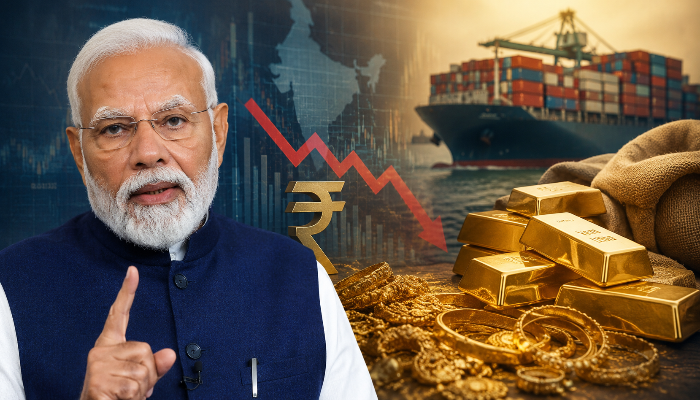
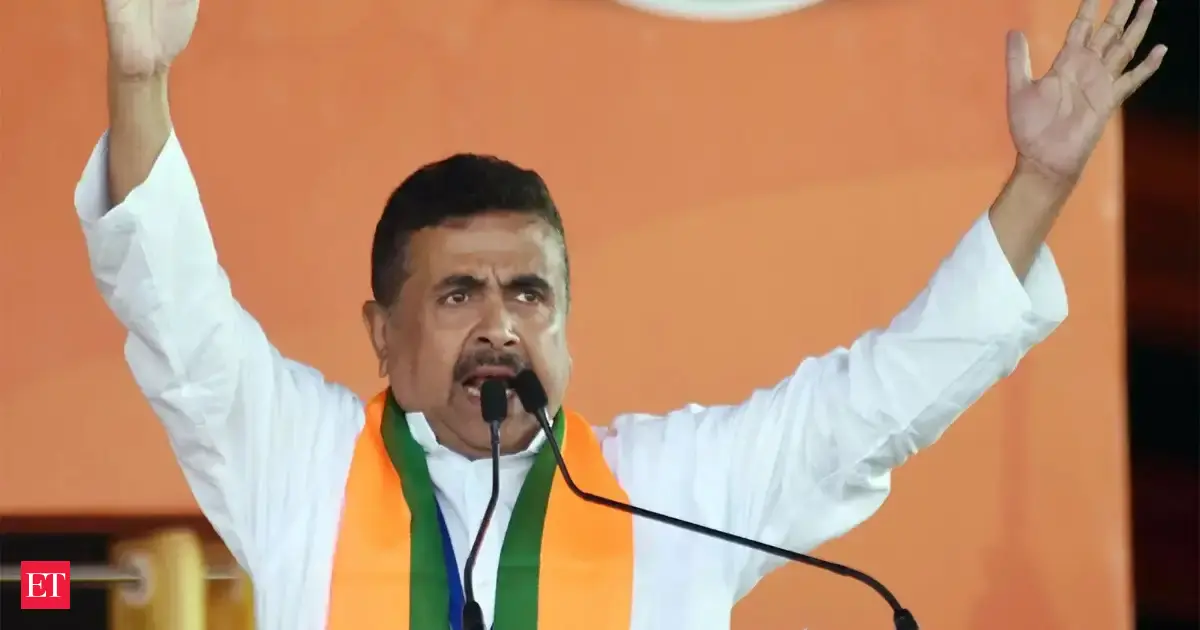
On 10th April (Sunday), Prime Minister Narendra Modi urged for the conservation of foreign exchange reserves amid the crisis in West Asia. He asked people to promote domestic travel rather than unnecessary international travel, foreign weddings and vacations. He also requested Indians to refrain from buying non-essential gold for a year to lessen the strain on foreign exchange outflows.
“Gold purchases are another area where foreign exchange is used extensively. In the national interest, we must resolve not to purchase gold for a year,” PM Modi conveyed while addressing a Bharatiya Janata Party (BJP) rally in Hyderabad.
Amid ongoing conflict in West Asia and growing fuel supply concerns, Prime Minister Narendra Modi made 7 appeals to the people of IndiaImage Source: MyGov India pic.twitter.com/JEj3Wg5OYG— OpIndia.com (@OpIndia_com) May 11, 2026
Gold is usually considered as a “safe haven” asset amid geopolitical turmoils. Hence, investors flock to acquire it in times of dispute or unpredictability. However, rising crude oil prices are also fuelling concerns about protracted inflation and soaring interest rates across the globe. Hence, the matter has turned out to be more complicated.
How West Asia war impacted the economy and Gold investment
Oil prices have jumped again as worries about disruptions in the Strait of Hormuz intensified following President Donald Trump’s rejection of Iran’s recent peace proposal. Global inflation risks are boosted by rising oil costs, which led central banks such as the US Federal Reserve to maintain higher interest rates for longer. This consequently has an adverse effect on gold since it doesn’t provide yield or interest. Investors frequently favour interest-bearing assets, including bonds and fixed-income instruments over bullion when interest rates remain substantial.
On the other hand, India is one of the biggest importers of gold in the world and procurement increases dramatically during holidays and the marriage season. The country pays for the majority of its gold imports using foreign currency, because domestic gold production is minimal and the growing global gold prices put an additional financial strain on its coffers. An uptick during a time of excessive crude prices exacerbates the trade gap and imposes greater pressure on the rupee and foreign exchange stock. The higher consumption causes a dollar drain and expands the nation’s import bill.
Moreover, global gold prices have been volatile due to the consistent fight between Iran and the United States, with bullion markets responding dramatically to each provocation and setback in the ceasefire. Therefore, the appeal made by PM Modi is a proactive move to strengthen the finances by shaping the spending habits of people.
This is important since India’s enormous yearly demand for gold is largely met by supplies from abroad. The action is linked to the mounting economic difficulties triggered by the elevated cost of energy and tensions in the Middle East.
The accelerating impact on vulnerable foreign reserves
India’s foreign exchange reserves are squeezed by its hefty gold shipments which account for about 9% of its entire import bill and are second only to crude oil. The projected value of these imports in FY26 was $72 billion. The matter has been made worse by the ongoing strife which has pushed up costs of fundamental goods like fertiliser and oil.
The current account deficit swelled as a consequence of these pressures, reaching $13.17 billion in Q4 2025. Thus, India’s foreign currency reserves slipped from a peak of $728.49 billion in February 2026 to roughly $690.69 billion by early May 2026. According to International Monetary Fund (IMF) projections, the country’s current account deficit could touch $84.5 billion in 2026 or around 2% of GDP.
It is continually widening, which shows that more money is leaving India than entering it. Meanwhile, India imported over $72 billion worth of gold in FY26, a 24% boost over the earlier year.
Representational Graph via AI
The four items (crude oil, gold, vegetable oils and fertilisers) depicted in the graph account for 31.1% of all imports into India. Gold alone contributes to over 10% of the entire import budget. Hence, the prime minister’s suggestion to cut back on gold purchases is a direct means of reducing foreign exchange expenditures and safeguarding these key reserves.
The interest of Indians in gold investments poses a serious challenge during critical times
The fact that gold has transformed into more than just a cultural commodity associated with festivals and weddings in India further emphasises the prime minister’s statement. For the first time in history, Indians are obtaining more gold for investments than jewellery in 2026. Gold is rapidly being employed as a financial hedge against uncertainties.
The World Gold Council (WGC) released data last month that revealed a major shift in the gold market in India. In the March quarter, investment demand for gold increased 54% year over year to 82 tonnes, surpassing demand for jewellery, which decreased by almost 20% to 66 tonnes. Despite record-high prices, the overall demand for gold climbed by 10%.
Representational Graph via AI
Inflows into gold exchange-traded funds rose by 186% during the March quarter as shares reached all-time highs. In India’s contemporary gold market, transactions of bars and coins almost equalled the demand for jewellery. This pattern presents a massive challenge during critical periods which already witness astronomical oil prices.
The large volume of gold imports necessary to meet domestic local demand becomes especially troublesome as it widens the trade deficit and weakens the currency. Thus, the timing of PM Modi’s remark is vital. The West Asia conflict is already hurting global supply chains and energy imports are going to be more and more expensive.
The nation is specifically susceptible to shocks from the outside because it imports around 90% of its crude oil needs. Foreign exchange reserves find themselves under double constraint when heavy gold imports are introduced in this scenario. Crude oil, gas, edible oil and fertilisers are all ‘necessary’ commodities, but gold is not. Its value lies in socio-cultural and aesthetic needs, not ‘necessity’.
Strong demand, negligible production and a recent downturn
India absorbs 700-800 tonnes of gold annually due to its profound cultural traditions, celebrations, nuptials and application as a store of value. The nation’s meagre domestic production, roughly 1-2 tonnes per year, is far less than this requirement. India is the largest importer of the precious metal, second only to China since it imports more than 90% of its gold needs.
Image via World Gold Council/Voronoi
New Delhi bought $51.8 billion worth of gold in 2024, making it the fifth-largest importer in the world by value. During the previous fiscal year, India imported almost 60 tonnes of gold per month with a monthly average of about $6 billion. However, imports plummeted from around 100 tonnes in January to roughly 65-66 tonnes in February, then to 20-22 tonnes in March.
According to reports, imports were only 15 tonnes roughly $1.3 billion in April, offering further short-term respite for policymakers trying to mitigate stress from the external sector. It is among the lowest monthly levels recorded in decades outside of the Covid pandemic.
PM Modi’s plea alongside notable administrative and tax issues are considered responsible for this precipitous decline. Major banks have also halted shipments owing to multiple factors. The India International Bullion Exchange (IIBX) continues to receive some gold, but it takes longer and costs more money. India’s gold prices are higher than those throughout the world due to this shortage.
The influence on gold prices subsequent to PM Modi’s appeal
Stock prices for prominent jewellers fell dramatically following PM Modi’s recommendation. The price of 24 carat gold has come down by ₹603.0 to ₹15192.0 per gram. The value of 22 carat gold has sunk by ₹552.35 to ₹13915.872 per gram, while the price of 24 carat gold has moved by -1.84% over the last week and by 0.13% over the past month. Nevertheless, it is not feasible to predict how long this trend will hold in the future.
It is noteworthy that India has made multiple attempts in the past to reduce gold imports through increased import taxes, limitations and gold monetisation programs. However, demand has stayed robust because gold is not considered as a luxury product and serves as a blend of financial insurance, security and savings. Consequently, the World Gold Council has forecasted that investment demand will persist to be sturdy in the upcoming quarters.
The analysts expressed that it is unclear how successful PM Modi’s request will be in the long run even though the temporary import ban would improve India’s trade balance. The government’s actions have demonstrated a constant focus on managing import costs and safeguarding foreign exchange reserves. However, the situation is probably going to remain dynamic as government attempt to strike a balance between gold consumption and economic stability.