Karnataka: NIA court convicts 4 Bangladeshi nationals in transnational human trafficking case; Read how illegal entry, fake Indian IDs and trafficking network were uncovered
On 8th April, a Special NIA court in Bengaluru convicted four Bangladeshi nationals, Zakir Khan, Badal Houladar, Kabir Talukdar and Mohammed Bachchu Gharami, in a transnational human trafficking case. The four were sentenced in a 2023 case that was registered suo motu by NIA in November that year. There were a total of fourteen accused in the case and the convicted individuals are Accused No 9 to Accused No 12. Special court in Bengaluru has convicted and sentenced four Bangladeshis to 3 years of RI in a transnational human trafficking case. pic.twitter.com/jncDFeFYR2— NIA India (@NIA_India) April 9, 2026 The court has sentenced all four to three years of rigorous imprisonment. They were also fined Rs 15,000 under Section 14 and Section 14A(b) of the Foreigners Act, Rs 5,000 under Section 3 of the Passport Entry into India Act, with additional imprisonment in case of default. Notably, all four had pleaded guilty in the last hearing that happened on 9th March this year. The court directed that all substantive sentences would run concurrently and the period already spent in judicial custody would be set off against the sentence. The court further ordered that the accused be deported to Bangladesh if not required in any other case after the completion of the sentence. The trial of the remaining accused will continue and the next date of hearing is 15th April. OpIndia went through over 20 court documents related to the case. How the case began The case originates from specific intelligence inputs received by the National Investigation Agency in early November 2024 regarding a transnational human trafficking network operating in Karnataka. The network was linked to facilitators in Assam, Tripura and Bangladesh. The information received by the investigation agency indicated that Bangladeshi nationals were being illegally brought into India. They were being provided fraudulent Indian identity documents and employed in waste segregation units under exploitative conditions. Based on these inputs, NIA registered the case and initiated searches at multiple locations. On 7th and 8th November 2023, raids were conducted on several locations including one at a garbage dumping yard at Horamavu Main Road in Seegehalli, Bengaluru. According to the deposition of one of the witnesses recorded in October 2025, who accompanied NIA officials as an independent witness, the investigating team identified a tarpaulin shed at the location based on the intelligence inputs. When they knocked at the shed, a person came out who was identified as Mirazul, accused no 8 in the case. The officials conducted a search and recovered multiple Aadhaar cards, PAN card, bank passbook, ATM card, driving licence, mobile phone with SIM cards and additional SIM cards. Mirazul was arrested and the items were seized. Subsequently, other locations linked to other accused were raided and the investigators recovered Bangladeshi documents, passports, Bangladeshi currency and identity records. They recovered Bangladeshi documents and passport copies from accused no 1, identified as Firdoush Bapri alias Firdous Mohammed Moksed. Similarly, Bangladeshi passport and documents were recovered from accused no 2, Muhammad Oli Ullah, Bangladesh currency, passport related material and documents from accused no 4, Masud Sardar, Bangladesh issued birth certificate from accused no 9, Zakir Khan and more. As investigation moved ahead, investigators found that several accused possessed Indian identity documents including Aadhaar cards, PAN cards, ration cards and voter ID cards despite being Bangladeshi nationals. This indicated that the documents were procured via fraudulent means. Witness statements recorded during investigation and court hearings stated that the accused collected money from Bangladeshi nationals and trafficked them into India through the Indo Bangladesh border near Benapole. Victims were promised jobs and valid Indian identity documents. Once they arrived, they were confined in sheds and made to work in waste segregation units for meagre wages. When they demanded better employment, the accused threatened that they would be handed over to police and arrested. How the trial proceeded and why court rejected bail applications According to the court documents accessed by OpIndia, several accused applied for bail and claimed they were innocent. However, based on the investigation and evidence, the court rejected several bail pleas over time. In an order passed on 4th April 2024, the court rejected the bail application of accused no 6 identified as Suma Shaikh Zakir. He claimed in his plea that he was innocent and falsely implicated in the case. He further claimed that he had been living in Bengaluru for over 20 years. He sought bail on medical grounds claiming a knee fracture. The prosecution opposed the plea and stated that chargesheet material showed he was actively involved in trafficking Bangla
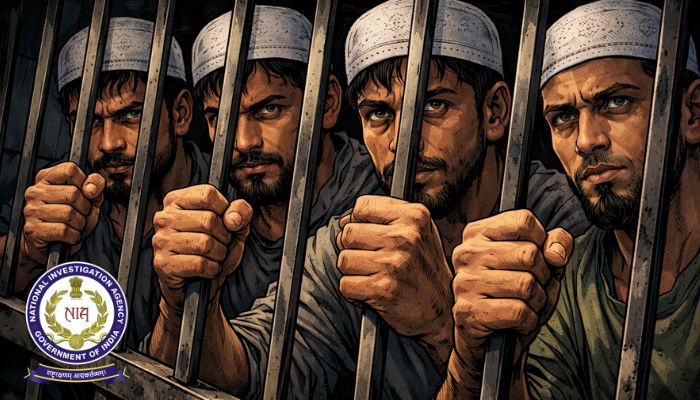
On 8th April, a Special NIA court in Bengaluru convicted four Bangladeshi nationals, Zakir Khan, Badal Houladar, Kabir Talukdar and Mohammed Bachchu Gharami, in a transnational human trafficking case.
The four were sentenced in a 2023 case that was registered suo motu by NIA in November that year. There were a total of fourteen accused in the case and the convicted individuals are Accused No 9 to Accused No 12.
Special court in Bengaluru has convicted and sentenced four Bangladeshis to 3 years of RI in a transnational human trafficking case. pic.twitter.com/jncDFeFYR2— NIA India (@NIA_India) April 9, 2026
The court has sentenced all four to three years of rigorous imprisonment. They were also fined Rs 15,000 under Section 14 and Section 14A(b) of the Foreigners Act, Rs 5,000 under Section 3 of the Passport Entry into India Act, with additional imprisonment in case of default.
Notably, all four had pleaded guilty in the last hearing that happened on 9th March this year. The court directed that all substantive sentences would run concurrently and the period already spent in judicial custody would be set off against the sentence. The court further ordered that the accused be deported to Bangladesh if not required in any other case after the completion of the sentence.
The trial of the remaining accused will continue and the next date of hearing is 15th April.
OpIndia went through over 20 court documents related to the case.
How the case began
The case originates from specific intelligence inputs received by the National Investigation Agency in early November 2024 regarding a transnational human trafficking network operating in Karnataka. The network was linked to facilitators in Assam, Tripura and Bangladesh.
The information received by the investigation agency indicated that Bangladeshi nationals were being illegally brought into India. They were being provided fraudulent Indian identity documents and employed in waste segregation units under exploitative conditions. Based on these inputs, NIA registered the case and initiated searches at multiple locations.
On 7th and 8th November 2023, raids were conducted on several locations including one at a garbage dumping yard at Horamavu Main Road in Seegehalli, Bengaluru. According to the deposition of one of the witnesses recorded in October 2025, who accompanied NIA officials as an independent witness, the investigating team identified a tarpaulin shed at the location based on the intelligence inputs.
When they knocked at the shed, a person came out who was identified as Mirazul, accused no 8 in the case. The officials conducted a search and recovered multiple Aadhaar cards, PAN card, bank passbook, ATM card, driving licence, mobile phone with SIM cards and additional SIM cards. Mirazul was arrested and the items were seized.
Subsequently, other locations linked to other accused were raided and the investigators recovered Bangladeshi documents, passports, Bangladeshi currency and identity records. They recovered Bangladeshi documents and passport copies from accused no 1, identified as Firdoush Bapri alias Firdous Mohammed Moksed.
Similarly, Bangladeshi passport and documents were recovered from accused no 2, Muhammad Oli Ullah, Bangladesh currency, passport related material and documents from accused no 4, Masud Sardar, Bangladesh issued birth certificate from accused no 9, Zakir Khan and more.
As investigation moved ahead, investigators found that several accused possessed Indian identity documents including Aadhaar cards, PAN cards, ration cards and voter ID cards despite being Bangladeshi nationals. This indicated that the documents were procured via fraudulent means.
Witness statements recorded during investigation and court hearings stated that the accused collected money from Bangladeshi nationals and trafficked them into India through the Indo Bangladesh border near Benapole. Victims were promised jobs and valid Indian identity documents.
Once they arrived, they were confined in sheds and made to work in waste segregation units for meagre wages. When they demanded better employment, the accused threatened that they would be handed over to police and arrested.
How the trial proceeded and why court rejected bail applications
According to the court documents accessed by OpIndia, several accused applied for bail and claimed they were innocent. However, based on the investigation and evidence, the court rejected several bail pleas over time.
In an order passed on 4th April 2024, the court rejected the bail application of accused no 6 identified as Suma Shaikh Zakir. He claimed in his plea that he was innocent and falsely implicated in the case. He further claimed that he had been living in Bengaluru for over 20 years. He sought bail on medical grounds claiming a knee fracture.
The prosecution opposed the plea and stated that chargesheet material showed he was actively involved in trafficking Bangladeshi nationals. The prosecution further contended that Zakir failed to provide valid proof that he was an Indian national. It was also argued that if released on bail, he could abscond and threaten witnesses.
While rejecting the bail plea, the court observed that witness statements and seized documents prima facie showed that Zakir was indeed a Bangladeshi national and he trafficked persons into India, confined them in sheds and forced them into labour for meagre wages. The court held that the possibility of absconding and influencing witnesses could not be ruled out.
First batch rejection of bail pleas
On 8th April 2024, the court rejected bail pleas filed by Firdoush, Mohammed Sohag Gazi, Zakir Khan, Mohammed Kabir Talukder and Mohammed Bachchu Gharami. The accused claimed in the plea that they were innocent and the allegations against them were baseless. They further argued that they belonged to respected families and have no criminal past. They also contended that they were in custody for over six months.
While opposing the bail pleas, the prosecution informed the court that the accused trafficked at least 22 Bangladeshi nationals into India on false promises of employment. They confined the illegal immigrants in waste segregation godowns. The prosecution argued that the accused also entered India illegally, possessed fraudulent Indian identity documents and were part of a transnational trafficking network.
Witness statements identified them as Bangladeshi nationals who brought victims into India. The prosecution also pointed to recovery of Bangladeshi documents, passports and currency from residences of accused.
While rejecting the plea, the court observed that there was prima facie material showing illegal entry into India, fraudulent procurement of Indian identity cards and trafficking of Bangladeshi nationals for forced labour. The court noted that the offences the accused were booked under were punishable with life imprisonment and victims were under the influence of the accused.
The court considered the seriousness of the allegations, risk of absconding and possibility of witness tampering and rejected the bail.
Bail rejection of main accused Firdoush
Just two months after that, on 22nd June 2024, the court rejected the bail application of Firdoush. The prosecution described him as the key organiser of the trafficking network operating in Bengaluru. The defence claimed that the alleged victims were working voluntarily in waste segregation units and were not confined or forced into labour.
The defence further claimed that Firdoush was an Indian citizen and had been residing in Bengaluru for years. They also argued that he had already undergone substantial judicial custody while pointing to delay in trial. They also claimed parity with other accused who had sought relief from the court.
The prosecution strongly opposed the bail plea and placed reliance on statements of rescued victims, seizure material recovered during raids, and documentary evidence that indicated that Firdoush played a central role in trafficking Bangladeshi nationals into India.
The prosecution submitted that Firdoush and his associates lured victims from Bangladesh with promises of employment and legal identity documents. After entering India illegally, they were housed in temporary sheds and forced to work on minimal wages. Furthermore, Firdoush controlled movement of the victims, collected money from them, and arranged forged Indian identity documents including Aadhaar and other records.
The prosecution told the court that several documents seized during searches linked Firdoush directly to other accused and to Bangladesh nationals. These included mobile phone data, contact numbers with Bangladesh country codes, identity papers of suspected Bangladeshi nationals, and records that indicated coordination for illegal entry into India.
The NIA also argued that the accused had failed to produce credible proof of Indian citizenship and that authenticity of documents relied upon by him was under verification.
While rejecting the bail, the court observed that the material placed on record showed prima facie involvement of the accused in a well structured human trafficking operation. The court noted that witness statements indicated victims were transported across the Indo Bangladesh border and then shifted to Bengaluru where they were made to work at waste segregation godowns. The court also recorded that the allegations included illegal entry into India, fabrication of identity documents, and trafficking for labour exploitation.
The court emphasised the seriousness of the allegation and the organised nature of the network. It observed that Firdoush was alleged to be the principal coordinator who facilitated illegal entry of Bangladeshi nationals into India, arranged accommodation, and controlled their employment.
The court held that if he was released on bail, there was a real possibility that he could abscond, particularly because his nationality itself was disputed. The court also noted that witnesses were vulnerable and could be influenced, especially as several victims were allegedly under the control of the accused earlier.
The court rejected the argument regarding delay in the trial and observed that the investigation involved multiple accused and a transnational element which justified the time taken by the investigation agency. It further noted that the plea was successive in nature and no substantial changes in circumstances had been shown since the earlier rejection of bail.
The court concluded that the accusations were serious, punishable with severe penalties, and supported by documentary and oral evidence at the prima facie stage. The court rejected the bail noting that his release at that stage could hamper trial.
Series of bail applications rejected
For months, several bail pleas were submitted in the court by the accused in the case and all of them were rejected. On 23rd September, the court rejected bail pleas of Mohammed Oli Ullah and Mohammed Bellal. Both claimed innocence and argued lack of material linking them to offences.
However, the prosecution argued that they were Bangladeshi nationals who illegally entered India and forged Indian identity documents, and trafficked victims. The court observed that the documents recovered from them during searches and witness statements indicated both of them were involved in the case. The court rejected the bail plea stating there was risk of absconding and influencing witnesses.
Then on 13th November, the court rejected the bail plea of Muhammed Idris. The defence claimed that he was an Indian citizen working as a waste picker. The prosecution stated he received trafficked victims in Bengaluru, confined them and forced them into labour.
The court observed that witness statements, seized documents and mobile phone data containing Bangladeshi contacts indicated his involvement in trafficking. The court noted that authenticity of identity documents was under verification and that he failed to produce citizenship proof and rejected the bail plea.
Framing of charges
On 19 May 2025, the Special NIA Court framed charges against all fourteen accused after examining the charge sheet, seizure material and witness statements. The court held that there was sufficient prima facie material indicating the existence of an organised trafficking network bringing Bangladeshi nationals into India and employing them in waste segregation units in Bengaluru. The court observed that the allegations disclosed offences relating to criminal conspiracy, human trafficking, illegal entry, illegal stay, and violations of passport and immigration laws.
The court first recorded that Firdoush, Muhammed Oli Ullah, Amol Chandra Das, Masud Sarder, Md Sohag Gazi, Suma Shaikh Zakir, Sk Md Bellal, Md Mirazul Islam, Muhammed Sahajalal Haldar and Muhammed Idris had allegedly entered into a conspiracy over a long period prior to November 2023. As per the prosecution case accepted at the stage of charge, they identified Bangladeshi nationals, arranged their illegal entry into India through agents operating near the Indo Bangladesh border, and lured them with promises of employment, accommodation and Indian identity documents. The court held that these allegations constituted prima facie criminal conspiracy to traffic foreign nationals into India.
The court further observed that Firdoush, Muhammed Oli Ullah, Amol Chandra Das, Masud Sarder, Md Sohag Gazi, Suma Shaikh Zakir, Muhammed Sahajalal Haldar and Muhammed Idris were alleged to have directly trafficked Bangladeshi nationals into India and transported them to Bengaluru. The victims were allegedly confined in sheds and waste segregation godowns where they were made to work for long hours for meagre wages. Witness statements indicated that victims were threatened with police arrest and deportation if they attempted to leave. The court held that these allegations disclosed offences of trafficking for forced labour.
Separate allegations were recorded against Sk Md Bellal and Md Mirazul Islam. The court noted that these two accused allegedly trafficked specific victims identified as CW 31 and CW 32 into India under similar false assurances. After being brought into India, the victims were allegedly confined and forced to work in waste segregation units. The court observed that threats of arrest and deportation were allegedly used to control their movement.
The court also recorded that all fourteen accused, namely Firdoush, Muhammed Oli Ullah, Amol Chandra Das alias Sujib, Masud Sarder, Md Sohag Gazi, Suma Shaikh Zakir, Sk Md Bellal, Md Mirazul Islam, Zakir Khan, Md Badal Houladar, Md Kabir Talukder, Md Bachchu Gharami, Muhammed Sahajalal Haldar and Muhammed Idris, had allegedly entered India illegally without valid documents and continued residing in Bengaluru for several years. They were also alleged to have possessed Indian identity documents such as Aadhaar cards, PAN cards, ration cards and voter IDs which were suspected to have been obtained fraudulently.
The court further observed that the accused allegedly facilitated illegal entry of other Bangladeshi nationals by arranging border crossings and promising documentation. These acts, according to the court, attracted offences under the Foreigners Act relating to illegal entry, illegal stay and abetment of infiltration. The court also held that the accused entered India without valid passports and remained in violation of passport laws, attracting provisions of the Passport Entry into India Act and relevant rules.
After considering the witness statements, seizure material, and documentary evidence, the court concluded that there were sufficient grounds to proceed to trial against all fourteen accused for conspiracy, trafficking, illegal migration and related offences.
Discharge application of Suma Shaikh Zakir rejected
On 25th March 2025, the discharge application of Suma Shaikh Zakir was rejected. He claimed innocence and relied on Indian identity documents. The prosecution cited seizure of a Bangladeshi SIM card, visiting cards, mobile phones and chats with Bangladeshi numbers. The court held that witness statements and seized materials created grave suspicion and warranted trial.
Bail pleas of Amol alias Sujib rejected
On 23rd August 2025, bail of accused no 3 Amol Chandra Das alias Sujib was rejected. He claimed Indian citizenship and parity with Suma Shaikh Zakir. The prosecution argued he illegally entered India and trafficked Bangladeshi nationals. The court noted the plea was successive and risk of absconding existed.
On 24th January 2026, bail of accused no 4 Masud Sarder was rejected. He claimed Indian citizenship and denied involvement. The prosecution cited recovery of Bangladeshi currency, passport details, vaccination certificate, mobile phones and birth registration certificates. The court also relied on a letter dated 4th September 2025 stating his birth certificate was not found in official records. The court held that he illegally entered India, obtained fraudulent identity documents and trafficked victims. Bail was rejected.
Guilty plea and conviction
During proceedings, accused nos 9 Zakir Khan, 10 Badal Houladar, 11 Kabir Talukdar and 12 Mohammed Bachchu Gharami pleaded guilty on 9th March 2026. On 8th April 2026, the court convicted the four and sentenced them to three years rigorous imprisonment with fines. The court ordered sentences to run concurrently and directed deportation after completion of sentence.
Trial continues
The case involves fourteen accused including Firdoush, Muhammed Oli Ullah, Amol Chandra Das, Masud Sarder, Md Sohag Gazi, Suma Shaikh Zakir, Sk Md Bellal, Md Mirazul Islam, Zakir Khan, Md Badal Houladar, Md Kabir Talukder, Md Bachchu Gharami, Muhammed Sahajalal Haldar and Muhammed Idris. With accused nos 9 to 12 convicted after pleading guilty, the trial against the remaining accused continues and the matter is listed for 15th April.