From ‘India’s cleanest city’ to public health emergency: All you need to know about deadly water contamination in Indore
Indore, which over the years has been recognised as the cleanest city in India, finds itself in a state of severe health crisis in early 2026. In the Bhagirathpura area of the district, at least 15 people have died, and over 200 are still in hospitals from a nasty water contamination mess as of early January 2026. Folks started getting sick from vomiting, diarrhoea, fever, and dehydration after drinking the municipal tap water that turned foul-smelling and dirty-looking. How the crisis unfolded: Timeline and cause Back in mid-December 2025, people in Bhagirathpura, an area with about 15,000 residents, first noticed something off with their tap water. It looked discoloured, smelled bad like sewage, and tasted bitter. They kept complaining to city officials, but nothing happened fast enough. By 25th December, families were still using it for cooking and drinking since there weren’t good options. Image via PTI Things got bad quickly on 27th and 28th of December. The first bunch of illnesses caused severe stomach issues from the tainted water. Local clinics saw patients coming in weak and dehydrated. Health teams started checking homes. Then, on 29th December, cases exploded. Mayor Pushyamitra Bhargava said at least three deaths were tied to diarrhoea from the bad water, with more folks rushing to bigger hospitals. On 30th December, over 100 were admitted, and reports said more than 1,100 got sick in total. Symptoms all pointed to waterborne bugs. Surveys ramped up house-to-house. By 31st December, death counts were fuzzy; officials said four to seven, but families linked even a six-month-old baby’s death to milk made with the water. The state government announced ₹2 lakh compensation for the families of the deceased. Administrative action followed, with a zonal officer and assistant engineer suspended and a sub-engineer dismissed. On 1st and 2nd January, lab tests finally confirmed it, bacteria like E. coli, Salmonella, and Vibrio cholerae in the supply, mixed in from sewage leaking through a busted 30-year-old pipeline under a public toilet near a police outpost. They fixed the pipe, isolated it, cleaned things up, and started sending clean water via over 20 tankers a day. Officials told everyone to boil water or avoid taps till checks cleared it. Over 1,400 to 2,000 affected in all, with promises for better monitoring statewide. NHRC steps in, seeks accountability On Thursday, 1st January, 2026, the National Human Rights Commission (NHRC) took suo motu cognisance of the case on the 1st of January through reports that appeared in the media. The Commission noted that if the reports were true, the case embodied a grave breach of the victims’ right to health and life. The commission fired off a notice to Madhya Pradesh‘s Chief Secretary, demanding a full report within two weeks. News from 31st December pointed to the main drinking water pipe running right under a public toilet, a leak let sewage flood in. Broken lines everywhere made it worse, pushing dirty water straight to homes. This kind of neglect hit hard on vulnerable folks’ right to safe living. Jal Jeevan Mission findings raise bigger concerns A fresh Union government report released on Sunday, 4th January, under the Jal Jeevan Mission showed big problems with rural drinking water in Madhya Pradesh. Out of samples from rural spots, 36.7% weren’t safe to drink – tested for E. coli, total coliform in certified labs, plus pH checks right there. This came out amid the Indore deaths, now at 15 confirmed from city supply issues. In Indore district’s rural homes, just 33% got potable water; well below acceptable standards. Some areas like Alirajpur hit 100% good, but others like Anuppur had zero. Gwalior at 20.9%, Morena 25.2%, and more showed spotty results. Bhopal was 56.9%, Jabalpur 54.3%. About 23.4% of homes didn’t get steady supply, 36.7% had busted taps during checks. Only 3.7% griped about taste, but 22% said not enough water came safety slips often go unnoticed till it’s too late. Pollution Control Board warnings ignored for years This wasn’t out of nowhere. A Madhya Pradesh Pollution Control Board probe back in 2016-17 tested groundwater at 60 spots in Indore, including Bhagirathpura. Almost all had total coliform over 10 MPN per 100 ml – a clear sign of faecal sewage sneaking in from bad pipes and drainage. They told Indore Municipal Corporation: mark those pumps and wells unsafe, put up signs, stop sewage mixing. But large chunks of the city, especially old pipeline zones with waterlogging, stayed risky. Concerns over Indore’s water system were also highlighted in a 2019 Comptroller and Auditor General (CAG) report on water management in Indore and Bhopal. The report found serious deficiencies, despite a $200 million Asian Development Bank loan sanctioned in 2004 to improve water and sanitation infrastructure in Bhopal, Indore, Jabalpur, and Gwalior. It aimed for a clean, steady supply for
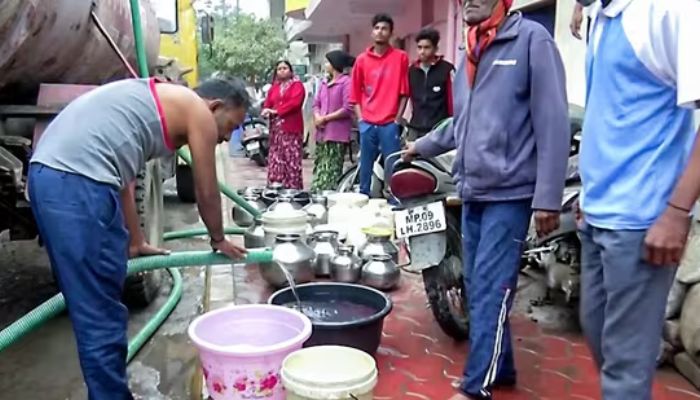

Indore, which over the years has been recognised as the cleanest city in India, finds itself in a state of severe health crisis in early 2026. In the Bhagirathpura area of the district, at least 15 people have died, and over 200 are still in hospitals from a nasty water contamination mess as of early January 2026. Folks started getting sick from vomiting, diarrhoea, fever, and dehydration after drinking the municipal tap water that turned foul-smelling and dirty-looking.
How the crisis unfolded: Timeline and cause
Back in mid-December 2025, people in Bhagirathpura, an area with about 15,000 residents, first noticed something off with their tap water. It looked discoloured, smelled bad like sewage, and tasted bitter. They kept complaining to city officials, but nothing happened fast enough. By 25th December, families were still using it for cooking and drinking since there weren’t good options.

Things got bad quickly on 27th and 28th of December. The first bunch of illnesses caused severe stomach issues from the tainted water. Local clinics saw patients coming in weak and dehydrated. Health teams started checking homes. Then, on 29th December, cases exploded. Mayor Pushyamitra Bhargava said at least three deaths were tied to diarrhoea from the bad water, with more folks rushing to bigger hospitals.
On 30th December, over 100 were admitted, and reports said more than 1,100 got sick in total. Symptoms all pointed to waterborne bugs. Surveys ramped up house-to-house. By 31st December, death counts were fuzzy; officials said four to seven, but families linked even a six-month-old baby’s death to milk made with the water.
The state government announced ₹2 lakh compensation for the families of the deceased. Administrative action followed, with a zonal officer and assistant engineer suspended and a sub-engineer dismissed.
On 1st and 2nd January, lab tests finally confirmed it, bacteria like E. coli, Salmonella, and Vibrio cholerae in the supply, mixed in from sewage leaking through a busted 30-year-old pipeline under a public toilet near a police outpost.
They fixed the pipe, isolated it, cleaned things up, and started sending clean water via over 20 tankers a day. Officials told everyone to boil water or avoid taps till checks cleared it. Over 1,400 to 2,000 affected in all, with promises for better monitoring statewide.
NHRC steps in, seeks accountability
On Thursday, 1st January, 2026, the National Human Rights Commission (NHRC) took suo motu cognisance of the case on the 1st of January through reports that appeared in the media. The Commission noted that if the reports were true, the case embodied a grave breach of the victims’ right to health and life.
The commission fired off a notice to Madhya Pradesh‘s Chief Secretary, demanding a full report within two weeks. News from 31st December pointed to the main drinking water pipe running right under a public toilet, a leak let sewage flood in. Broken lines everywhere made it worse, pushing dirty water straight to homes. This kind of neglect hit hard on vulnerable folks’ right to safe living.
Jal Jeevan Mission findings raise bigger concerns
A fresh Union government report released on Sunday, 4th January, under the Jal Jeevan Mission showed big problems with rural drinking water in Madhya Pradesh. Out of samples from rural spots, 36.7% weren’t safe to drink – tested for E. coli, total coliform in certified labs, plus pH checks right there. This came out amid the Indore deaths, now at 15 confirmed from city supply issues.
In Indore district’s rural homes, just 33% got potable water; well below acceptable standards. Some areas like Alirajpur hit 100% good, but others like Anuppur had zero. Gwalior at 20.9%, Morena 25.2%, and more showed spotty results. Bhopal was 56.9%, Jabalpur 54.3%. About 23.4% of homes didn’t get steady supply, 36.7% had busted taps during checks. Only 3.7% griped about taste, but 22% said not enough water came safety slips often go unnoticed till it’s too late.
Pollution Control Board warnings ignored for years
This wasn’t out of nowhere. A Madhya Pradesh Pollution Control Board probe back in 2016-17 tested groundwater at 60 spots in Indore, including Bhagirathpura. Almost all had total coliform over 10 MPN per 100 ml – a clear sign of faecal sewage sneaking in from bad pipes and drainage.
They told Indore Municipal Corporation: mark those pumps and wells unsafe, put up signs, stop sewage mixing. But large chunks of the city, especially old pipeline zones with waterlogging, stayed risky.
Concerns over Indore’s water system were also highlighted in a 2019 Comptroller and Auditor General (CAG) report on water management in Indore and Bhopal. The report found serious deficiencies, despite a $200 million Asian Development Bank loan sanctioned in 2004 to improve water and sanitation infrastructure in Bhopal, Indore, Jabalpur, and Gwalior. It aimed for a clean, steady supply for all.
But a 2019 CAG report slammed the mess: water only hit four zones daily in Indore, five in Bhopal. Just over half the families, 530,000 out of 941,000, had taps.
Leaks took 22 to 108 days to fix. From 2013-2018, 4,481 bad samples, 362,000 families in Bhopal and 533,000 in Indore without clean water, 545,000 water disease cases.
Losses were huge; 30-70% non-revenue water vanished, unknown. Tax collections tanked, with dues at Rs 470 crore. Supply was skimpy: 9-20 litres per person daily in Bhopal, 36-62 in Indore.
Tanks went uncleaned, no audits to spot waste. Experts call it criminal neglect, sewage lines laid carelessly near drinking pipes, both failing lets filth in. One activist said that if even one pipe held, no deaths. Another blamed blind city growth for more tragedies ahead.
Government action and official response
Chief Minister Mohan Yadav owned it, posting on X about strict steps. He ordered show-cause notices to Indore Municipal Commissioner and the Additional Commissioner, booted the Additional Commissioner, and yanked the Superintending Engineer from water works. They filled spots right away to fix the gap.
In a post on X, he wrote, “…I issued directions to the Indore Municipal Corporation Commissioner and Additional Commissioner to issue a show-cause notice in this regard, to immediately remove the Additional Commissioner from Indore, and to relieve the In-Charge Superintending Engineer of the charge of the Water Distribution Works Department. I also issued directions to immediately fill the necessary positions in the Indore Municipal Corporation with effect from now.”
आज सुबह मुख्य सचिव और अन्य अधिकारियों के साथ इंदौर के दूषित पेयजल प्रकरण में राज्य शासन द्वारा की जा रही कार्रवाई की समीक्षा की और आवश्यक दिशा-निर्देश दिए। अपर मुख्य सचिव (नगरीय प्रशासन एवं विकास) द्वारा प्रस्तुत रिपोर्ट पर भी चर्चा की।
— Dr Mohan Yadav (@DrMohanYadav51) January 2, 2026
इंदौर नगर निगम आयुक्त और अपर आयुक्त को इस…
Compensation kicked in at ₹2 lakh per death family early on 31st December. Chief Medical Officer Madhav Prasad Hasani said top care was a priority. Pipeline got repaired pronto, tankers rolled 20+ daily with safe water. Door-to-door checks caught hundreds more cases, hospitals handled 200 still admitted.
“Currently, senior doctors and district administration officials are continuously monitoring the situation at the hospitals and keeping a check that proper treatment is being ensured to the patients. I am going for the hearing of a case regarding this contaminated water issue and give further details later. Till now, as per records, four deaths occurred though we will revise and update if we received additional data and evidence in this regard,” Hasani told ANI.