Fighter jets, Stratotanker crashing, billion-dollar radars blown up: How US military has lost high-value assets despite its ’superiority’ flexing in a war nobody wanted
On March 12, the US Central Command confirmed that one of their KC-135 Stratotankers, the ‘flying gas station’ aerial refuelling aircraft, has been lost after a collision in the friendly skies over Iraq. Iranian sources have claimed it as a hit, but US insists it was a collision with another KC-135 Stratotanker, not a hit. Be it a hit or a freak collision, the bottom line is that a giant refuelling aircraft worth over 40 million USD was lost in a collision. Just hours ago, CENTCOM was flaunting the very same Stratotankers, sharing images of an impressive refuelling exercise where one of those flying gas stations was filling up a US Navy F/A-18F Super Hornet midair. A U.S. Air Force KC-135 Stratotanker refuels a U.S. Navy F/A-18F Super Hornet over the middle east during Operation Epic Fury. pic.twitter.com/3z9UzXyLt9— U.S. Central Command (@CENTCOM) March 12, 2026 This is not the worst loss the US military has suffered while fighting a war they started, thousands of miles away from their own country. After starting the Operation Epic Fury, where the US has been bombing Iran from its aircraft carriers and military bases in the Gulf nations, billions and billions of tax payer dollars have been blown off so far. The USA lost three F-15E Strike Eagles to friendly fire, though the pilots managed to eject and were safe. In the early days of Operation Epic Fury, Iran blew up the US’s AN/FPS-132 early-warning radar at Al Udeid base, Qatar. That was worth over $1.1 billion. In subsequent hits, Iran has reportedly hit and damaged several THAAD systems too, though the US has never officially confirmed them. At least 11 MQ-9 Reaper drones have been reported hit by Iranian attacks so far. MQ-9 Reapers cost $30 million each. That is over $330 million lost in just Reaper drones. Here is a tentative list of all the aircraft and MQ-9 Reaper drones lost by the US in 2025 and 2026, including the Alaska incident where an F-35A Lightning II went down. Note that the US has also lost several MQ-9 Reapers to Houthi attacks in the Red Sea. Their exact numbers are unknown and unconfirmed. Model / Asset NameDate of IncidentLocationEstimated ValueKC-135R StratotankerMarch 12, 2026Western Iraq$39.6 millionF/A-18E Super HornetApril 28, 2025Red Sea (USS Harry S. Truman)$68 millionF/A-18F Super HornetEarly May 2025Red Sea (USS Harry S. Truman)$68 millionF-15E Strike EagleMarch 2, 2026Over Kuwait$94 million each ($282 million for 3, approx)F-35A Lightning IIJanuary 28, 2025Eielson AFB, Alaska$100 million+F/A-18F Super HornetOctober 26, 2025South China Sea (USS Nimitz)$68 millionMH-60R SeahawkOctober 26, 2025South China Sea (USS Nimitz)$40 millionMQ-9 ReaperFebruary–March 2026Iran attacks (Operation Epic Fury)$32 million each ($352 million approx total for 11) Radar systems in the Gulf An Iranian strike hit and heavily damaged the US Space Force’s AN/FPS-132 (Block 5) Upgraded Early Warning Radar, located near Al-Khor, approximately 95 km north of Al Udeid Air Base, in the early days of Operation Epic Fury. This was a shocking loss of a highly advanced asset that had cost over 1.1 billion dollars back in 2013. After initial claims by the Iranian sources, the hit was confirmed by Planet Labs satellite imagery. The IRGC claimed complete destruction. However, Qatari and US sources confirmed the strike caused major damage. Planet Labs imagery confirming damage to AN-FPS-132 radar in Qatar This ultra-high-frequency phased-array system, one of only six worldwide, provides 5,000 km ballistic-missile detection and tracking for the entire region. Its loss sharply reduces CENTCOM’s long-range sensor coverage, compresses missile-defence reaction timelines across the Persian Gulf, and degrades support for allied THAAD and Patriot batteries. Replacement is estimated to take 5–8 years due to the system’s rarity and complexity. Unsurprisingly, after the loss of the AN/FPS-132 Early-Warning Radar, there were reports of multiple THAAD systems being hit. As per reports, Iran has struck at least three AN/TPY-2 X-band radars, the core sensors of the Terminal High Altitude Area Defence (THAAD) batteries, though the US has confirmed damage to only one. Destroyed AN/TPY-2 radar in Jordan, image via Defence Security Asia US Army’s AN/TPY-2 at Muwaffaq Salti Air Base, Jordan was hit and completely destroyed by Iran between March 1 and 2. This was confirmed with satellite imagery by multiple independent sources. Additionally, in UAE’s Al Ruwais and Saudi Arabia, Iran has reportedly managed to strike the core AN/TPY-2 radars of the THAAD batteries, essentialy damaging the degrade the entire layered missile-defense network in the Gulf, because without these radars fully functional, the THAAD systems cannot detect, track, or cue interceptors. Loss of AN/TPY-2 radars makes the US rely on short-supply Patriot systems. Additionally, only very few AN/TPY-2 radars exist globally, with no immediate spares, meaning that t
On March 12, the US Central Command confirmed that one of their KC-135 Stratotankers, the ‘flying gas station’ aerial refuelling aircraft, has been lost after a collision in the friendly skies over Iraq. Iranian sources have claimed it as a hit, but US insists it was a collision with another KC-135 Stratotanker, not a hit.
Be it a hit or a freak collision, the bottom line is that a giant refuelling aircraft worth over 40 million USD was lost in a collision. Just hours ago, CENTCOM was flaunting the very same Stratotankers, sharing images of an impressive refuelling exercise where one of those flying gas stations was filling up a US Navy F/A-18F Super Hornet midair.
A U.S. Air Force KC-135 Stratotanker refuels a U.S. Navy F/A-18F Super Hornet over the middle east during Operation Epic Fury. pic.twitter.com/3z9UzXyLt9— U.S. Central Command (@CENTCOM) March 12, 2026
This is not the worst loss the US military has suffered while fighting a war they started, thousands of miles away from their own country.
After starting the Operation Epic Fury, where the US has been bombing Iran from its aircraft carriers and military bases in the Gulf nations, billions and billions of tax payer dollars have been blown off so far. The USA lost three F-15E Strike Eagles to friendly fire, though the pilots managed to eject and were safe.
In the early days of Operation Epic Fury, Iran blew up the US’s AN/FPS-132 early-warning radar at Al Udeid base, Qatar. That was worth over $1.1 billion. In subsequent hits, Iran has reportedly hit and damaged several THAAD systems too, though the US has never officially confirmed them.
At least 11 MQ-9 Reaper drones have been reported hit by Iranian attacks so far. MQ-9 Reapers cost $30 million each. That is over $330 million lost in just Reaper drones.
Here is a tentative list of all the aircraft and MQ-9 Reaper drones lost by the US in 2025 and 2026, including the Alaska incident where an F-35A Lightning II went down. Note that the US has also lost several MQ-9 Reapers to Houthi attacks in the Red Sea. Their exact numbers are unknown and unconfirmed.
Model / Asset NameDate of IncidentLocationEstimated ValueKC-135R StratotankerMarch 12, 2026Western Iraq$39.6 millionF/A-18E Super HornetApril 28, 2025Red Sea (USS Harry S. Truman)$68 millionF/A-18F Super HornetEarly May 2025Red Sea (USS Harry S. Truman)$68 millionF-15E Strike EagleMarch 2, 2026Over Kuwait$94 million each ($282 million for 3, approx)F-35A Lightning IIJanuary 28, 2025Eielson AFB, Alaska$100 million+F/A-18F Super HornetOctober 26, 2025South China Sea (USS Nimitz)$68 millionMH-60R SeahawkOctober 26, 2025South China Sea (USS Nimitz)$40 millionMQ-9 ReaperFebruary–March 2026Iran attacks (Operation Epic Fury)$32 million each ($352 million approx total for 11)
Radar systems in the Gulf
An Iranian strike hit and heavily damaged the US Space Force’s AN/FPS-132 (Block 5) Upgraded Early Warning Radar, located near Al-Khor, approximately 95 km north of Al Udeid Air Base, in the early days of Operation Epic Fury. This was a shocking loss of a highly advanced asset that had cost over 1.1 billion dollars back in 2013. After initial claims by the Iranian sources, the hit was confirmed by Planet Labs satellite imagery. The IRGC claimed complete destruction. However, Qatari and US sources confirmed the strike caused major damage.
Planet Labs imagery confirming damage to AN-FPS-132 radar in Qatar
This ultra-high-frequency phased-array system, one of only six worldwide, provides 5,000 km ballistic-missile detection and tracking for the entire region. Its loss sharply reduces CENTCOM’s long-range sensor coverage, compresses missile-defence reaction timelines across the Persian Gulf, and degrades support for allied THAAD and Patriot batteries. Replacement is estimated to take 5–8 years due to the system’s rarity and complexity.
Unsurprisingly, after the loss of the AN/FPS-132 Early-Warning Radar, there were reports of multiple THAAD systems being hit. As per reports, Iran has struck at least three AN/TPY-2 X-band radars, the core sensors of the Terminal High Altitude Area Defence (THAAD) batteries, though the US has confirmed damage to only one.
Destroyed AN/TPY-2 radar in Jordan, image via Defence Security Asia
US Army’s AN/TPY-2 at Muwaffaq Salti Air Base, Jordan was hit and completely destroyed by Iran between March 1 and 2. This was confirmed with satellite imagery by multiple independent sources. Additionally, in UAE’s Al Ruwais and Saudi Arabia, Iran has reportedly managed to strike the core AN/TPY-2 radars of the THAAD batteries, essentialy damaging the degrade the entire layered missile-defense network in the Gulf, because without these radars fully functional, the THAAD systems cannot detect, track, or cue interceptors.
Loss of AN/TPY-2 radars makes the US rely on short-supply Patriot systems. Additionally, only very few AN/TPY-2 radars exist globally, with no immediate spares, meaning that their redeployment or replacement will take years and weaken defences elsewhere.
Aircraft loss from carriers at sea
In April May 2025, the US Navy lost two F-18 Super Hornets in the Red Sea from its aircraft carrier USS Harry S Truman. On April 28, one F/A-18F Super Hornet, worth over 65 million USD, fell off in the Red Sea, along with its towing gear and the tow tractor, while the carrier was turning to evade attack from the Houthis. Days later, another Super Hornet went overboard because the arrestment wire failed to stop it.
An F/A-18 fighter jet plunged off the deck of the USS Harry S. Truman, sinking into the Red Sea. The $70 million jet was reportedly being towed out of the hangar bay when the crew lost control. @TrevorLAult has the latest on the investigation. https://t.co/QMvq6tKP5c pic.twitter.com/s5cL8PyC6v— World News Tonight (@ABCWorldNews) April 28, 2025
On October 26, 2025, a F/A-18F Super Hornet and a SeaHawk helicopter went down in the South China Sea during routine flying ops just 30 minutes apart. They were both flying from the USS Nimitz. The crew ejected safely, and the aircraft was also later lifted off from the sea depth.
US military’s Hollywood-style superiority vs realities of distant wars in distant lands
The US military’s fabled superiority, endlessly amplified by Hollywood spectacles like Top Gun, video-game franchises, and decades of pop-culture narratives portraying invincible stealth fighters, carrier strike groups, and precision dominance, clashes sharply with the sobering ledger of distant wars.
The consistent loss of dozens of high-value assets, in addition to the loss of personnel lives, illustrates how even America’s most sophisticated assets remain vulnerable to saturation missile barrages, friendly-fire incidents, and operational friction thousands of miles from home.
This pattern repeats the 2021 Afghanistan debacle, when the hurried nighttime abandonment of Bagram Air Base left behind roughly $7.1 billion in tanks, helicopters, armoured vehicles, small arms, and aircraft that fell intact into Taliban hands, an indelible image of retreat that no amount of Hollywood propaganda can airbrush away.
This is Bagram Air Base, and this is the legacy of the occupation… helicopters, armored vehicles, and tanks…Trump dreams of reclaiming them, but we say: Come and add more equipment to our museums! "#Afghanistan_Graveyard_of_Invaders pic.twitter.com/3QA8AOtnch— Army of Afghanistan (@Army_of_Afghani) September 21, 2025
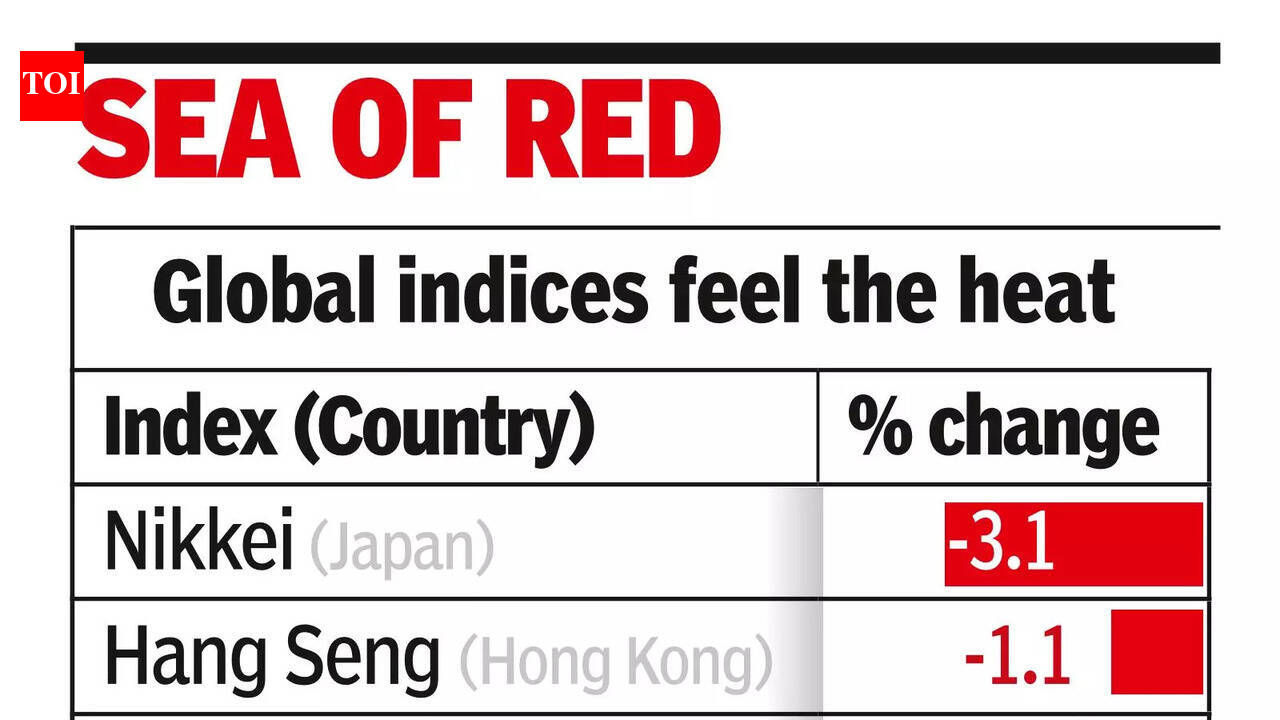
What is baffling is the strange disconnect between the US political posturing and the staggering costs of endless wars in distant lands. The current war with Iran could have been avoided. US aggression in attacking a country thousands of miles away from their shores is choking the Strait of Hormuz, a crucial bridge to global trade, risking millions of people living in the Gulf nations, and destroying infrastructure at an alarming scale. The war started by the US administration is also causing Asian nations like India, Singapore, China, Japan and others to face a supply crunch of fossil fuels, sending markets into crisis and putting healthy economies into peril. However, neither acknowledgement nor remedy is coming from the White House.
The gap between political posturing and the raw arithmetic of strategic and asset loss is also surprising. Washington briefings and news soundbites still frame every engagement as a triumphant assertion of “global leadership,” with officials gloating over dominance, real and imaginary, while conveniently ignoring the multi-billion-dollar holes punched in forward-deployed capabilities, holes that will take years and further taxpayer billions to patch.
Trump and Hegseth have been making big claims, tall promises. But the loss of strategic assets and the global cost of this war with Iran is starting to hurt the whole world. This cannot and should not be allowed to go on. US diplomacy and pressure might force the Gulf nations to endure Iranian missiles on their land, but the economic wounds that are being inflicted on India, China and other Asian nations by risking crucial supply chains is bound to incite some response. Sooner or later, nations around the world, especially Asian powers, are going to step up and ask the US to back off and stop the war.