Bombay HC quashes 16-year-old SC/ST case as an ‘act of vengeance’: How a woman filed three cases against Mumbai professor for questioning reservation eligibility
A recent ruling by the Bombay High Court has brought renewed attention to a contentious question: can stringent social justice laws be weaponised through repeated litigation? In quashing a 16-year-old case against advocate and law professor Virendranath B. Tiwari, Justice Ashwin D. Bhobe did more than just dispose of a stale prosecution; he exposed a pattern that raises serious concerns about potential misuse of the Scheduled Castes and Scheduled Tribes (Prevention of Atrocities) Act. Three cases, one accused, similar allegations At the heart of the matter lies a striking fact: this was not the first complaint Chitra Shalunkhe had filed against Tiwari. It was the third. All three cases invoked provisions of the SC/ST Act, each stemming from broadly similar allegations. In the earlier two instances, Tiwari had already been acquitted or discharged. Yet, a fresh FIR was registered once again, this time over a 2007 incident where Shalunkhe alleged that Tiwari questioned her qualifications for a reserved post and assaulted her. Tiwari’s defence was direct: the complaints were retaliatory, triggered by his objections to her eligibility and academic credentials. The High Court appears to have found merit in this claim. When law meets threshold: Court finds no offence The Court’s reasoning was unambiguous. It held that even if the allegations were taken at face value, they failed to meet the essential ingredients required under the SC/ST Act. There was no evidence of caste-based insult in public view. No use of casteist slur. No intimidation is linked explicitly to caste identity. This is not a procedural technicality; it goes to the very foundation of the law. The SC/ST Act is designed to address targeted, identity-based atrocities. Without that nexus, its invocation becomes legally untenable. Even the complainant’s counsel conceded that key provisions, such as Section 3(1)(s), were not attracted due to the absence of caste-based humiliation. Judicial recognition of “vengeance” Perhaps the most consequential part of the judgment lies in its characterisation of the litigation pattern. Justice Bhobe noted that initiating proceedings “for the third time” on similar grounds appeared to be “an act of vengeance aimed at causing harassment and humiliation” to the accused, a 74-year-old senior citizen. This observation shifts the case from a mere acquittal to something more systemic: a judicial acknowledgement that legal processes themselves can be misused as instruments of pressure. IPC charges also falter The attempt to sustain parallel charges under the IPC, including allegations of assault and outraging modesty, also collapsed under scrutiny. The Court found that the alleged umbrella incident did not satisfy the statutory thresholds required to constitute these offences. Additionally, the Court clarified that the amended provisions of the SC/ST Act introduced in 2016 could not be retrospectively applied to a 2007 incident, closing another avenue that had been invoked to keep the case alive. A case study in legal overreach? This ruling does not dilute the importance of the SC/ST Act. The law remains a critical safeguard against caste-based violence and discrimination. However, cases like this underline a parallel reality: when invoked repeatedly without meeting legal thresholds, even well-intentioned laws risk being drawn into cycles of personal vendetta. Three cases. Same complainant. Same accused. All are failing on foundational legal requirements. The High Court’s intervention, therefore, is not just about one man’s legal relief; it is a reminder that the credibility of protective legislation depends as much on preventing misuse as it does on punishing genuine offences. In drawing a firm line after years of litigation, the judiciary has signalled that while the law must remain strong, its application must remain precise.
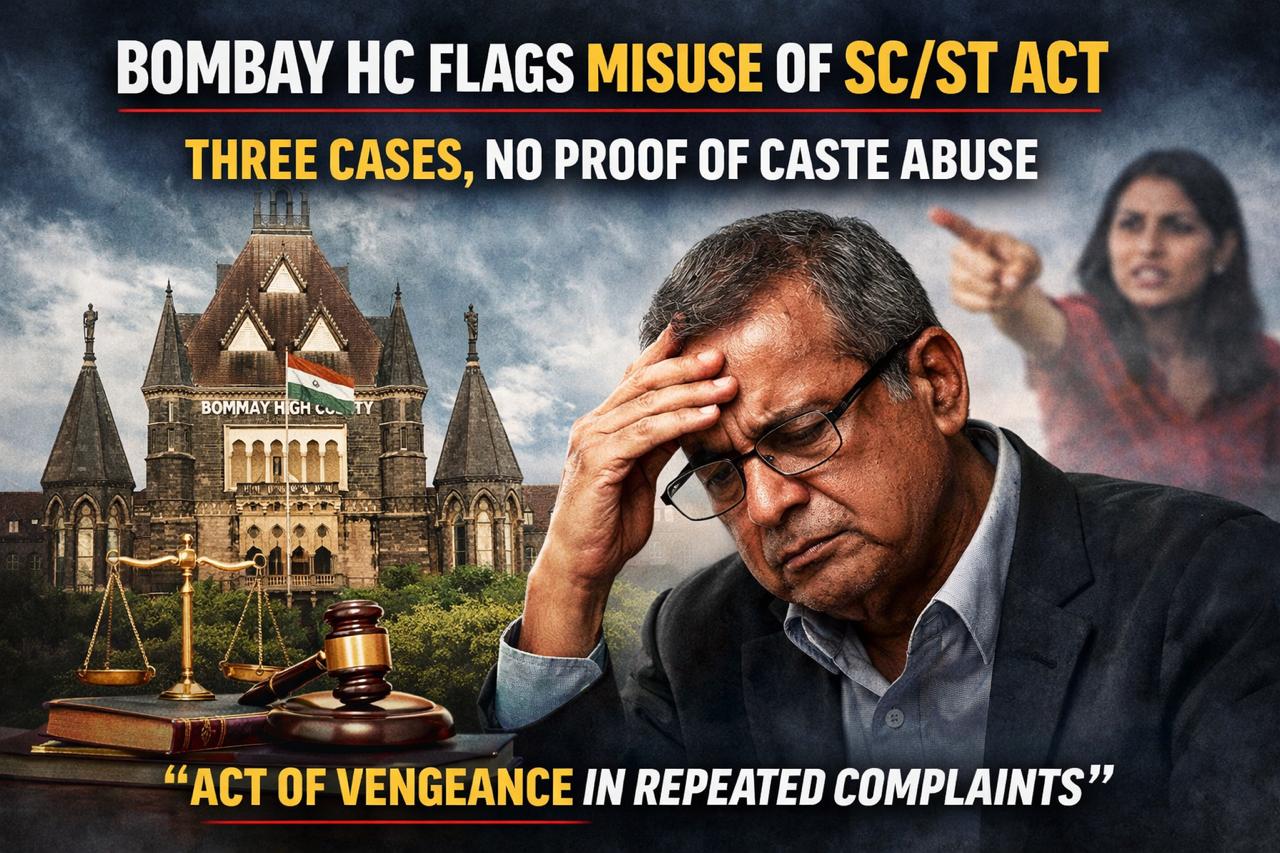
A recent ruling by the Bombay High Court has brought renewed attention to a contentious question: can stringent social justice laws be weaponised through repeated litigation?
In quashing a 16-year-old case against advocate and law professor Virendranath B. Tiwari, Justice Ashwin D. Bhobe did more than just dispose of a stale prosecution; he exposed a pattern that raises serious concerns about potential misuse of the Scheduled Castes and Scheduled Tribes (Prevention of Atrocities) Act.
Three cases, one accused, similar allegations
At the heart of the matter lies a striking fact: this was not the first complaint Chitra Shalunkhe had filed against Tiwari. It was the third.
All three cases invoked provisions of the SC/ST Act, each stemming from broadly similar allegations. In the earlier two instances, Tiwari had already been acquitted or discharged. Yet, a fresh FIR was registered once again, this time over a 2007 incident where Shalunkhe alleged that Tiwari questioned her qualifications for a reserved post and assaulted her.
Tiwari’s defence was direct: the complaints were retaliatory, triggered by his objections to her eligibility and academic credentials. The High Court appears to have found merit in this claim.
When law meets threshold: Court finds no offence
The Court’s reasoning was unambiguous. It held that even if the allegations were taken at face value, they failed to meet the essential ingredients required under the SC/ST Act.
There was no evidence of caste-based insult in public view. No use of casteist slur. No intimidation is linked explicitly to caste identity.
This is not a procedural technicality; it goes to the very foundation of the law. The SC/ST Act is designed to address targeted, identity-based atrocities. Without that nexus, its invocation becomes legally untenable.
Even the complainant’s counsel conceded that key provisions, such as Section 3(1)(s), were not attracted due to the absence of caste-based humiliation.
Judicial recognition of “vengeance”
Perhaps the most consequential part of the judgment lies in its characterisation of the litigation pattern.
Justice Bhobe noted that initiating proceedings “for the third time” on similar grounds appeared to be “an act of vengeance aimed at causing harassment and humiliation” to the accused, a 74-year-old senior citizen.
This observation shifts the case from a mere acquittal to something more systemic: a judicial acknowledgement that legal processes themselves can be misused as instruments of pressure.
IPC charges also falter
The attempt to sustain parallel charges under the IPC, including allegations of assault and outraging modesty, also collapsed under scrutiny. The Court found that the alleged umbrella incident did not satisfy the statutory thresholds required to constitute these offences.
Additionally, the Court clarified that the amended provisions of the SC/ST Act introduced in 2016 could not be retrospectively applied to a 2007 incident, closing another avenue that had been invoked to keep the case alive.
A case study in legal overreach?
This ruling does not dilute the importance of the SC/ST Act. The law remains a critical safeguard against caste-based violence and discrimination. However, cases like this underline a parallel reality: when invoked repeatedly without meeting legal thresholds, even well-intentioned laws risk being drawn into cycles of personal vendetta.
Three cases. Same complainant. Same accused. All are failing on foundational legal requirements.
The High Court’s intervention, therefore, is not just about one man’s legal relief; it is a reminder that the credibility of protective legislation depends as much on preventing misuse as it does on punishing genuine offences.
In drawing a firm line after years of litigation, the judiciary has signalled that while the law must remain strong, its application must remain precise.