As West Bengal CM Suvendu Adhikari approves land handover to BSF for fencing along India-Bangladesh border, read how Mamata Banerjee had stonewalled the project under TMC regime
In the run-up to the West Bengal state assembly election, the Bhartiya Janata Party (BJP) repeatedly said that it is a civilisation battle for the party, particularly in the wake of the ongoing deliberate demographic shift. Just two days after being sworn in as West Bengal Chief Minister, Suvendu Adhikari chaired his first cabinet meeting and approved the transfer of land to the Border Security Force (BSF) for completing fencing along the India-Bangladesh border. CM Adhikari announced on 11th May 2026, that the process of handing over the required land to BSF, with over 90% already identified, would be completed within 45 days. The BJP government in West Bengal aims to enable the BSF to erect fencing and secure vulnerable stretches presently exploited by Bangladeshi Muslim infiltrators. The West Bengal Chief Minister said that border fencing is his government’s priority for national security to curb the illegal influx of Bangladeshis. “In our very first Cabinet meeting today, we have taken the decision to transfer the land to the BSF. The process of transferring this land commences today. It will be transferred to the MHA within the next 45 days. Once this is accomplished, the BSF will complete the border fencing, and the ongoing issue of illegal infiltration will be resolved within a short period,” CM Adhikari said. #WATCH | Howrah: West Bengal Chief Minister Suvendu Adhikari says, "In our very first Cabinet meeting today, we have taken the decision to transfer the land to the BSF. The process of transferring this land commences today. It will be transferred to the MHA within the next 45… pic.twitter.com/vkVGBLKqkV— ANI (@ANI) May 11, 2026 Bangladeshi infiltration, demographic challenge and the TMC regime’s deliberate obstacles in the completion of the India-Bangladesh border fencing project The India-Bangladesh border, stretching over 2,200 km in West Bengal, is one of India’s most porous international boundaries. In total, Bangladesh shares 4096 kilometres of border with the Indian states of Assam, Meghalaya, Tripura, Mizoram and West Bengal. Over the years, the Modi government has pushed for blanket barbed-wire fencing, floodlights, and BSF Border Outposts (BOPs) to tackle illegal infiltration, cattle smuggling, narcotics trafficking, fake currency, and other criminal activities. For such projects, state governments are required to hand over the demanded land area while the Centre bears the cost. In West Bengal’s case, the Central government has already acquired or paid compensation for large tracts of land in around nine border districts. However, the erstwhile Mamata Banerjee-led regime caused frustrating delays in the handover of physical possession of the acquired land to the BSF, thus slowing down the border fencing project chronically over the years. Consequently, massive stretches of land along the India-Bangladesh border remain unfenced despite budgetary allocations and the Centre’s appeals. Over the decades, India has followed established protocols to deport Bangladeshi infiltrators and Rohingyas to their home country. The process, however, has been slow, often due to legal hurdles put up by Indian Islamo-leftists who approach courts to prevent deportation of illegal Muslim infiltrators, cumbersome due to the Bangladesh government and the Bangladesh Border Guard’s dishonest refusal to acknowledge their own citizens. As per a 2016 report, there are more than 2 crore Bangladeshis living illegally in India. The actual numbers are now estimated to be significantly higher than 2 crores. In addition to Bangladesh’s refusal to accept its own citizens back, some state governments, particularly the TMC regime in West Bengal, have been non-cooperative in providing land for border fencing, despite its crucial role in deterring illegal entries. This treacherous non-cooperation stemmed from the TMC government’s lethargic attitude in land acquisition to avoid displeasing the Muslim community, since the majority of the illegal immigrants are Muslims. OpIndia has documented numerous instances wherein Mamata Banerjee, who often boasted that she is not a Kafir, made policy decisions and gave speeches that indicated her pro-Muslim bias and anti-Hindu politics. Last year, then Leader of Opposition (LoP), Suvendu Adhikari, had raised the issue of the ruling CM Mamata Banerjee-led TMC government’s reluctance to provide land for fencing 600 kilometres of area, which allowed several illegal immigrants to enter India. Adhikari said this while highlighting the case of 3 Rohingya women who were arrested at Sealdah railway station in Kolkata. The Mamata Government continuously faced accusations of not cooperating with the Border Security Force (BSF) in curbing infiltration and transboundary crimes. In fact, the no-so-Kafir Mamata Banerjee’s obsessive electoral communal-political dynamics, and consequent delays in land acquisition, prevented completion of the border-fencing project
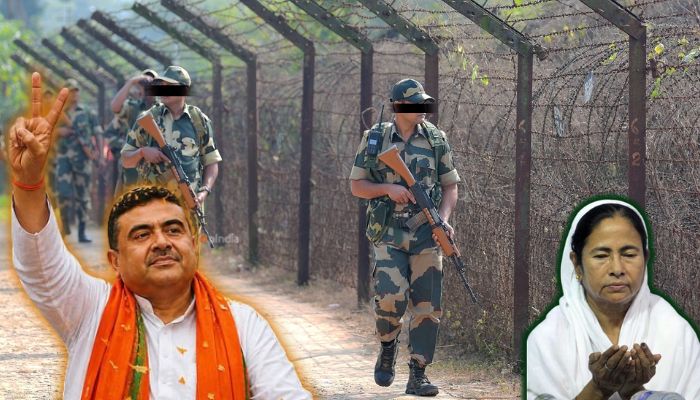
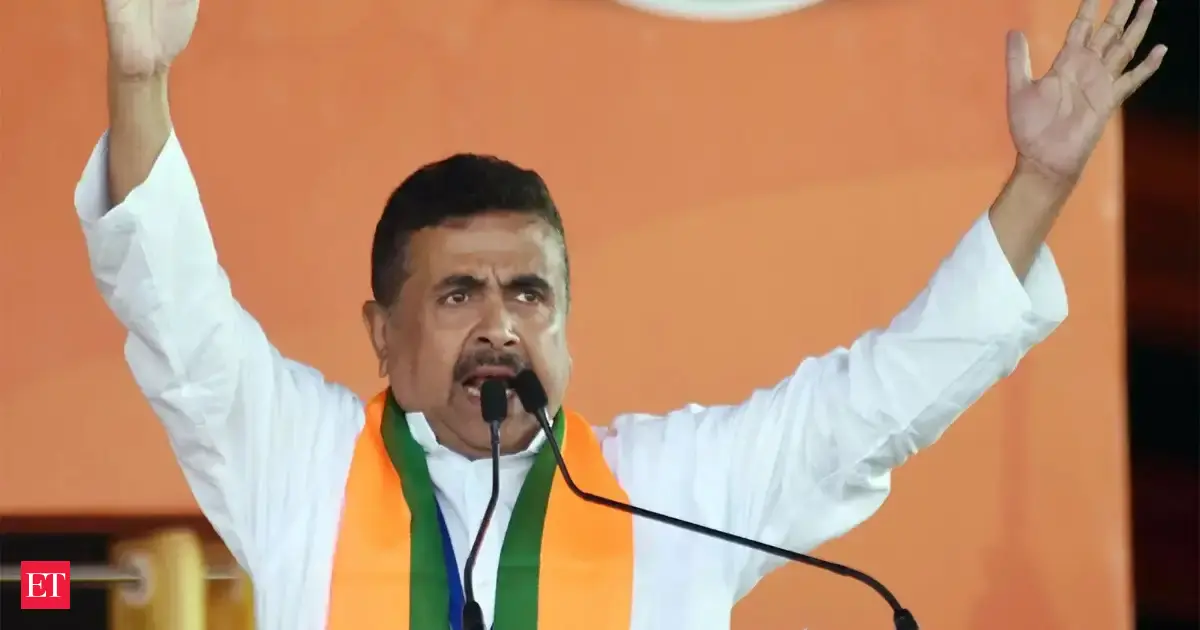
In the run-up to the West Bengal state assembly election, the Bhartiya Janata Party (BJP) repeatedly said that it is a civilisation battle for the party, particularly in the wake of the ongoing deliberate demographic shift. Just two days after being sworn in as West Bengal Chief Minister, Suvendu Adhikari chaired his first cabinet meeting and approved the transfer of land to the Border Security Force (BSF) for completing fencing along the India-Bangladesh border.
CM Adhikari announced on 11th May 2026, that the process of handing over the required land to BSF, with over 90% already identified, would be completed within 45 days. The BJP government in West Bengal aims to enable the BSF to erect fencing and secure vulnerable stretches presently exploited by Bangladeshi Muslim infiltrators.
The West Bengal Chief Minister said that border fencing is his government’s priority for national security to curb the illegal influx of Bangladeshis.
“In our very first Cabinet meeting today, we have taken the decision to transfer the land to the BSF. The process of transferring this land commences today. It will be transferred to the MHA within the next 45 days. Once this is accomplished, the BSF will complete the border fencing, and the ongoing issue of illegal infiltration will be resolved within a short period,” CM Adhikari said.
#WATCH | Howrah: West Bengal Chief Minister Suvendu Adhikari says, "In our very first Cabinet meeting today, we have taken the decision to transfer the land to the BSF. The process of transferring this land commences today. It will be transferred to the MHA within the next 45… pic.twitter.com/vkVGBLKqkV— ANI (@ANI) May 11, 2026
Bangladeshi infiltration, demographic challenge and the TMC regime’s deliberate obstacles in the completion of the India-Bangladesh border fencing project
The India-Bangladesh border, stretching over 2,200 km in West Bengal, is one of India’s most porous international boundaries. In total, Bangladesh shares 4096 kilometres of border with the Indian states of Assam, Meghalaya, Tripura, Mizoram and West Bengal.
Over the years, the Modi government has pushed for blanket barbed-wire fencing, floodlights, and BSF Border Outposts (BOPs) to tackle illegal infiltration, cattle smuggling, narcotics trafficking, fake currency, and other criminal activities.
For such projects, state governments are required to hand over the demanded land area while the Centre bears the cost. In West Bengal’s case, the Central government has already acquired or paid compensation for large tracts of land in around nine border districts. However, the erstwhile Mamata Banerjee-led regime caused frustrating delays in the handover of physical possession of the acquired land to the BSF, thus slowing down the border fencing project chronically over the years.
Consequently, massive stretches of land along the India-Bangladesh border remain unfenced despite budgetary allocations and the Centre’s appeals.
Over the decades, India has followed established protocols to deport Bangladeshi infiltrators and Rohingyas to their home country. The process, however, has been slow, often due to legal hurdles put up by Indian Islamo-leftists who approach courts to prevent deportation of illegal Muslim infiltrators, cumbersome due to the Bangladesh government and the Bangladesh Border Guard’s dishonest refusal to acknowledge their own citizens. As per a 2016 report, there are more than 2 crore Bangladeshis living illegally in India. The actual numbers are now estimated to be significantly higher than 2 crores.
In addition to Bangladesh’s refusal to accept its own citizens back, some state governments, particularly the TMC regime in West Bengal, have been non-cooperative in providing land for border fencing, despite its crucial role in deterring illegal entries. This treacherous non-cooperation stemmed from the TMC government’s lethargic attitude in land acquisition to avoid displeasing the Muslim community, since the majority of the illegal immigrants are Muslims. OpIndia has documented numerous instances wherein Mamata Banerjee, who often boasted that she is not a Kafir, made policy decisions and gave speeches that indicated her pro-Muslim bias and anti-Hindu politics.
Last year, then Leader of Opposition (LoP), Suvendu Adhikari, had raised the issue of the ruling CM Mamata Banerjee-led TMC government’s reluctance to provide land for fencing 600 kilometres of area, which allowed several illegal immigrants to enter India. Adhikari said this while highlighting the case of 3 Rohingya women who were arrested at Sealdah railway station in Kolkata.
The Mamata Government continuously faced accusations of not cooperating with the Border Security Force (BSF) in curbing infiltration and transboundary crimes. In fact, the no-so-Kafir Mamata Banerjee’s obsessive electoral communal-political dynamics, and consequent delays in land acquisition, prevented completion of the border-fencing project.
It has been alleged that 569.254 km of the international border in West Bengal remains unsecured due to Mamata Banerjee’s intransigence, leaving the portion vulnerable to illegal infiltration and smuggling. It is due to the delays in acquiring the Centre-approved land areas by the TMC government that the BSF could not build essential border infrastructure like outposts and fences in over 17 critical locations. The West Bengal Police, under ex-CM Mamata Banerjee, also faced allegations of deliberate non-cooperation in the fight against transborder crimes and infiltration of Bangladeshi illegals.
Notably, there are three categories of land required for border fencing. First category: land areas acquired and compensation received by the state government from the central government, but only a partial portion of which is handed over to the BSF. The second category is wherein land acquisition proceedings started under the direct purchase policy but could not be finalised; thus, there is a status quo. Third is where the land acquisition process is yet to commence.
Besides causing delays in land handover, the Mamata Banerjee government also had a problem with the expansion of the BSF’s jurisdiction from 15 to 50 Kilometres.
While Mamata Banerjee kept denying the allegations of deliberate delays on her government’s part in the completion of the India-Bangladesh border fencing project, the Calcutta High Court rebuked the TMC regime over the same in April.
A bench comprising Chief Justice Sujoy Paul and Justice Partha Sarathi Sen reprimanded the Mamata government for failing to hand over land stretches across nine border districts on time to the BSF. The court also imposed a Rs 25,000 fine on the state government officer.
Alarmingly, the court found that out of 127.327 km of “lands already acquired” for which “compensation” had been “received by the state government from the central government”, only 8 km of land was handed over since 27 January.
“What is surprising and shocking is that in a matter of national importance, the respondent state has not thought it proper to file their report” on the compliance of its direction “on affidavit” but had instead filed a “sketchy and evasive report which does not disclose date and place-wise as to what action has been taken for handing over the land after passing the order of this court…” the court said.
The court further noted that out of 198.252 km of land stretches acquired for fencing, in the districts of 24 Parganas (N), Nadia, Murshidabad, Malda, Dakshin Dinajpur, Uttar Dinajpur, Darjeeling, Jalpaiguri, and Cooch Behar, only 70.925 km was handed over to the BSF.
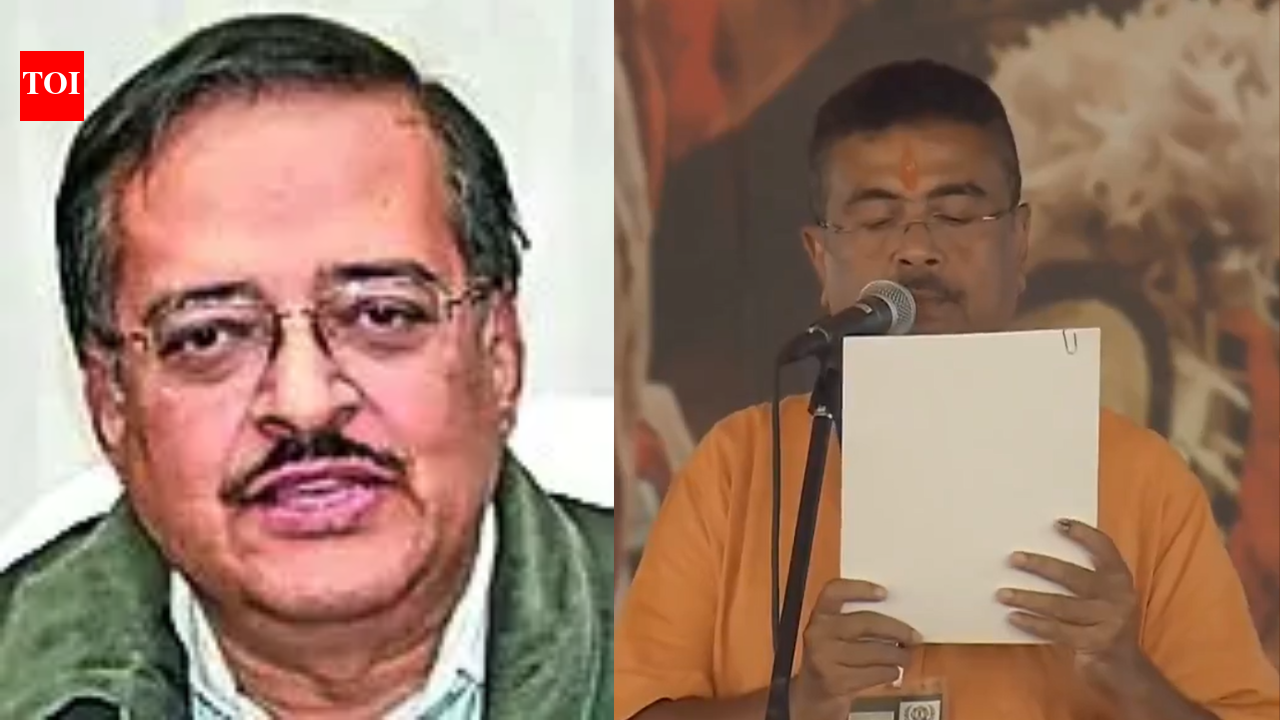
The court’s observations came during the hearing of a PIL filed by former Deputy Chief of Army Staff Subrata Saha.
The delay in land handover was conspicuously deliberate, since Mamata Banerjee did not want to upset her Muslim votebank by expediting the process of border fencing that would obstruct the influx of Bangladeshi Muslims into West Bengal. The mutual admiration between Mamata Banerjee and Bangladeshi Muslims can also be understood from the fact that after TMC’s defeat, several Bangladeshi Islamists issued statements in support of Banerjee, with some, like Nurul Huda, even going to the extent of encouraging her to declare war on Delhi and join Bengal with Bangladesh. Apparently, the worst of the Bangladeshi Islamists admire and support Mamata Banerjee since she obstructed border fencing and allowed a political shield to Muslim infiltrators for electoral gains.
No wonder, Mamata Banerjee and Trinamool Congress vehemently opposed the Special Intensive Revision, alleging Muslim disenfranchisement and continue to blame it for their humiliating defeat against the BJP in state elections.