As nation celebrates Somnath Swabhiman Parv, read about ‘secular’ Nehru’s letters opposing the reconstruction and consecration ceremony of Somnath Temple
The Somnath Temple in Gujarat has been a witness to the numerous attacks by foreign Islamic invaders on the Hindu Dharma and civilisation. It stands tall as a symbol of Bharat’s resilience and civilisational continuity. On the 8th of January 2026, the nation is celebrating Somnath Swabhiman Parv. While the Hindu temple came under attack by Islamic invaders since 1026, its reconstruction and return to its original glory irked even the ‘secular’ leaders like Jawaharlal Nehru in independent India. India was partitioned on Islamic lines, and the Islamic Republic of Pakistan was created on the corpses of countless Hindus, Sikhs and other non-Muslims. While the Muslim-majority Pakistan became an Islamic republic, the Hindu-majority India adopted a ‘secular’ character. However, India’s ‘secular’ and ‘progressive’ political leadership significantly undermined Hindu rights and interests, apparently to appease the Muslims who did not go to Pakistan even though the majority of Muslims voted for Pakistan’s creation. From the British Colonial Raj to Congress Raj, the blatant snubbing of Hindu rights continued in both pre- and post-independent India. Jawaharlal Nehru, the first Prime Minister of an independent India, was outspokenly against the reconstruction of the Somnath Temple. PM Nehru wrote a series of letters between 1950 and 1951, wherein he expressed opposition to the reconstruction and consecration of the Somnath Temple. Nehru wrote around 17 letters to various officials, including Cabinet ministers, chief ministers, the President, the Vice President, and even to the Prime Minister of Pakistan, making his deep disdain for the Hindu community’s quest for reclamation of its destroyed temples known. Jawaharlal Nehru objected to President Rajendra Prasad’s decision to attend the Somnath Temple consecration ceremony On 2nd March 1951, Prime Minister Jawaharlal Nehru ‘confessed’ that he was against the idea of President Rajendra Prasad associating himself with the grand opening ceremony of the Somnath Temple. He urged Prasad not to preside over the ceremony. “…I confess that I do not like the idea of your associating yourself with a spectacular opening of the Somnath temple. This is not merely visiting a temple, which can certainly be done by you or anyone else, but rather participating in a significant function which unfortunately has a number of implications. Personally, I thought that this was no time to lay stress on large-scale building operations at Somnath. This could have been done gradually and perhaps more effectively later. However, this has been done. I feel that it would be better if you did not preside over this function,” Nehru wrote. This letter came in response to President Prasad’s letter informing PM Nehru that Navanagar’s Jam Saheb at invited the President to preside over the Somnath consecration ceremony. President Prasad wrote, “I personally do not see any objection to associating myself with the function, particularly because I have never ceased visiting temples, and… denominational religious or semi-religious institutions….” Nehru did not “like” the waters of distant rivers being collected for the Somnath consecration, asked the Foreign Secretary to write to embassies not to arrange waters sought from various rivers In a note to the then Secretary-General and Foreign Secretary, PM Nehru said that he did not like the idea of collecting waters of various rivers and twigs from mountains for the Somnath consecration ceremony. He also expressed his disappointment over then-President Rajendra Prasad visiting the Somnath Temple to attend the Pran Pratishtha ceremony. “I have also written to Mr Munshi about the Somnath temple. It is fantastic that our Embassies should be addressed in this way and asked to collect the waters of distant rivers and twigs from various mountains. I mentioned to the President sometime ago that I did not fancy his visiting the Somnath temple on this occasion. He said he had promised to do so and it was difficult for him to get out of his promise. There is nothing more to be done about it. But I have made it clear both to the President and to Mr Munshi that I do not at all like these activities,” PM Nehru wrote in the note dated 17th April 1951. Not only this, but PM Nehru also asked the Ministry of External Affairs official to write to Indian embassies abroad not to heed requests to fetch waters from various rivers for the relevant purpose. “Does External Affairs know anything about these letters addressed to our Embassies abroad asking for the waters of various rivers? I think you might write to our Embassies not to pay the slightest attention to these appeals.…” Nehru wrote. In a letter to then Union Home Minister C Rajagopalachari, PM Nehru expressed amazement over letters being written to Indian embassies abroad for the collection of waters from various rivers for the Somnath temple ceremony. “…I should like to draw your spe
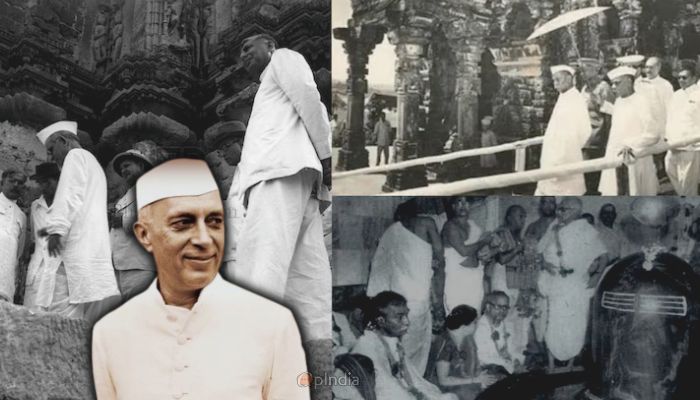

The Somnath Temple in Gujarat has been a witness to the numerous attacks by foreign Islamic invaders on the Hindu Dharma and civilisation. It stands tall as a symbol of Bharat’s resilience and civilisational continuity. On the 8th of January 2026, the nation is celebrating Somnath Swabhiman Parv. While the Hindu temple came under attack by Islamic invaders since 1026, its reconstruction and return to its original glory irked even the ‘secular’ leaders like Jawaharlal Nehru in independent India.
India was partitioned on Islamic lines, and the Islamic Republic of Pakistan was created on the corpses of countless Hindus, Sikhs and other non-Muslims. While the Muslim-majority Pakistan became an Islamic republic, the Hindu-majority India adopted a ‘secular’ character. However, India’s ‘secular’ and ‘progressive’ political leadership significantly undermined Hindu rights and interests, apparently to appease the Muslims who did not go to Pakistan even though the majority of Muslims voted for Pakistan’s creation.
From the British Colonial Raj to Congress Raj, the blatant snubbing of Hindu rights continued in both pre- and post-independent India. Jawaharlal Nehru, the first Prime Minister of an independent India, was outspokenly against the reconstruction of the Somnath Temple.
PM Nehru wrote a series of letters between 1950 and 1951, wherein he expressed opposition to the reconstruction and consecration of the Somnath Temple. Nehru wrote around 17 letters to various officials, including Cabinet ministers, chief ministers, the President, the Vice President, and even to the Prime Minister of Pakistan, making his deep disdain for the Hindu community’s quest for reclamation of its destroyed temples known.
Jawaharlal Nehru objected to President Rajendra Prasad’s decision to attend the Somnath Temple consecration ceremony
On 2nd March 1951, Prime Minister Jawaharlal Nehru ‘confessed’ that he was against the idea of President Rajendra Prasad associating himself with the grand opening ceremony of the Somnath Temple. He urged Prasad not to preside over the ceremony.
“…I confess that I do not like the idea of your associating yourself with a spectacular opening of the Somnath temple. This is not merely visiting a temple, which can certainly be done by you or anyone else, but rather participating in a significant function which unfortunately has a number of implications. Personally, I thought that this was no time to lay stress on large-scale building operations at Somnath. This could have been done gradually and perhaps more effectively later. However, this has been done. I feel that it would be better if you did not preside over this function,” Nehru wrote.
This letter came in response to President Prasad’s letter informing PM Nehru that Navanagar’s Jam Saheb at invited the President to preside over the Somnath consecration ceremony. President Prasad wrote, “I personally do not see any objection to associating myself with the function, particularly because I have never ceased visiting temples, and… denominational religious or semi-religious institutions….”
Nehru did not “like” the waters of distant rivers being collected for the Somnath consecration, asked the Foreign Secretary to write to embassies not to arrange waters sought from various rivers
In a note to the then Secretary-General and Foreign Secretary, PM Nehru said that he did not like the idea of collecting waters of various rivers and twigs from mountains for the Somnath consecration ceremony. He also expressed his disappointment over then-President Rajendra Prasad visiting the Somnath Temple to attend the Pran Pratishtha ceremony.
“I have also written to Mr Munshi about the Somnath temple. It is fantastic that our Embassies should be addressed in this way and asked to collect the waters of distant rivers and twigs from various mountains. I mentioned to the President sometime ago that I did not fancy his visiting the Somnath temple on this occasion. He said he had promised to do so and it was difficult for him to get out of his promise. There is nothing more to be done about it. But I have made it clear both to the President and to Mr Munshi that I do not at all like these activities,” PM Nehru wrote in the note dated 17th April 1951.
Not only this, but PM Nehru also asked the Ministry of External Affairs official to write to Indian embassies abroad not to heed requests to fetch waters from various rivers for the relevant purpose.

“Does External Affairs know anything about these letters addressed to our Embassies abroad asking for the waters of various rivers? I think you might write to our Embassies not to pay the slightest attention to these appeals.…” Nehru wrote.
In a letter to then Union Home Minister C Rajagopalachari, PM Nehru expressed amazement over letters being written to Indian embassies abroad for the collection of waters from various rivers for the Somnath temple ceremony.
“…I should like to draw your special attention to what he has written about the Somnath temple business. I am very much troubled about this, and yet I do not know what I can do. In any event it is amazing for people to write to our Embassies for the waters of the rivers there,” PM Nehru wrote.

PM Nehru was ‘distressed’ about the President and some cabinet ministers attending the Somnath Temple inauguration
In a note to MEA Secretary S Dutt on 9th May 1951, PM Nehru expressed ‘distress’ over the association of the Indian and Saurashtra government with the Somnath Temple consecration ceremony.
“I have been much distressed at the association of the Government of India with the ceremony that is taking place at Somnath. I wrote to the Jam Saheb and to the Government of Saurashtra about it. I find now that in fact some Ministries of the Government of India, including our Ministry, had been consulted and in fact they encouraged various steps that were taken. I am afraid we can do nothing further in the matter now. But I think all this association is most unfortunate,” Nehru wrote.

Nehru’s letter to Navanagar Jam Saheb expressing worry over the Islamic nation Pakistan accusing India of not being secular over government involvement in the Somnath Temple consecration
Hardly five years after Pakistan came into existence after the slaughter of Hindus, Sikhs, Buddhists and other Kafir communities, Prime Minister Jawaharlal Nehru was worried that Pakistan was accusing the Indian government of not being secular.
In a letter to Maharaja Digvijaysinhji Jadeja, the Jam Saheb of Navanagar or the modern-day Jamnagar, PM Nehru not only raised objections over the Saurashtra government spending Rs 5 lakh on the Somnath Temple ceremony and President Rajendra Prasad attending the event, but also lamented that Pakistan is taking advantage of this to prove that India is not secular.
“So far as the Government of India is concerned, I am going to make it perfectly clear in answer to questions in Parliament that they have nothing to do with this matter. But I can hardly say that about the Saurashtra Government, although I think their association as a Government is not proper and they should not spend Government funds on it. I have written to the Chief Minister about this also…Pakistan of course is taking great advantage of this to try to prove that we are not a secular State,” PM Nehru wrote in the letter dated 22nd April 1951.

Such was the desperation to appear secular and distance the State from Hindu Dharma or Dharmic/civilisational event that PM Nehru did not want Pakistan to be able to question India’s secularism. Pakistan, officially being an Islamic Republic, with nothing remotely to do with secularism, had no locus standi to question whether India is a secular state or not.
Nehru declined Navanagar Jam Saheb’s invitation to the Somnath Temple consecration ceremony, calling the event ‘Hindu revivalism’
In a letter responding to the invitation extended by Maharaja Digvijaysinhji Jadeja, the Jam Saheb of Navanagar or the modern-day Jamnagar, to the Somnath Temple consecration ceremonies, Nehru declined the invitation.
PM Nehru went as far as to call the reconstruction and consecration of the Somnath Temple an act of ‘revivalism’. He also lamented that the President, some ministers and the Jam Saheb were a part of it. Nehru even stressed that the President of India and cabinet ministers attending the ceremony will have ‘bad consequences’.
The letter dated 24th April 1951 reads, “Thank you for your letter of the 22nd April conveying an invitation to the ceremonies at the Somnath temple. I am afraid it is not possible for me to leave Delhi at this critical juncture for any such function. But apart from this, I must be quite frank with you about this ceremony. Indeed I have written to you about it in another connection already. I am troubled by this revivalism and by the fact that our President and some Ministers and you as Rajpramukh are associated with it. I think that this is not in line with the nature of our State and it will have bad consequences both nationally and internationally. As individuals, of course, it is open to anyone to do what he chooses in such matters. But many of us happen to be more than private individuals, and we cannot dissociate ourselves from our public capacities.”

Nehru told Home Minister C Rajagopalachari that the President should not go to the Somnath consecration ceremony
In a letter dated 11th March 1951, PM Nehru informed the then Union Home Minister C Rajagopalachari about the President receiving an invitation to the Somnath Temple consecration ceremony. The Prime Minister wrote that although he is not opposed to President Prasad going to a temple or any place of worship, he does not want the President to attend the Somnath temple function. Nehru opined that the President’s presence in the ceremony of the Hindu temple will have several implications, although the PM did not elaborate on what sort of implications.
“… As the President is anxious to associate himself with this function, I do not know whether it is desirable for me to insist that he should not do so. I propose, therefore, subject to your advice, to tell him that he can exercise his own discretion in the matter, although I still think that it would be better for him not to go there,” Nehru wrote.

Nehru fumed over the Saurashtra government providing Rs 5 lakh for the Somnath Temple consecration ceremony
Prime Minister Jawaharlal Nehru was so keen on keeping his ‘secular’ credentials intact that on 21st April 1951, he wrote a letter to then Saurashtra Chief Minister U.N. Dhebar questioning him about the reported allocation of Rs 5 lakh for the Somnath Mandir ceremony by his government. Nehru dubbed the fund allocation an improper use of public funds.
“I have seen an item of news in the papers to the effect that the Saurashtra Government has sanctioned a sum of Rs 5 lakhs for the installation ceremony of the Somnath temple. I was much surprised to read this and I should like to know if this is correct. Whatever the importance of the Somnath temple might be, this is not a governmental matter and it is for private individuals to collect money for it. I doubt if it is a proper use of public funds held by Governments to be spent in this way,” PM Nehru wrote.

Nehru irked over the impression abroad that the Somnath consecration was a government-funded affair
Prime Minister Nehru felt that the secular and progressive image of his government was tainted by the impression abroad that the Somnath Temple ceremony was a government-linked or, rather, government-funded affair. In a letter to Kanhaiyalal Maniklal Munshi, or simply KM Munshi, who was then Food Minister and oversaw the Somnath temple’s reconstruction, Nehru called the Saurashtra government’s decision to spend Rs 5 lakh on the Somnath consecration ceremony “improper expenditure”.
In the letter dated 22nd April 1951, Nehru was also upset about Navanagar Jam Saheb writing letters to Indian embassies for waters of various rivers for the ceremony.
“I am distressed at the impression abroad that the Somnath installation ceremony is more or less a Government affair. Questions are going to be asked in Parliament and I am going to make it clear that the Government of India has nothing to do with it. Unfortunately I cannot say the same about the Saurashtra Government which, I am surprised, is reported to have decided to spend Rs 5 lakhs over the installation ceremony. I think this is improper expenditure for a Government at any time and more especially in view of the circumstances in the country today,” Nehru wrote.

“I have written to the President on this subject also and to the Jam Saheb. Unfortunately, the Jam Saheb is not only the Chairman of the Trustees of Somnath temple, but also the Rajpramukh of Saurashtra. His letter to our foreign Embassies has given us a lot of trouble and created a good deal of misunderstanding,” he added.
Ahead of the Somnath consecration, Nehru directed Chief Ministers not to do anything that affects the secular character of the State
In one of his letters to various Chief Ministers in the country about the Somnath Temple consecration ceremony, PM Nehru directed CMs of all states to “not do anything which comes in the way of our State being secular.”
“That is the basis of our Constitution and Governments, therefore, should refrain from associating themselves with anything which tends to affect the secular character of our State,” Nehru wrote in the correspondence dated 2nd May 1951.

‘Governmental association with Somnath ceremony will injure us abroad and even in India’: When Nehru feared the world would cancel his ‘secular’ certificate if his government had links with the inauguration of a Hindu temple in Hindu Hindu-majority country
In another letter addressed to a government official, wherein PM Nehru expressed his objection regarding the supposed government ‘association’ to the Somnath Temple’s consecration ceremony. This letter was written on 28th April 1951 to Ranganath Ramchandra Diwakar, then Minister of Information and Broadcasting.
Nehru expressed worries about the ceremonies set to take place at the Somnath Temple, saying that he was troubled by the inquiries about whether it is a government function or not.
“I have been rather worried about the ceremonies that are going to take place at Somnath temple. Many inquiries are addressed to me as to whether this is a governmental function or not. I have replied both in India and abroad, as well as in Parliament, that this is not a governmental function, although some Members of Government may be personally interested,” Nehru wrote.

He also expressed discomfort over a ‘pompous’ ceremony being held at the Somnath Temple and any government association with it, asserting that this will injure his ‘secular’ government, inside and outside India.
“I think that this pompous ceremony regarding Somnath temple and any kind of governmental association is going to injure us abroad and even in India. Indeed I am getting many complaints and letters about it. Inquiries are addressed to me if this is how a secular State behaves. All I can say in reply is that this is not a governmental function,” Nehru added.
He further urged that the radio broadcast should tone down the description of the events at the Somnath Temple consecration ceremony and that it should not appear in any way as a governmental function, as if he was worried ‘someone’ would be upset about Hindus doing worship in Hindu temples and the President and some cabinet ministers attending the event as practising Hindus.
“I feel that in the circumstances our radio broadcast should rather tone down the description of what happens at Somnath and not make it appear in any way that it is a governmental function,” PM Nehru’s letter reads.
‘How a secular Government such as ours can associate itself with such a revivalist ceremony’: PM Jawaharlal Nehru’s letter to President Rajendra Prasad
In the letter dated 22nd April 1951, Prime Minister Nehru raised serious concerns over the events related to the Somnath Mandir. Nehru said that his ‘secular’ government is facing questions about come his government is associating itself with such a ‘revivalist’ ceremony. He further highlighted the Somnath Trustee and Navanagar Jam Saheb’s letters to various Indian embassies about collecting water from various rivers and the soil of specific mountains.
“I am greatly worried about the Somnath affair. As I feared, it is assuming a certain political importance. Indeed references have been made to it internationally also. In criticism of our policy in regard to it, we are asked how a secular Government such as ours can associate itself with such a ceremony which is, in addition, revivalist in character. Questions are being put to me in Parliament and I am replying to them saying that Government has nothing to do with it and those persons who are connected in any way are functioning entirely in their personal capacity,” Nehru wrote.
Mentioning the Rs 5 lakh expenditure the Saurashtra government was making on the Somnath ceremony, PM Nehru deemed this “undesirable”, saying that amidst starvation and economic challenges, such expenditure was inappropriate.
“At any time this would have been undesirable, but at the present juncture, when starvation stalks the land and every kind of national economy and austerity are preached by us, this expenditure by a Government appears to me to be almost shocking. We have stopped expenditure on education, on health and many beneficent services because we say that we cannot afford it. And yet, a State Government can spend a large sum of money on just the installation ceremony of a temple,” Nehru wrote.

PM Nehru’s reasoning behind opposing the Saurashtra government’s decision to spend Rs 5 lakh on the Somnath consecration ceremony reminds one of the hue and cry Islamo-leftists made over the construction of the Ayodhya Ram Mandir and Prime Minister Narendra Modi being the representative Yajman during the Pran Pratishtha of Shri Ram Lalla.
For years, liberals have argued that instead of building Ram Mandir, hospitals, schools, and universities should be built, suggesting that Dharmic expenditure at massive levels is a waste, as if building the temple would have prohibited construction of schools, colleges, or there would be no other land left for such buildings.
PM Modi’s active participation in the Ayodhya Ram Mandir consecration ceremony was in sharp contrast to PM Nehru’s idea of ‘secularism’, where Hindu grievances are dismissed as a revivalist agenda. India owes its secular character to Hinduism and Hindus with the Hindu consciousness and civilisation; India would be as soulless as Pakistan.
PM Nehru’s letter to beloved ‘Nawabzada’ Liaquat Ali Khan of Pakistan about the gates of Somnath Temple being brought back from Afghanistan
The most outrageous of all the letters Nehru wrote regarding the Somnath Temple consecration ceremony was the one he wrote on 21st April 1951 to Pakistan’s Prime Minister Liaquat Ali Khan. Addressing Khan as “Dear Nawabzada”, Nehru described the Pakistani media reports that the gates of the original Somnath Temple, destroyed by Mahmud Ghazni centuries ago, were being brought back ahead of the consecration ceremony, as “completely false”.
“…A recent broadcast from Peshawar in Pushto on the 17th April is an example of extreme irresponsibility and falsehood. I shall be grateful if you will consider this.The story of the gates of Somnath temple being brought back to India from Afghanistan is completely false and there is not an atom of truth in it. This has been publicly denied. In fact nobody knows if there are any such gates anywhere and nothing of the kind is being sent from Afghanistan to India. Nevertheless, the Pakistan Press has been full of this story,” Nehru wrote.
“I leave it to you to judge how far the broadcast, a report of which I am enclosing, is decent or desirable from any point of view,” PM Nehru added, demonstrating the extent he went to appease and placate Muslims not only in India but even in Pakistan.

Nehru’s letter to Liaquat Ali Khan reminds one of how he wrote to Mohammad Ali Jinnah, informing him that to appease Muslims, his party had truncated the four stanzas of the nationalist song Vande Mataram to remove references to Maa Durga. The truncated version was then adopted by the party in 1938.
In consequence of Congress’s abject surrender before Islamists and fixation with being ‘secular’, the Vande Mataram song was mutilated, and four stanzas were dropped out of six to placate those who, just years after, betrayed the nation.
Jawaharlal Nehru opposed the reconstruction of the Somnath Mandir
Jawaharlal Nehru’s strong opposition to President Rajendra Prasad and some cabinet ministers attending the Somnath Mandir consecration ceremony was not surprising, given that he tried his best to prevent the reconstruction of the temple destroyed by Muslim invaders.
The former Prime Minister was opposed to Hindus having the authority to reclaim their most revered religious places, even after the nation suffered through a brutal, religiously motivated partition. If not for Sardar Vallabhbhai Patel, the revival of Somnath Mandir would have been a long and bloodied struggle, as the Hindus did for the Ram Janmabhoomi.
On 13th November 1947, Sardar Patel reached Junagarh to a roaring welcome from the state’s citizens, promising to restore the Somnath Mandir. After his return to Delhi, a cabinet meeting decided to reconstruct the temple and determined that the state would cover the costs. However, Mohandas Karamchand Gandhi wanted people to cover its expenses, which led to the decision being overturned. He was killed in 1948, and Sardar Patel passed away in 1950, after which Kanhaiyalal Maneklal (KM) Munshi, the cabinet minister at the time, became chairman of the trust’s advisory committee, which was tasked with restoring the temple.
In a clear declaration of his position on the Somnath Mandir revival issue, Nehru told Munshi, “I don’t like your trying to restore Somnath. It is Hindu Revivalism.”
Conclusion
From truncating the song Vande Mataram due to its glorification of Maa Durga after Muslim outrage, reducing the historic Tamil sceptre Sengol, which had Nandi, the vahana of Lord Shiv seat atop, to Nehru’s ‘walking stick’, opposing construction of Somnath Mandir, to rejecting the existence of Lord Ram in the 2007 affidavit in Sethusamudram Project case, Congress has historically attacked and undermined Hindus, Hindu Dharma and Sanatan civilisation.