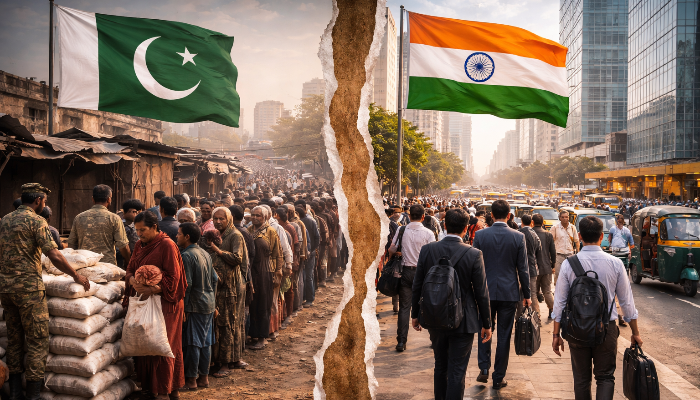
Amid war and sanctions, how India navigated a tricky terrain in the Middle East to secure energy, trade, and strategic interests
Famed American historian and philosopher Will Durant (1885 – 1981) had once said, “India was the motherland of our race,… she was the mother of our philosophy; mother, through the Arabs, of much of our mathematics; mother, through the Buddha, of the ideals embodied in Christianity;… Mother India is in many ways the mother of us all.” The luminary, who was best known for his 11-volume work – ‘The Story of Civilization’ – was echoing a kindred spirit that has been found in Maha Upanishad Chapter 6, Verse 72: “अयं निजः परो वेति गणना लघुचेतसाम्। उदारचरितानां तु वसुधैव कुटुम्बकम्॥“ (ayaṃ nijaḥ paro veti gaṇanā laghucetasām।udāracaritānāṃ tu vasudhaiva kuṭumbakam॥) It translates to – “This is mine, that is his, say the small minded,The wise believe that the entire world is a family.” As Middle East continues to be engulfed in flames, courtesy a joint operative by Israel and US on Iran, India’s well-deliberated stance of keeping herself equidistant from both the axes is stark testimony to the above spirit. It was possibly not coincidental that just before Operation Epic Fury commenced on February 28, 2026 with a joint Israel-US strike on Iranian military and nuclear infrastructure, PM Modi rounded up a strategically timed Israel State tour. While the visit (25th – 26th February) drew tepid outrage from Indian Opposition, all the while receiving a rapturous welcome from the Knesset, Bharat possibly drew a distinct line of support to the Israel-US coalition, just as the war was to erupt. India’s well-crafted balanced positioning India has maintained a balanced stance in this war, avoiding any direct entanglement in hostilities. This has had pleasantly surprising consequences, in particular, the stellar “diplomatic win” of having India-bound vessels getting to pass through the Strait of Hormuz. As many other nations reel from a maritime logistics breakdown, India has secured 4 ships already, with more in the offing. As the Indian PM outlined the challenges in his Lok Sabha speech on 23/03, he also detailed how India has managed to weather the turmoil so effectively, courtesy a slew of measures undertaken around energy security over past decade. Some immediate reasons are as under: India has a Strategic Petroleum Reserve of over 53 Lakh metric tonnes, with more capacity under development to notch that past 65 Lakh metric tonnes. Energy imports have been diversified from 27 to 41 countries gradually. Ethanol blending has notched up from 1 – 1.5% about a decade back, to ~ 20% currently. Initiatives like railway electrification, metro expansion, electric mobility are reducing dependency on fossil fuels. In the all party meet that was convened subsequently on 25/03, Opposition parties expressed a “sense of solidarity” with Government, all the while as LOP Rahul Gandhi and TMC chose to skip the same! Why India chose to stay neutral Turning back to the question of why India chose to maintain the well-crafted neutral stance it took in the conflict, let us do some soul searching. As it turns out, this might go down in history as one of the most sagacious political and diplomatic stance undertaken by India in recent times! Balanced diplomacy – Israel and Iran form crucial elements in the regional connectivity of India via the Middle East to other nations to the West. In the event that Iranian regime survives, it will be heavily sanctioned and surrounded by hostile neighbours, many of whom it attacked during the course of the conflict. It makes little sense to trade with such a State, nor would it get any geopolitical advantage by siding with a nation that could fall any day. On the contrary, India harbours a strong trade, defence, and geopolitical connection with Israel and the Gulf States. If the Iranian regime falls, India will gain a lot from a revamped Iranian system that can trade freely once mainstreamed back into the international system. In short, it is a win-win scenario for India to side with Israel, whatever fate befalls Iran. The other covert benefit, albeit a political one, that India can garner by siding with Israel is to popularise the sentiment that India should be doing to Pakistan what Israel did to Iran. BJP gets a clear benefit in raising that up, more so as many crucial States head to the polls this year. That is perfect diplomacy and politics rolling into one! Declining trade interests with Iran – Materially, India has little to lose in Iran as the two economies have decoupled substantially over the last few years under Washington’s sanctions. From a peak in 2018-19 of USD 17.03 BN, India-Iran bilateral trade contracted sharply by around 87% to around USD 2.3 BN in 2024. This was largely driven by the reimposition of US sanctions in 2019. India has maintained a trade surplus here. In fact, India happens to be the 3rd largest import partner for Iran. (Source: tradeimex.in) In 2024, Indian imports from Iran were roughly USD 1.06 BN, whil
Famed American historian and philosopher Will Durant (1885 – 1981) had once said, “India was the motherland of our race,… she was the mother of our philosophy; mother, through the Arabs, of much of our mathematics; mother, through the Buddha, of the ideals embodied in Christianity;… Mother India is in many ways the mother of us all.”
The luminary, who was best known for his 11-volume work – ‘The Story of Civilization’ – was echoing a kindred spirit that has been found in Maha Upanishad Chapter 6, Verse 72:
“अयं निजः परो वेति गणना लघुचेतसाम्।
उदारचरितानां तु वसुधैव कुटुम्बकम्॥“
(ayaṃ nijaḥ paro veti gaṇanā laghucetasām।udāracaritānāṃ tu vasudhaiva kuṭumbakam॥)
It translates to –
“This is mine, that is his, say the small minded,The wise believe that the entire world is a family.”
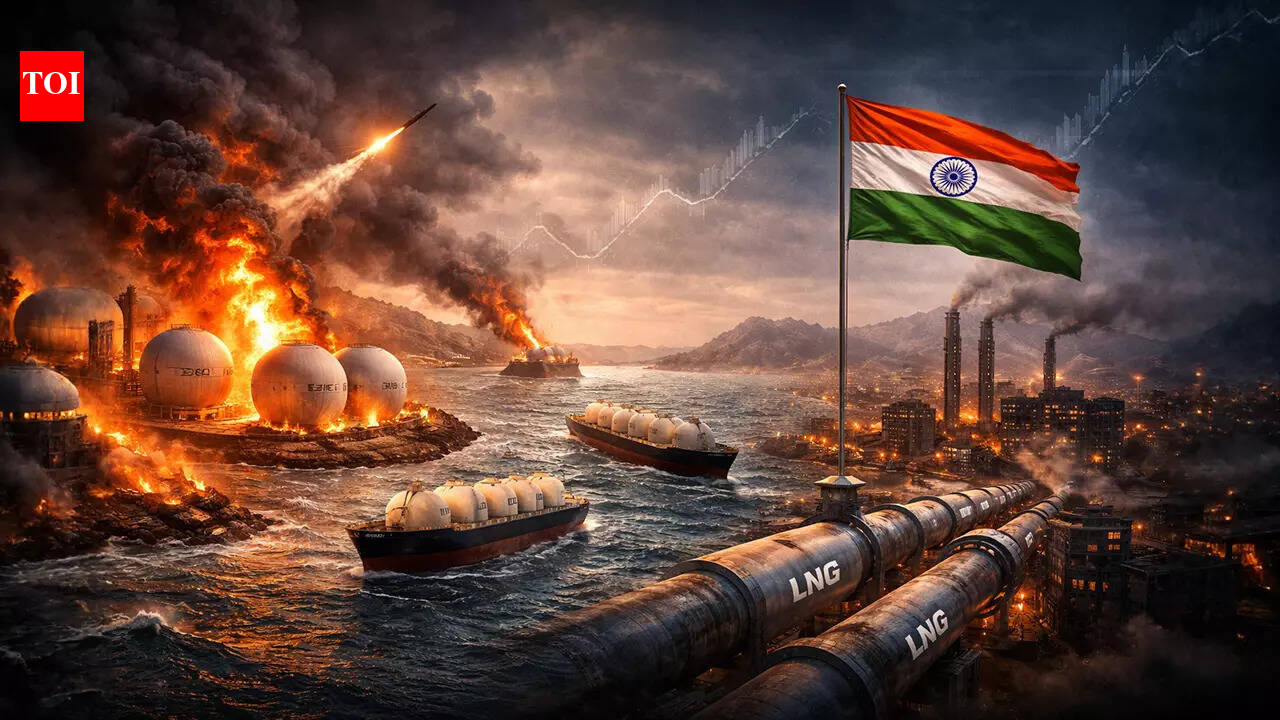
As Middle East continues to be engulfed in flames, courtesy a joint operative by Israel and US on Iran, India’s well-deliberated stance of keeping herself equidistant from both the axes is stark testimony to the above spirit. It was possibly not coincidental that just before Operation Epic Fury commenced on February 28, 2026 with a joint Israel-US strike on Iranian military and nuclear infrastructure, PM Modi rounded up a strategically timed Israel State tour. While the visit (25th – 26th February) drew tepid outrage from Indian Opposition, all the while receiving a rapturous welcome from the Knesset, Bharat possibly drew a distinct line of support to the Israel-US coalition, just as the war was to erupt.
India’s well-crafted balanced positioning
India has maintained a balanced stance in this war, avoiding any direct entanglement in hostilities. This has had pleasantly surprising consequences, in particular, the stellar “diplomatic win” of having India-bound vessels getting to pass through the Strait of Hormuz. As many other nations reel from a maritime logistics breakdown, India has secured 4 ships already, with more in the offing.
As the Indian PM outlined the challenges in his Lok Sabha speech on 23/03, he also detailed how India has managed to weather the turmoil so effectively, courtesy a slew of measures undertaken around energy security over past decade. Some immediate reasons are as under:
India has a Strategic Petroleum Reserve of over 53 Lakh metric tonnes, with more capacity under development to notch that past 65 Lakh metric tonnes.
Energy imports have been diversified from 27 to 41 countries gradually.
Ethanol blending has notched up from 1 – 1.5% about a decade back, to ~ 20% currently.
Initiatives like railway electrification, metro expansion, electric mobility are reducing dependency on fossil fuels.
In the all party meet that was convened subsequently on 25/03, Opposition parties expressed a “sense of solidarity” with Government, all the while as LOP Rahul Gandhi and TMC chose to skip the same!
Why India chose to stay neutral
Turning back to the question of why India chose to maintain the well-crafted neutral stance it took in the conflict, let us do some soul searching. As it turns out, this might go down in history as one of the most sagacious political and diplomatic stance undertaken by India in recent times!
Balanced diplomacy – Israel and Iran form crucial elements in the regional connectivity of India via the Middle East to other nations to the West. In the event that Iranian regime survives, it will be heavily sanctioned and surrounded by hostile neighbours, many of whom it attacked during the course of the conflict. It makes little sense to trade with such a State, nor would it get any geopolitical advantage by siding with a nation that could fall any day. On the contrary, India harbours a strong trade, defence, and geopolitical connection with Israel and the Gulf States. If the Iranian regime falls, India will gain a lot from a revamped Iranian system that can trade freely once mainstreamed back into the international system. In short, it is a win-win scenario for India to side with Israel, whatever fate befalls Iran.
The other covert benefit, albeit a political one, that India can garner by siding with Israel is to popularise the sentiment that India should be doing to Pakistan what Israel did to Iran. BJP gets a clear benefit in raising that up, more so as many crucial States head to the polls this year. That is perfect diplomacy and politics rolling into one!
Declining trade interests with Iran – Materially, India has little to lose in Iran as the two economies have decoupled substantially over the last few years under Washington’s sanctions. From a peak in 2018-19 of USD 17.03 BN, India-Iran bilateral trade contracted sharply by around 87% to around USD 2.3 BN in 2024. This was largely driven by the reimposition of US sanctions in 2019. India has maintained a trade surplus here. In fact, India happens to be the 3rd largest import partner for Iran.
(Source: tradeimex.in)
In 2024, Indian imports from Iran were roughly USD 1.06 BN, while exports touched USD 1.25 BN. Organic chemicals, edible fruits, and petroleum products were the prime imports, whereas rice, tea, coffee, and pharmaceuticals were the principal exports.
India’s imports from Iran (2024)
India’s exports to Iran (2024)
(Source: https://tradingeconomics.com/)
Energy diversification – As the world’s third-largest oil consumer, which depends on imports for over 88% of its crude oil requirement, India has done well to calibrate its energy exposure according to changing geopolitics. During 2016-17 (post 2015 nuclear deal), imports of Iranian oil soared to 27.1 Million Tonnes. Due to the reimposition of sanctions, India has completely stopped buying Iranian oil since May 2019. At that stage, non-compliance would have exposed Indian oil companies to US secondary sanctions. Presently, India has close to nil imports from Iran, with countries like Russia, Iraq, and Saudi Arabia assuming centre stage.
(Source: https://www.ceicdata.com/en/indicator/india/crude-oil-imports)
The astute political and economic pragmatism is illustrated further in the evolving mix of importing nations since 2020.
(Source: https://www.voronoiapp.com/geopolitics/Tracking-Indias-Oil-Imports–6162)
The diminished reliance on Iran for oil imports, which stands as a stellar example of India’s political sagacity, could enable the nation to take a balanced stance in the ongoing conflict. In fact, while the recent disruptions in the Strait of Hormuz have rattled multiple nations, courtesy the criticality of dependence on the Strait for oil imports, India’s diversification strategy has led to around 70% of crude imports coming from routes outside the Strait, as against 55% earlier.
It is worthwhile to note in this context that while India’s daily crude oil consumption is about 55 lakh barrels, through its diversification strategy, the volumes secured currently exceed what would normally have arrived through the Strait of Hormuz during this period.
Focus on the safety of the Indian diaspora – The Middle East is home to around 90 Lakh Indian expatriates. Their safety and continued flow of remittances to India for the diaspora, to support their families and other requirements, have been priorities for the Indian Government. Of the aforementioned number, 9,000 – 10,000 reside in Iran. Balancing the safety of Indians spread across Middle East nations warrants a non-aligned approach, which India has successfully adopted.
Strategic relationship with Israel – The Indian and Israeli PMs have had a long-standing bonhomie, which the latter referred to in his speech at the Knesset, during PM Modi’s State visit, as “I would almost venture to say, more than a friend, a brother”. He was candid to mention, “In a world where anti-Semitism is rising, India stands out.” In a world that is increasingly getting shaped by heightened protectionism and an evolving play of technological prowess, it is only but natural for India to deepen its long-standing relations on world stage.
Both regions have consistently blamed a rising “Islamic terrorism” as a threat to global peace. The overtly pro-Israel policy, though, has been a detour from the erstwhile Government’s stand. That dates back to 1947, when India opposed the UN’s plan to partition Palestine. In fact, in 1988, India became one of the first non-Arab states to recognise Palestine. With the end of the Cold War and a leaning towards the Soviet Union despite being non-aligned, India’s stance slowly changed, with diplomatic relations being initiated with Israel in 1992. Since then, the Indo-Israel ties have gone from strength to strength.
Key defence partner in Israel – Under the present regime, India became Israel’s largest weapons buyer. Trade between the two nations has ballooned from USD 200 MN in 1992 to more than USD 6 BN in 2024. India is Israel’s second-largest Asian trading partner after China in goods, primarily in petroleum, chemicals, and diamonds. The Bilateral Investment Treaty (BIT) that was signed last September, has given a further fillip to bilateral trade.
India’s defence deals with Israel date back long – to 1962 – when Israel provided military aid to India in its war against China. In 1999, during India’s war with Pakistan, Israel supplied IAF with the Unmanned Aerial Vehicle ‘Searcher’ and surveillance systems for Jaguar and Mirage squadrons. The defence ties with Israel have notched up since, and since 2014, around 42.1% of all arms exports from Israel have landed in India, with Azerbaijan, Vietnam, and US making up the other major customers.
Increasing trade interests with Israel – As regards trade, India’s partnership with Israel is not limited to defence. Exports are, however, concentrated across a few key sectors, like gems and jewellery, especially cut and polished diamonds, which are sent to Israel’s large diamond trading hubs. Apart from this, petroleum products, organic chemicals, plastics, and engineering goods also form a major portion of the exports. In very recent years, there has been a sharp drop in Indian exports to Israel – PM Modi’s visit can supposedly perk up the exports again, courtesy strategic deals and tie-ups across areas.
Statecraft at its finest
Chanakya, in his seminal treatise on statecraft, ‘Arthashastra’, talks of ‘Mandala theory’ – which in essence is a framework to model foreign policy based on ‘circle of states’. He mentioned the immediate neighbour as an enemy (Ari), the state beyond them is a friend (Mitra), and so on. Present-day Central Gov’s foreign policy is well aligned to such ancient wisdom of Bharat, as we find India navigating the tricky neo-political contours of the Middle East so very well during the present conflict. Pragmatic realism (Realpolitik) is a key tenet of Arthashastra, and despite complex relations with Gulf nations, India has prioritised national interest over ideological sentimentality in its bonhomie with Israel, as also staying cautious to not infuriate Iran.
‘When it rains, look for rainbows’ – goes an old adage. Under the trying circumstances of a volatile Middle East, India’s sagacious diplomacy ensured it not only weathered the rains, but also upped its relations across the Middle East. Government’s guiding beacon ‘Sabka Sath’, for once, transcended national borders – onto international terrain. With Bharat’s indelible mark written all over!