A 245-million-year-old marine reptile fossil in China preserves a rare digestive tract, possible liver traces and remains of its last fish meal
A 245-million-year-old marine reptile fossil shows an intact digestive tract. This ancient Austronaga minuta fossil offers rare insights into early reptile digestion. Its simple stomach suggests complex digestive systems evolved later in archosaur history. The reptile's body showed adaptations for aquatic life, unlike prior beliefs. This discovery enhances understanding of early marine reptile evolution during the Triassic period.
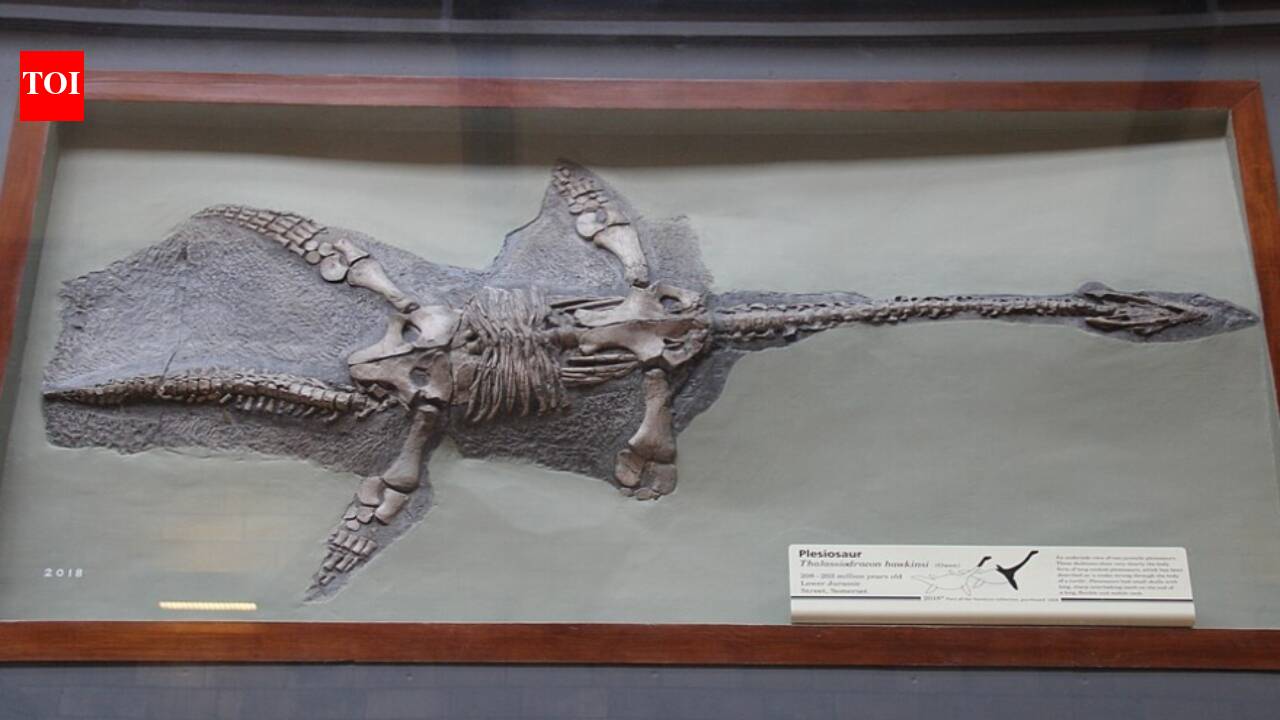
A 245-million-year-old marine reptile fossil shows an intact digestive tract. This ancient Austronaga minuta fossil offers rare insights into early reptile digestion. Its simple stomach suggests complex digestive systems evolved later in archosaur history. The reptile's body showed adaptations for aquatic life, unlike prior beliefs. This discovery enhances understanding of early marine reptile evolution during the Triassic period.