800-year-old Kakatiya-Era Shiva Temple demolished in Congress-ruled Telangana, case filed after outrage: What the controversy is and why the temple matters historically
A controversy has erupted in Telangana after the Congress government demolished an 800-year-old Shiva temple from the Kakatiya period in Warangal district during land-clearing work for a government school project. Following public outrage and complaints from historians, heritage activists and residents, the Union Ministry of Culture and the Archaeology Department have now registered a case over the incident. The ancient temple was located in Ashok Nagar village, Khanapur Mandal, Warangal district. According to reports, the structure was brought down on Wednesday, 6th May, while authorities were preparing land for the construction of a proposed Young India Integrated Residential School under the state government’s education initiative. Historians believe the temple dates back to the reign of Kakatiya ruler Ganapatideva and is nearly 800 years old. #BREAKING | 800-year-old Kakatiya-era Shiv mandir demolished in Telangana’s Warangal districtThe ancient structure in Ashok Nagar, Khanapur Mandal, dating back to the reign of Ganapatideva and bearing a rare 1231 AD inscription, was allegedly razed during land clearing for a… pic.twitter.com/0lgHJiFqhY— Organiser Weekly (@eOrganiser) May 8, 2026 The demolition has triggered sharp criticism from different quarters, with many accusing the authorities of ignoring Telangana’s rich cultural heritage in the name of development. Case registered after a complaint to the National Monuments Authority The matter took a serious turn after the noted Telangana rights lawyer, Immaneni Rama Rao, filed a complaint with the National Monuments Authority. Following the complaint, both the Union Ministry of Culture and the Archaeology Department registered a case regarding the demolition of the temple. An 800-year-old Shiva temple, believed to date back to the Kakatiya era, has been allegedly demolished in Warangal, setting off a storm of protest from historians, activists and the Union government. The structure, located in Ashok Nagar of Khanapur mandal, was reportedly cleared… pic.twitter.com/4cVNzE4XbS— The Statesman (@TheStatesmanLtd) May 8, 2026 The complaint sought legal action under Section 30 of the Telangana Heritage Act against officials who allowed the demolition work without taking mandatory approvals from the Archaeology and Endowments Departments. It also accused the state government of not forming the required Heritage Conservation Committee under the law. According to the complaint, the ancient structure could have been protected or even relocated instead of being demolished completely. The National Monuments Authority is now expected to examine the entire incident and determine whether rules related to heritage conservation were violated. At the same time, questions are also being raised about the use of heavy machinery at the site. Activists said that the temple was flattened during levelling work carried out for the school project. Administration denies deliberate demolition As the controversy grew, the Warangal district administration issued a clarification after conducting a joint inspection of the site on Wednesday, 6th May. The inspection involved officials from the Revenue Department, Archaeology Department, Telangana State Education Welfare and Infrastructure Development Corporation, and local revenue authorities. In its response, the administration denied claims of intentional demolition. Officials said the area was heavily covered with thick bushes and trees, and while clearing the vegetation, “remnants of an old dilapidated structure were noticed on the ground.” The district administration also claimed that “no dismantling activity was carried out by the executing agency.” Officials further said that the land belonged to the government and was not listed as endowment land. According to the Archaeology Department officials who joined the inspection, the temple structure was “not notified or recorded in the list of protected monuments or archaeological sites.” However, the explanation has not convinced many historians and activists, who argue that the temple had long been known locally and should have been protected. Officials promise restoration of the temple Following the backlash, Warangal District Collector Dr Satya Sharada and Narsampet MLA Donthi Madhava Reddy visited the site and assured locals that the temple would be reconstructed. Collector Satya Sharada described ancient monuments as “rare heritage assets” and said the administration would work with historians and archaeology experts to restore the structure. She said the temple was not officially listed in Archaeology Department records, but because it was believed to belong to the Kakatiya period, steps would now be taken to preserve and reconstruct it. MLA Donthi Madhava Reddy also defended the project, saying the land had been selected because of its open space and greenery. According to him, officials clearing the site failed to
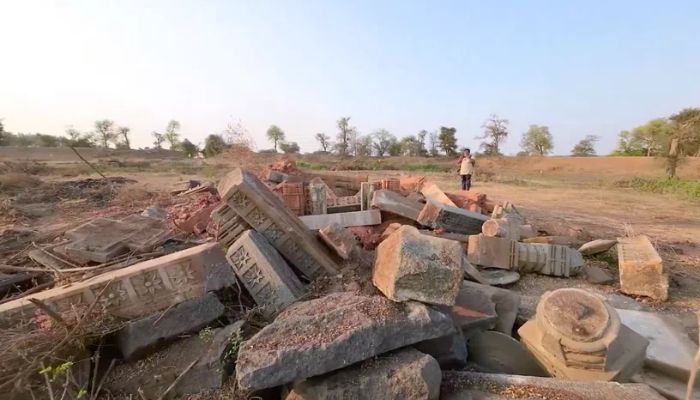
A controversy has erupted in Telangana after the Congress government demolished an 800-year-old Shiva temple from the Kakatiya period in Warangal district during land-clearing work for a government school project. Following public outrage and complaints from historians, heritage activists and residents, the Union Ministry of Culture and the Archaeology Department have now registered a case over the incident.
The ancient temple was located in Ashok Nagar village, Khanapur Mandal, Warangal district. According to reports, the structure was brought down on Wednesday, 6th May, while authorities were preparing land for the construction of a proposed Young India Integrated Residential School under the state government’s education initiative. Historians believe the temple dates back to the reign of Kakatiya ruler Ganapatideva and is nearly 800 years old.
#BREAKING | 800-year-old Kakatiya-era Shiv mandir demolished in Telangana’s Warangal districtThe ancient structure in Ashok Nagar, Khanapur Mandal, dating back to the reign of Ganapatideva and bearing a rare 1231 AD inscription, was allegedly razed during land clearing for a… pic.twitter.com/0lgHJiFqhY— Organiser Weekly (@eOrganiser) May 8, 2026
The demolition has triggered sharp criticism from different quarters, with many accusing the authorities of ignoring Telangana’s rich cultural heritage in the name of development.
Case registered after a complaint to the National Monuments Authority
The matter took a serious turn after the noted Telangana rights lawyer, Immaneni Rama Rao, filed a complaint with the National Monuments Authority. Following the complaint, both the Union Ministry of Culture and the Archaeology Department registered a case regarding the demolition of the temple.
An 800-year-old Shiva temple, believed to date back to the Kakatiya era, has been allegedly demolished in Warangal, setting off a storm of protest from historians, activists and the Union government. The structure, located in Ashok Nagar of Khanapur mandal, was reportedly cleared… pic.twitter.com/4cVNzE4XbS— The Statesman (@TheStatesmanLtd) May 8, 2026
The complaint sought legal action under Section 30 of the Telangana Heritage Act against officials who allowed the demolition work without taking mandatory approvals from the Archaeology and Endowments Departments. It also accused the state government of not forming the required Heritage Conservation Committee under the law.
According to the complaint, the ancient structure could have been protected or even relocated instead of being demolished completely. The National Monuments Authority is now expected to examine the entire incident and determine whether rules related to heritage conservation were violated.
At the same time, questions are also being raised about the use of heavy machinery at the site. Activists said that the temple was flattened during levelling work carried out for the school project.
Administration denies deliberate demolition
As the controversy grew, the Warangal district administration issued a clarification after conducting a joint inspection of the site on Wednesday, 6th May. The inspection involved officials from the Revenue Department, Archaeology Department, Telangana State Education Welfare and Infrastructure Development Corporation, and local revenue authorities.
In its response, the administration denied claims of intentional demolition. Officials said the area was heavily covered with thick bushes and trees, and while clearing the vegetation, “remnants of an old dilapidated structure were noticed on the ground.”
The district administration also claimed that “no dismantling activity was carried out by the executing agency.” Officials further said that the land belonged to the government and was not listed as endowment land.
According to the Archaeology Department officials who joined the inspection, the temple structure was “not notified or recorded in the list of protected monuments or archaeological sites.”
However, the explanation has not convinced many historians and activists, who argue that the temple had long been known locally and should have been protected.
Officials promise restoration of the temple
Following the backlash, Warangal District Collector Dr Satya Sharada and Narsampet MLA Donthi Madhava Reddy visited the site and assured locals that the temple would be reconstructed.
Collector Satya Sharada described ancient monuments as “rare heritage assets” and said the administration would work with historians and archaeology experts to restore the structure.
She said the temple was not officially listed in Archaeology Department records, but because it was believed to belong to the Kakatiya period, steps would now be taken to preserve and reconstruct it.
MLA Donthi Madhava Reddy also defended the project, saying the land had been selected because of its open space and greenery. According to him, officials clearing the site failed to notice the ancient structure earlier.
He assured residents that the Shiva temple would be rebuilt at the same location, along with the proposed school project. He also said an idol of Goddess Saraswati would be installed at the reconstructed shrine.
Historical importance of the temple
The demolished structure was considered historically very important because it contained a rare seven-line Telugu inscription dated February 1231 AD. The inscription referred to Kakatiya ruler Ganapatideva with titles such as “Maharaja” and “Rajadhirajulu,” meaning king of kings.
Historians said the temple stood within the historic “Kota Katta” mud fort zone, an area associated with ancient defensive structures from the Kakatiya era.
According to heritage experts, the temple had already been documented by the Heritage Department as far back as 1965. The structure occupied less than half an acre inside the larger 20 to 30-acre land identified for the school project.
S Haragopal, convener of Kotha Telangana Charithra Brundam, said the temple had valuable stone inscriptions connected to the Kakatiya dynasty. He claimed the granite pillars and inscriptions are now buried under debris after the demolition.
Some reports also suggested that the sanctum sanctorum was dug up during the process, leading to suspicions that there may have been attempts to search for hidden treasure beneath the structure.
Political row intensifies in Telangana
The incident has become a major political controversy in Telangana. Many opposition leaders and heritage protection groups have been criticising the Congress government in connection with the demolition of this historical structure.
District general secretary of the BJP, Rana Pratap Reddy, condemned the incident and demanded the reconstruction of the temple in its original design. He accused the government of demolishing the structure without getting any clearance from the Archaeology Department.