‘Mere existence of Dargah does not make land Waqf property’: Madras High Court sets aside Tamil Nadu Waqf Board order appointing Mutawalli – Read what the judgment says
On 5th June, the Madras High Court held that the mere existence of a Dargah on a piece of land does not automatically make it a ‘Waqf property’. Furthermore, the court stated that it does not give the Waqf Board automatic jurisdiction to take control of the institution or appoint a Mutawalli. OpIndia accessed judgment in the matter. The observations were made while setting aside a Tamil Nadu Waqf Board resolution under which a Mutawalli was appointed for the Sarkar Syed Habibullah Sha Khadari Arif Rabbani Hazarath Dargah located at Kamaraj Road in Triplicane, Chennai. Justice K Govindarajan Thilakavadi allowed the appeal filed by the Dargah represented through M Mohammed Azmathullah. The court held that a Dargah can be treated as a Waqf only when the statutory requirements under the Waqf Act are satisfied. The court ruled that religious use, existence of a tomb, or presence of a shrine cannot, by itself, be treated as proof of Waqf ownership or Waqf Board jurisdiction. The court observed, “Mere existence of a Dargah does not automatically confer jurisdiction upon the Board unless the institution is established or treated as a Waqf in accordance with law.” The judgment has clearly drawn the line between religious character and legal status. A place may be religious in nature, however, that alone does not prove that the property belongs to Waqf and that the Waqf Board can use its power to appoint its administrator. The dispute over the Triplicane Dargah According to the appellant, the Dargah was around 240 years old and his family had been maintaining it for over 40 years from their own earnings. He also stated that he had been serving as Mutawalli of the Dargah on a hereditary basis. The appellant informed the court that the land on which the Dargah stands belongs to the Public Works Department (PWD) and is not Waqf property. He submitted that he had obtained an electricity connection in his name as Mutawalli after receiving a no objection certificate (NOC) from the PWD on 2nd December 2021. The controversy arose after the Tamil Nadu Waqf Board appointed A Shainsha as Mutawalli of the Dargah and proceeded on the basis that the property was Waqf property. The appellant challenged the Board’s resolution dated 23rd August 2023 and the consequential order dated 14th September 2023 before the Tamil Nadu Waqf Tribunal. However, his application was dismissed, after which he approached the High Court. Appellant argued that Waqf Board acted without authority The appellant contended that the Waqf Board had appointed the Mutawalli without any authorisation and failed to establish that the Dargah land was Waqf property before doing so. He argued that the Board could not declare the property as Waqf without following the statutory process under the Waqf Act. He further argued that the land was government land and that no lawful transfer, dedication, statutory notification or Gazette declaration showed it to be Waqf property. He stated that the Board relied on an unverified trust deed and unsupported representation letters to appoint the Mutawalli. It was also argued that the Board had not followed the procedure for removing an existing Mutawalli under Section 64 of the Waqf Act. The appellant maintained that his family had been in continuous control and maintenance of the Dargah, and that the claim of the 5th respondent regarding hereditary management was not supported by reliable evidence. The appellant also submitted that the Tribunal wrongly relied on a Government Order to conclude that the land was a burial ground, even though, according to him, that Government Order related to a different survey number. Waqf Board claimed religious and charitable use His appeal was opposed in the High Court by the Tamil Nadu Waqf Board. It argued that the land and surrounding lands originally belonged to the Dargah and later came into the possession of the Municipality and thereafter the PWD. It also claimed that the surrounding lands were originally used as a burial ground. The Board submitted that once a property is intended for religious and charitable purposes, it becomes Waqf property and comes under the supervisory control of the Tamil Nadu Waqf Board. It also claimed that the appellant had admitted before the Board that he did not belong to the Dargah family, and therefore he was estopped from claiming hereditary Mutawalliship. The Board stated that registration of the Dargah under Section 36(4) of the Waqf Act was under process and defended the appointment of the 5th respondent as Mutawalli. Public Works Department said land was government poromboke The PWD’s stand in the case is crucial as it contradicted the Waqf Board’s claim. The PWD submitted that the land belonged to the Municipality since 1974 and was classified as government poromboke land. The land was allotted rent free to Bharat Scouts and Guides by the PWD. The PWD argued that Shainsha, who was appointe
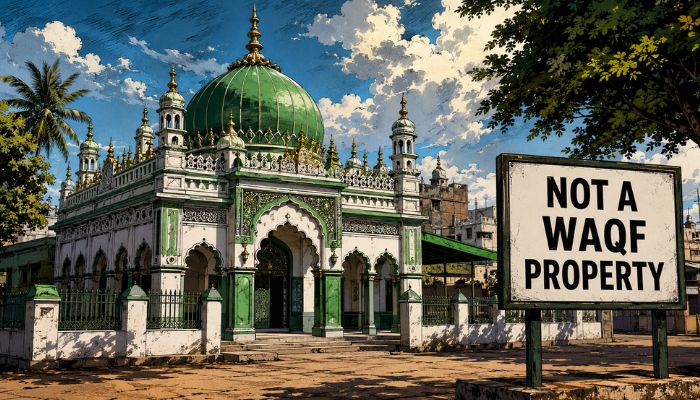
On 5th June, the Madras High Court held that the mere existence of a Dargah on a piece of land does not automatically make it a ‘Waqf property’. Furthermore, the court stated that it does not give the Waqf Board automatic jurisdiction to take control of the institution or appoint a Mutawalli. OpIndia accessed judgment in the matter.
The observations were made while setting aside a Tamil Nadu Waqf Board resolution under which a Mutawalli was appointed for the Sarkar Syed Habibullah Sha Khadari Arif Rabbani Hazarath Dargah located at Kamaraj Road in Triplicane, Chennai.
Justice K Govindarajan Thilakavadi allowed the appeal filed by the Dargah represented through M Mohammed Azmathullah. The court held that a Dargah can be treated as a Waqf only when the statutory requirements under the Waqf Act are satisfied. The court ruled that religious use, existence of a tomb, or presence of a shrine cannot, by itself, be treated as proof of Waqf ownership or Waqf Board jurisdiction.
The court observed, “Mere existence of a Dargah does not automatically confer jurisdiction upon the Board unless the institution is established or treated as a Waqf in accordance with law.”
The judgment has clearly drawn the line between religious character and legal status. A place may be religious in nature, however, that alone does not prove that the property belongs to Waqf and that the Waqf Board can use its power to appoint its administrator.
The dispute over the Triplicane Dargah
According to the appellant, the Dargah was around 240 years old and his family had been maintaining it for over 40 years from their own earnings. He also stated that he had been serving as Mutawalli of the Dargah on a hereditary basis.
The appellant informed the court that the land on which the Dargah stands belongs to the Public Works Department (PWD) and is not Waqf property. He submitted that he had obtained an electricity connection in his name as Mutawalli after receiving a no objection certificate (NOC) from the PWD on 2nd December 2021.
The controversy arose after the Tamil Nadu Waqf Board appointed A Shainsha as Mutawalli of the Dargah and proceeded on the basis that the property was Waqf property. The appellant challenged the Board’s resolution dated 23rd August 2023 and the consequential order dated 14th September 2023 before the Tamil Nadu Waqf Tribunal. However, his application was dismissed, after which he approached the High Court.
Appellant argued that Waqf Board acted without authority
The appellant contended that the Waqf Board had appointed the Mutawalli without any authorisation and failed to establish that the Dargah land was Waqf property before doing so. He argued that the Board could not declare the property as Waqf without following the statutory process under the Waqf Act.
He further argued that the land was government land and that no lawful transfer, dedication, statutory notification or Gazette declaration showed it to be Waqf property. He stated that the Board relied on an unverified trust deed and unsupported representation letters to appoint the Mutawalli.
It was also argued that the Board had not followed the procedure for removing an existing Mutawalli under Section 64 of the Waqf Act. The appellant maintained that his family had been in continuous control and maintenance of the Dargah, and that the claim of the 5th respondent regarding hereditary management was not supported by reliable evidence.
The appellant also submitted that the Tribunal wrongly relied on a Government Order to conclude that the land was a burial ground, even though, according to him, that Government Order related to a different survey number.
Waqf Board claimed religious and charitable use
His appeal was opposed in the High Court by the Tamil Nadu Waqf Board. It argued that the land and surrounding lands originally belonged to the Dargah and later came into the possession of the Municipality and thereafter the PWD. It also claimed that the surrounding lands were originally used as a burial ground.
The Board submitted that once a property is intended for religious and charitable purposes, it becomes Waqf property and comes under the supervisory control of the Tamil Nadu Waqf Board. It also claimed that the appellant had admitted before the Board that he did not belong to the Dargah family, and therefore he was estopped from claiming hereditary Mutawalliship.
The Board stated that registration of the Dargah under Section 36(4) of the Waqf Act was under process and defended the appointment of the 5th respondent as Mutawalli.
Public Works Department said land was government poromboke
The PWD’s stand in the case is crucial as it contradicted the Waqf Board’s claim. The PWD submitted that the land belonged to the Municipality since 1974 and was classified as government poromboke land. The land was allotted rent free to Bharat Scouts and Guides by the PWD.
The PWD argued that Shainsha, who was appointed as Mutawalli, had fraudulently registered the Dargah land without its concurrence. Furthermore, the Dargah could not be construed as Waqf because it was not related to public purpose and Islamic religious services.
5th respondent relied on trust deed and claim of hereditary management
On the other hand, Shainsha claimed that the Dargah was Waqf as defined under the Waqf Act and that the land originally belonged to the Dargah. He submitted that the Dargah had been administered by his forefathers hereditarily and that they had been performing religious rites and prayers at the site.
He submitted a registered trust deed from February 2020, executed in the name of Hazarat Syed Habibullah Sha Khaderi Trust. He claimed that he had approached the Waqf Board for recognition as Mutawalli and later filed a writ petition before the High Court. Following the court’s direction in that case, the Board considered his representation and appointed him as Mutawalli.
He further argued that registration of a Waqf is only a statutory formality and does not alter the character of the Waqf. He claimed that non-registration may attract a penalty against the Mutawalli, but it cannot be used to deny the existence of Waqf.
He also argued that express dedication was not necessary in every case and that a Waqf can arise by long public use.
Court said survey and notification are mandatory
While examining whether the Dargah and the land on which it stands could be treated as Waqf property, the court noted that under Muslim law, Waqf can be created by permanent dedication of movable or immovable property by a Muslim for a purpose recognised by Muslim law as pious, religious or charitable. In the absence of express dedication, Waqf may be presumed through long use, but that long use must be proved.
The court then turned to the statutory requirements under the Waqf Act. It held that before a property is declared Waqf, a preliminary survey has to be conducted. The Survey Commissioner must conduct an inquiry and submit a report to the State Government. Thereafter, the State Government forwards the report to the Waqf Board, and the Board publishes the list of Waqfs in the official Gazette.
The court made it clear that this process is not optional. “Conducting of the surveys before declaring a property a Waqf property is a sine qua non,” the court said.
In the present case, the court noted that the disputed land had not been surveyed and notified in the Government Gazette. Though the respondents said that the survey was under process, the court held that the survey had to be conducted before declaring the property as Waqf.
The court observed, “Though the respondents 1 to 3 and 5 would submit that the survey is under process, it is imperative to conduct a survey before declaring a property as Waqf Property, and the provisions of Section 4 & 5 have to be mandatorily followed to decide whether a property is a Waqf Property.”
Every Dargah or grave is not automatically Waqf property
The court rejected the idea that the existence of a Dargah itself is enough to bring the land within the jurisdiction of the Waqf Board.
The court observed that “mere religious use or existence of a tomb or shrine is not automatically sufficient.” It held that there must be permanent dedication of property by a Muslim for purposes recognised by Muslim law as pious, religious or charitable.
The court further explained that for a Dargah to become Waqf, the land, building or income must be permanently dedicated for maintaining the shrine, conducting Urs, feeding devotees, religious instruction, charity or similar religious and charitable purposes.
The court said the founder must have had ownership or lawful control over the property and must have intended to permanently divest himself of ownership in favour of God.
The court further observed that courts must examine whether the Dargah functions as a public religious institution. This includes factors such as public access for worship, offerings collected for religious purposes, performance of rituals, maintenance through endowments and recognition by the Muslim community.
It also listed the kind of evidence that may prove Waqf, including a Waqf deed, revenue records, inam register entries, historical grants, Gazette notifications, entries in Waqf survey reports, long-standing management as Waqf and judicial decisions.
In one of the most important observations, the court said, “Every grave or Dargah is not automatically Waqf property. Existence of a Muslim endowment is required.”
The court further added, “Courts often distinguish a private family tomb and a Saint shrine maintained as a public religious endowment.”
Trust deed was not enough
Shainsha had relied on the trust deed from 2010. However, the court found that he had failed to show that the trust deed was acted upon. The court said there was nothing on record to show that the land on which the Dargah stands belonged to the Dargah. Therefore, alleged use of the disputed land could not be enough to construe it as Waqf by user in the absence of evidence.
The court said, “There is nothing on record to show that the land in which the Dargah is situate belong to the Dargah. Therefore, the alleged use of the disputed land is not established to construe it as Waqf by user in the absence of evidence to show that it was so used.”
This finding weakened the Waqf Board’s position because the appointment of a Mutawalli presupposes the existence of a Waqf. Without first proving that the institution or property is legally Waqf, the Board could not appoint someone to administer it as Waqf.
Appointment of Mutawalli presupposes existence of Waqf
The court also emphasised that a Mutawalli can be appointed by the Waqf Board only when the existence of Waqf is first established. “Appointment of a Mutawalli ordinarily presupposes the existence of a waqf,” the court said.
It further held, “The Board must first establish jurisdictional facts before exercising control over the institution.” Since the Waqf Board had not first established that the Dargah or the land was Waqf property in accordance with law, its resolution appointing the 5th respondent as Mutawalli was held to be unsustainable.
Civil court to decide rival claims over the Dargah
While the High Court set aside the Waqf Board’s order, it did not grant the appellant permanent injunction. The reason was that both the appellant and the 5th respondent were claiming rights over the Dargah.
The court said that this dispute must first be resolved according to law by a competent civil court. Therefore, the appellant was not entitled to the relief of injunction at this stage.
This means that while the Waqf Board’s appointment of the 5th respondent as Mutawalli has been set aside, the rival claims of management, hereditary rights or founder status remain open for adjudication before the appropriate civil court.